
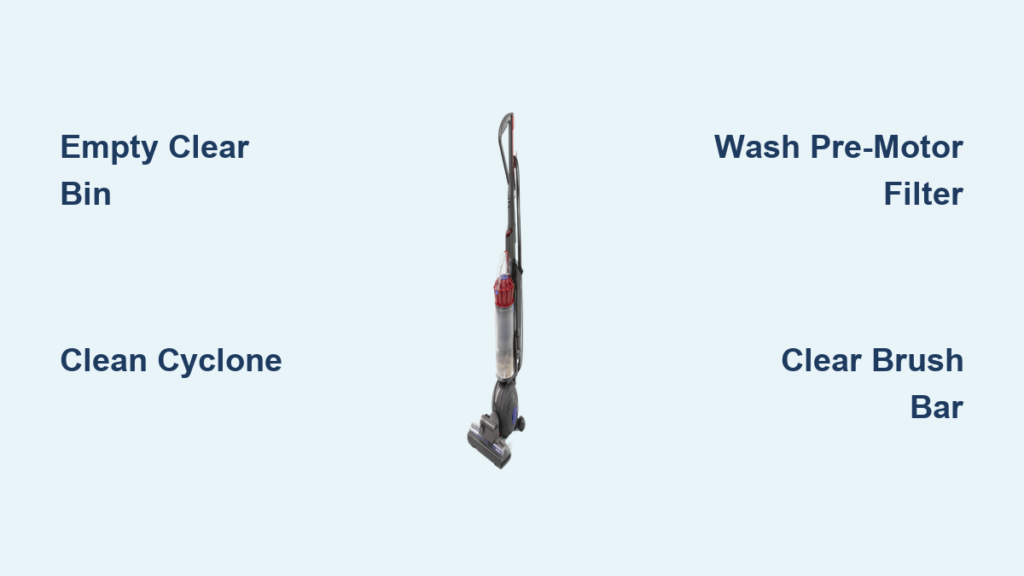
Your Dyson Light Ball Multi Floor vacuum loses suction power when dust and hair clog its intricate system. If you’ve noticed your vacuum struggling to pick up debris it once handled with ease, or if it’s making unusual noises during operation, you’re likely dealing with a maintenance issue rather than a broken machine. This happens to even the best vacuums when filters become saturated and brush bars get tangled with pet hair. Following this precise cleaning process will restore your Dyson Light Ball Multi Floor to factory-fresh performance without requiring professional service. You’ll learn exactly how to tackle the cyclone assembly, pre-motor filter, and brush bar—three critical components that determine your vacuum’s effectiveness.
Essential Tools for Dyson Light Ball Multi Floor Maintenance
Before you disassemble your vacuum, gather these specific items to ensure a thorough cleaning session. Having everything ready prevents mid-cleaning interruptions that could leave your vacuum partially disassembled and unusable. You’ll need a soft microfiber cloth to wipe down the exterior without scratching the plastic housing—regular paper towels might leave lint behind that could enter the air system. A clean paintbrush or new soft-bristled toothbrush works perfectly for dislodging stubborn dust from the cyclone assembly’s narrow channels where water shouldn’t go. For clearing blockages in the hose and wand, keep a wooden spoon handle or plastic chopstick nearby; metal objects could scratch internal surfaces and create future dust collection points. Most importantly, prepare a large towel to catch dust during disassembly and a dedicated drying area where parts won’t be disturbed for 24 hours.
Clearing Blockages in Your Dyson Light Ball Multi Floor Cyclone System
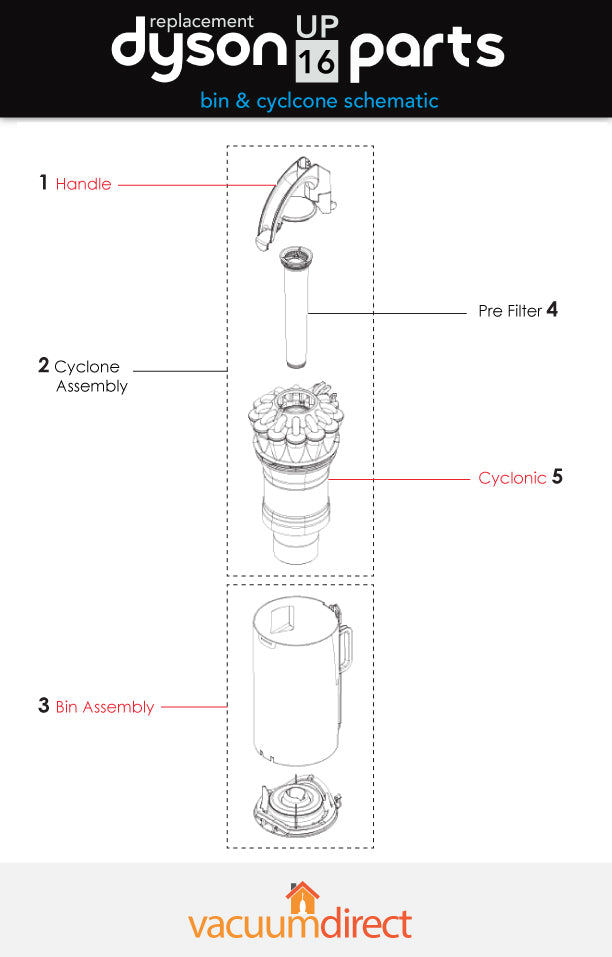
The cyclone system is the heart of your Dyson’s suction power, and when it gets clogged, performance plummets immediately. This section shows you exactly how to restore airflow through this critical component without damaging its delicate structure.
How to Remove and Empty the Clear Bin Properly
Start by unplugging your Dyson Light Ball Multi Floor and moving it to an outdoor area or near a large trash can—indoor emptying creates unnecessary dust clouds. Press the red bin release button firmly while lifting the clear bin straight up; don’t twist or force it. Hold the bin over your disposal area and press the red “Max” button to open the bottom fully. Tap the bin’s sides against the trash can to dislodge stubborn debris, then rotate the bin while tapping to ensure complete emptying. For fine dust that clings to the bin walls, use your soft brush in a circular motion—never scrape with sharp objects that could scratch the transparent plastic. If you have pet hair that’s matted inside the bin, carefully pull it out with your fingers before emptying to prevent clogs downstream.
Cleaning the Cyclone Assembly Without Water Damage
With the bin removed, locate the small hole at the top of the cyclone assembly where the bin attaches. Use short, controlled bursts of compressed air (from a canister vacuum cleaner like a Datavac) directed upward through this opening to dislodge deeply embedded dust. The airflow should travel opposite to normal operation, forcing trapped particles out through the top. If compressed air isn’t available, use your soft brush to gently sweep downward through the cyclone channels—work methodically from top to bottom, never forcing the brush. For stubborn residue on the cyclone walls, lightly dampen a corner of your microfiber cloth with lukewarm water and wipe in a circular motion, then immediately dry with the clean portion of the cloth. Never immerse the cyclone assembly in water or use cleaning solutions, as this damages the precision-engineered surfaces.
Filter Maintenance That Restores Maximum Suction Power
Your Dyson Light Ball Multi Floor relies on two critical filters that require different cleaning approaches. Neglecting either filter causes rapid performance decline and can even damage the motor over time. This section details the exact procedures for maintaining both filters properly.
Pre-Motor Filter Cleaning Procedure for Long-Term Performance
The pre-motor filter sits behind the clear bin in the ball housing and catches larger particles before they reach the motor. To access it, twist the circular filter cover counterclockwise until it releases—don’t force it if it’s stuck. Remove the filter and tap it firmly over your trash can, rotating it as you tap to dislodge dust from all angles. For deeper cleaning, rinse the filter under cold running water while gently squeezing the pleats—hot water damages the filtration media. Never use soap or scrub the filter, as this destroys its electrostatic properties. After rinsing, squeeze out excess water by pressing the filter between your palms (never twist or wring), then place it on a clean towel in a well-ventilated area. Set a timer for 24 hours—using the vacuum with a damp filter causes immediate clogging and potential mold growth. During drying, keep the filter away from direct sunlight which degrades the material.
Post-Motor HEPA Filter Care Without Causing Damage
The post-motor HEPA filter (if your model includes it) sits at the top of the machine near the exhaust and captures microscopic particles. Unlike the pre-motor filter, this component shouldn’t be washed. Remove it by pressing the release tab and lifting straight out. Tap it gently over your trash can while rotating it through all positions—this dislodges 90% of accumulated dust without damaging the delicate media. For stubborn debris trapped deep in the pleats, use short bursts of compressed air from the clean side toward the dirty side. Never vacuum the filter or use water, as this collapses the microscopic pores that capture allergens. Check this filter monthly; when light can’t pass through it easily, replace it with genuine Dyson part 966197-01. Using non-Dyson filters creates improper seals that allow dirty air to bypass the filtration system.
Brush Bar and Hose Maintenance for Optimal Floor Cleaning

A tangled brush bar not only reduces cleaning effectiveness but also strains your vacuum’s motor. This section shows you how to maintain the brush bar and clear hidden blockages that cause suction loss.
Removing Hair and Debris from the Brush Bar Assembly
Flip your Dyson Light Ball Multi Floor upside down and locate the brush bar access panel on the cleaner head. Use scissors to carefully cut through hair strands wrapped around both ends of the bar—never pull hard, as this can misalign the bearings. For threads and fibers wound tightly around the center, use a seam ripper to gently lift and cut them without damaging the bristles. Rotate the brush bar manually while cleaning to access all sides; it should spin freely with minimal resistance when clean. Check the end caps for embedded debris that prevents proper rotation—use your chopstick to dislodge any compacted dirt. After cleaning, wipe the entire brush bar assembly with your damp microfiber cloth to remove fine dust that reduces static cling.
Clearing Hidden Blockages in Hoses and Wand Components
Blockages often occur in unexpected places like the wand swivel joint or hose connections. Start by detaching the wand from both the cleaner head and main body. Hold it vertically and drop a coin through each end—if it doesn’t pass freely, you’ve found your blockage location. Use your wooden spoon handle to gently push through the obstruction from the opposite end of where the coin stopped. For flexible hose sections, straighten them completely and use compressed air to blast through clogs. Never use wire hangers or sharp objects that could puncture the hose lining. Test suction at each connection point after clearing—reconnect components one at a time while checking for restored airflow to identify problem areas.
Troubleshooting Common Post-Cleaning Issues Immediately

Even after proper cleaning, you might encounter performance problems that require specific fixes. This section addresses the most frequent issues users face after maintenance.
Why Your Dyson Light Ball Multi Floor Loses Suction After Cleaning
If suction remains weak after cleaning, check that both filters are completely dry—a single damp filter can reduce performance by 70%. Verify the clear bin is seated with a firm click; improper alignment creates air leaks that bypass the cyclone system. Examine all hose connections for kinks or partial disconnections that disrupt airflow. For persistent issues, perform the coin test again on all components to identify residual blockages. Remember that full suction restoration might take several uses as the filter media recharges its electrostatic properties.
Fixing Brush Bar Spin Problems After Maintenance
When the brush bar won’t rotate after cleaning, first ensure no remaining threads are wrapped around the drive belt. Power off the vacuum and manually spin the brush bar—if it catches at one point, you likely have debris inside the end caps. Remove the end caps (consult your manual for model-specific instructions) and clean the bearing surfaces with your microfiber cloth. Reapply a single drop of silicone lubricant to each bearing point before reassembly—never use oil-based lubricants that attract dust. Test the brush bar spin by hand before powering on; it should rotate smoothly through a full 360 degrees.
Long-Term Maintenance Schedule for Peak Performance
Implement these simple habits to keep your Dyson Light Ball Multi Floor operating at maximum efficiency between deep cleanings. Empty the bin when it reaches the ½ full mark—waiting until it’s completely full reduces suction by 40% immediately. Clean the pre-motor filter every 2-3 months with regular use, or monthly if you have pets. Replace the HEPA filter every 12 months regardless of visible condition, as microscopic pore clogging occurs even when it looks clean. Store your vacuum upright in a climate-controlled environment—garages and basements expose components to humidity that degrades internal parts. Most importantly, never skip the 24-hour drying period for filters; this single step prevents 90% of post-cleaning performance issues.
Following this precise maintenance routine ensures your Dyson Light Ball Multi Floor delivers powerful, consistent cleaning performance for years. You’ve now mastered the complete cleaning process—from cyclone assembly to filter care—that restores factory-level suction without professional help. Implement these steps monthly, and your vacuum will handle everyday messes with the same efficiency as when it was new.

