
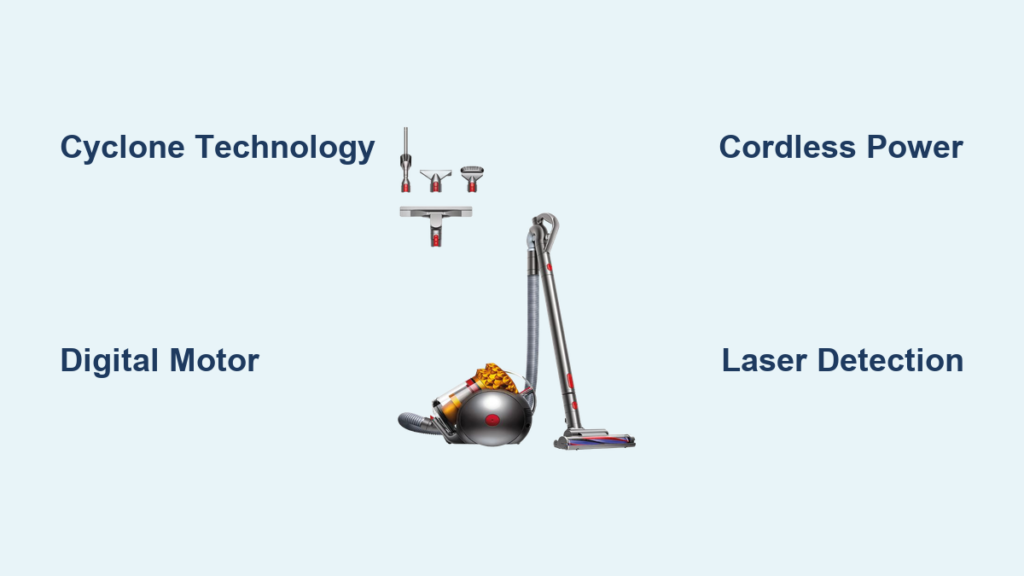
Imagine pushing a heavy vacuum cleaner across your floor, watching the suction power fade as the bag fills, and struggling to maneuver around furniture. For decades, this frustrating routine defined home cleaning—until Dyson vacuum innovation shattered industry norms. What began as one man’s quest to solve a simple problem—why vacuums lose suction—sparked a technological revolution that continues to reshape how we clean our homes today. Dyson’s relentless pursuit of better engineering didn’t just improve vacuum cleaners; it completely reimagined what’s possible in home cleaning technology.
The story of Dyson vacuum innovation spans more than 30 years of challenging conventions and solving problems others ignored. From the initial breakthrough of bagless cyclone technology to today’s intelligent, self-navigating robots, each advancement builds on James Dyson’s original frustration with traditional vacuum limitations. This journey of continuous improvement proves that even the most mundane household appliances can become platforms for extraordinary engineering when approached with fresh thinking and relentless determination.
Why Dyson’s Cyclone Technology Changed Vacuum Performance Forever

James Dyson’s pivotal insight came from observing industrial sawmills, not vacuum cleaner factories. His frustration with clogged bags that killed suction led him to explore cyclonic separation—a process using centrifugal force to separate dust from air. This fundamental shift in thinking created the first true alternative to bag-dependent vacuums, solving the industry’s dirty secret: manufacturers made more money selling replacement bags than the machines themselves.
How the G-Force Prototype Proved Bagless Could Work
Working in his garden shed, Dyson built 5,127 prototypes before perfecting his cyclone system. The breakthrough G-Force model used dual cyclones spinning at tremendous speeds to fling dust particles outward while clean air moved toward the center. This engineering marvel created consistent suction that never diminished as the bin filled—unlike bagged models that lost up to 80% of their power during use. The transparent bin wasn’t just a design choice; it provided immediate visual feedback that the technology actually worked, turning skeptics into believers.
Why the DC01 Became a Global Phenomenon
When Dyson launched the DC01 in 1995, competitors dismissed its transparent bin as a gimmick, but consumers recognized its value immediately. For the first time, users could see exactly how much dirt their vacuum collected and knew precisely when to empty it. The machine’s distinctive design—bright colors, visible technology, and industrial aesthetic—stood in stark contrast to the dull, boxy vacuums dominating the market. More importantly, it delivered on its promise: powerful, uninterrupted suction that cleaned deeper and more effectively than anything previously available. The DC01’s success proved that consumers would pay more for genuinely better performance.
What Makes Dyson’s Motor Technology Superior to Traditional Vacuum Motors
Dyson engineers recognized that cyclonic separation required more than just a new dust collection system—it demanded a completely reimagined power source. Traditional vacuum motors couldn’t maintain the sustained high speeds necessary for effective cyclone operation without overheating or failing prematurely. This realization led to one of Dyson vacuum innovation’s most significant breakthroughs.
How the Digital Motor Delivers Unmatched Power Efficiency
Unlike conventional motors that spin at 10,000-30,000 rpm, Dyson’s digital motor accelerates to 110,000-125,000 rpm—faster than a Formula 1 engine. This incredible speed generates the centrifugal force needed for effective cyclone separation while using less energy. The motor’s brushless design eliminates friction points that cause traditional motors to wear out, resulting in longer lifespan and consistent performance. By designing the motor specifically for vacuum applications rather than adapting existing technology, Dyson created a power source that perfectly matches the demands of cyclonic separation.
Why Ball Technology Revolutionized Maneuverability
The introduction of the Dyson Ball in 2005 addressed another longstanding vacuum pain point: difficult steering. Traditional four-wheel designs often got stuck or required excessive force to change direction. The single spherical housing allowed the vacuum to pivot on a central point, making it dramatically easier to navigate around furniture legs, under chairs, and through tight spaces. This innovation wasn’t just about convenience—it improved cleaning effectiveness by enabling users to reach previously inaccessible areas without straining their backs or arms.
How Cordless Technology Made Powerful Cleaning Truly Portable

Dyson vacuum innovation hit another milestone when cordless models matched—and eventually surpassed—the performance of corded vacuums. This required solving multiple engineering challenges simultaneously: creating lightweight yet powerful batteries, developing motors that could run efficiently on battery power, and designing ergonomics that balanced weight distribution for comfortable extended use.
What Enables Dyson Cordless Vacuums to Maintain Suction
The V6 model, developed over 10 years with £150 million in R&D investment, proved cordless vacuums could deliver professional-grade cleaning. Key to this achievement was optimizing the entire system—motor, battery, and airflow—to work in perfect harmony. Unlike competitors that simply removed the cord from existing designs, Dyson engineered every component specifically for cordless operation. The result was a vacuum that maintained powerful suction throughout its runtime, with intelligent power management that adjusted performance based on cleaning needs.
Why Stick and Handheld Designs Expanded Cleaning Possibilities
Dyson recognized that different cleaning tasks require different tools. The transition from bulky uprights to versatile stick configurations opened new cleaning opportunities—from quick kitchen spills to car interiors. The modular design allows users to convert between stick, handheld, and specialized tool configurations in seconds, making thorough cleaning possible anywhere in the home without lugging around a heavy machine. This flexibility fundamentally changed when and how people clean, encouraging more frequent maintenance cleaning between deep sessions.
How Modern Dyson Vacuums Think and Adapt to Your Cleaning Needs
Today’s Dyson vacuum innovation has entered the intelligence era, where machines don’t just clean—they analyze, adapt, and optimize. This represents a paradigm shift from passive cleaning tools to active partners in maintaining home hygiene.
What Makes Laser and Piezo Sensor Technology Revolutionary
Newer models like the V15 Detect incorporate green laser diodes positioned at a 1-degree angle to illuminate microscopic dust particles invisible to the naked eye. Combined with piezo sensor technology that counts and sizes particles 15,000 times per second, these vacuums provide real-time feedback about what they’re collecting. The machine automatically adjusts suction power based on debris type and quantity, ensuring optimal performance while conserving battery life. This level of environmental awareness transforms vacuuming from a routine chore to an informed cleaning process.
Why Whole-Machine Filtration Matters for Indoor Air Quality
Dyson’s sealed HEPA filtration system captures 99.97% of particles as small as 0.3 microns—keeping allergens and pollutants trapped inside the machine rather than recirculating them into your breathing space. Unlike many competitors where filtration is an afterthought, Dyson designs the entire airflow path to maintain filtration integrity from brush bar to exhaust. This focus on clean air output makes Dyson vacuums particularly valuable for allergy sufferers and households with pets, addressing a critical aspect of home health that most vacuum manufacturers previously ignored.
When Dyson’s Robotics Will Transform Your Cleaning Routine
Dyson vacuum innovation continues accelerating toward fully autonomous cleaning solutions that learn your habits and clean when you’re not home. The company’s significant investment in robotics research—employing hundreds of engineers dedicated solely to this field—signals that the next major leap is already underway.
How Dyson’s Vision Systems Outperform Traditional Robot Navigation
Unlike many robot vacuums that rely on random bump-and-go patterns or basic infrared sensors, Dyson’s high-end models use sophisticated computer vision systems. Their 360 Heurist and 360 Vis Nav models process visual data from multiple angles to create detailed room maps, identify obstacles, and plan the most efficient cleaning paths. This intelligent navigation means fewer missed spots, less time wasted on redundant passes, and the ability to remember multiple floor plans for consistent performance throughout your home.
Why Predictive Maintenance Features Reduce Ownership Hassles
Modern Dyson vacuums incorporate smart features that anticipate maintenance needs before problems occur. Battery management systems optimize charging cycles to extend lifespan, while filter reminders alert you when components need attention. Some models even detect blockages and guide you through clearing them via the LCD screen. These innovations reduce the traditional pain points of vacuum ownership, making high-performance cleaning more accessible to everyone regardless of technical expertise.
Dyson vacuum innovation continues pushing boundaries with every new model, proving that even seemingly mature product categories can undergo radical transformation through engineering excellence. From that first cyclone prototype in a garden shed to today’s intelligent cleaning systems, Dyson’s journey demonstrates how persistent focus on solving real user problems—rather than incremental improvements—creates genuine market disruption. As robotics, AI, and materials science advance, the vacuum cleaner of tomorrow will likely make today’s models seem as outdated as those bagged machines Dyson originally set out to replace. The next time you clean your floors, remember that you’re benefiting from decades of relentless innovation that turned a simple frustration into a global technology revolution.

