
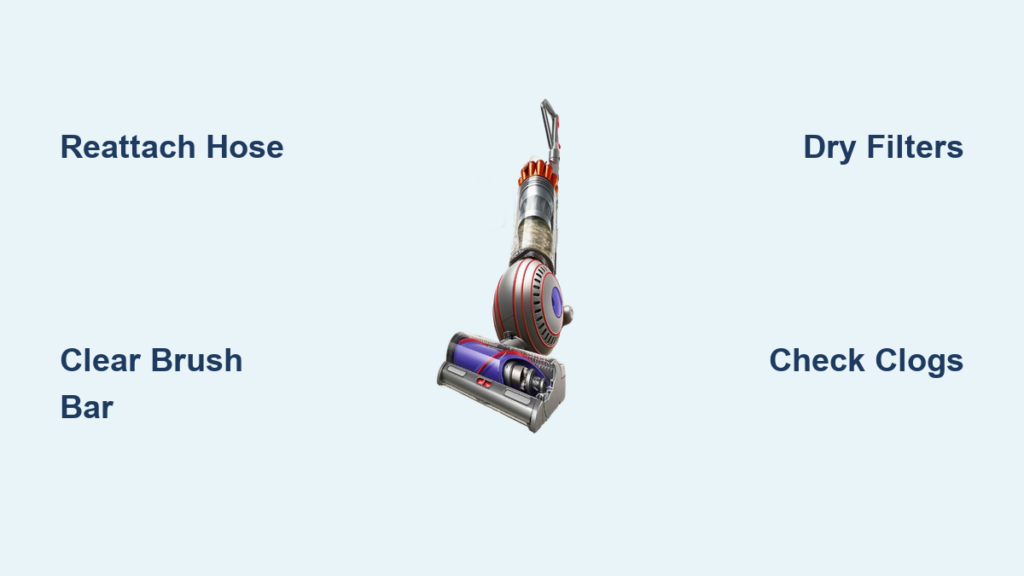
Your Dyson Ball Animal vacuum suddenly loses suction while cleaning pet hair, or the brush bar stops spinning mid-task. You’re left wrestling with debris instead of conquering it—a frustrating reality for many DC65 owners. As a powerful 245 Air Watt machine designed for carpets and hard floors, your Dyson Ball Animal shouldn’t quit on you. The good news? Most issues stem from simple, fixable problems like disconnected hoses or clogged filters. This guide walks you through diagnosing and repairing your Dyson Ball Animal vacuum in under 30 minutes, saving you costly service calls. You’ll learn exactly how to fix Dyson Ball Animal suction loss, brush bar failures, and overheating with basic tools and no prior experience.
Sudden performance drops often trace back to three critical failure points: the internal hose connection, filter maintenance, and brush bar obstructions. Ignoring these can turn minor issues into permanent damage—like a damp filter choking your motor or tangled hair burning out the brush bar motor. But with the right approach, you can restore peak performance using only a screwdriver and flashlight. By the end of this guide, you’ll confidently troubleshoot 90% of common Dyson Ball Animal problems. Let’s dive into the fixes that get your vacuum back in action.
Fix Sudden Suction Loss in Your Dyson Ball Animal (DC65)
If your Dyson Ball Animal loses all suction instantly, skip complex disassembly—the culprit is almost always the internal hose inside the canister. This clear corrugated hose connects the handle to the cyclone assembly, and when detached, air bypasses the entire system. You’ll notice zero suction at the floorhead or hose, even if the motor runs normally.
Reattach the Disconnected Canister Hose in 60 Seconds
- Unplug and empty the bin – Press the red release catch to remove the clear canister.
- Inspect the handle port – Look into the bin’s handle opening (where it clicks into the cyclone unit). You’ll see a white plastic nozzle.
- Secure the hose – The clear hose must click firmly onto this nozzle. If loose, push it on until you feel resistance. A visual gap or wobble means it’s not seated.
Critical detail: This hose detaches easily during bin emptying. After reattaching, test suction immediately—strong airflow confirms success. If suction remains weak, move to clog checks below.
Clear Blockages in the Wand and Hose Path
A partial clog causes gradual suction loss. Work backward from the tool end:
– Wand base: Disconnect the wand from the hose. Shine a flashlight into the wand’s lower opening—dirt jams here often. Use a straightened coat hanger to dislodge debris.
– Main hose: Press the quick-release collar and pull the hose from the handle. Check both ends for hair or coins. Run water through it if safe (avoid electrical components).
– Cyclone inlet: With the bin removed, look up into the cyclone shroud. Remove visible debris with tweezers.
Pro tip: Place your palm over the hose end while running the vacuum. Weak suction? The clog is downstream; no seal? Check hose connections first.
Repair a Non-Spinning Brush Bar on Dyson Ball Animal

A frozen brush bar leaves pet hair and debris untouched—a top complaint for DC65 owners. This isn’t usually a motor failure. In 95% of cases, hair and thread jam the brush bar ends, straining the belt until it slips or burns. You’ll hear a humming noise or smell hot plastic if ignored.
Clear Brush Bar Tangles in 5 Minutes
- Unplug and flip the floorhead – Lay it upside down on a flat surface.
- Cut obstructions – Use scissors or a seam ripper to slice hair/fibers wrapped around both brush bar ends. Pull debris outward (not toward bearings).
- Test rotation – Spin the bar by hand. It should move smoothly. Stiffness indicates hidden debris under the end caps—remove the bottom plate with a T10 Torx screwdriver to access.
Warning: Never force-spin a jammed bar. This strains the motor. If the belt is cracked or melted (visible through inspection windows), replace it—Dyson part #921134-01.
Stop Dyson Ball Animal Overheating and Automatic Shutdowns
Your vacuum cuts out after 10 minutes of use with a “clunk” sound? This thermal shutdown protects the motor from damage. A damp HEPA filter is the #1 cause—moisture from incomplete drying chokes airflow, overheating the motor within minutes.
Wash and Dry Filters Correctly
- Remove both filters:
– Pre-motor filter (purple foam): Slide out from the side handle compartment.
– Post-motor HEPA filter (white cylinder): Twist off the back panel. - Rinse under cold water – Squeeze gently until water runs clear. Never use soap—it degrades filter fibers. For stubborn dust, soak in 50/50 vinegar-water for 1 hour.
- Dry for 24+ hours – Place filters upright in a warm, ventilated area. Reinstalling damp filters causes immediate overheating. Test dryness by squeezing—no moisture should transfer to paper.
Key mistake: Owners reinstall filters after 2–3 hours, causing repeat shutdowns. Set a phone reminder for 24 hours.
Eliminate Burning Smells from Your Dyson Ball Vacuum
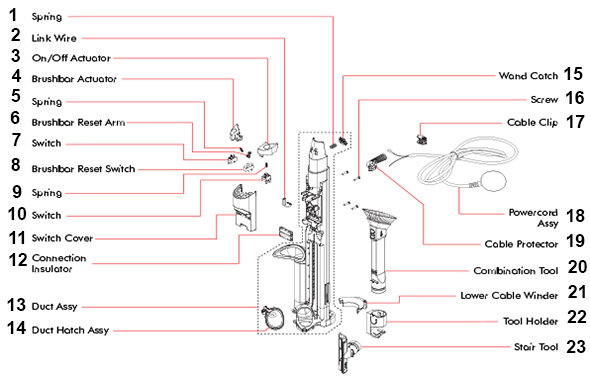
A burning odor means urgent action is needed. This isn’t normal “new vacuum” smell—it signals overheating components. Ignoring it risks permanent motor damage.
Diagnose the Source in 3 Steps
- Check the brush bar – Unplug and inspect for hair tangles. A jammed bar makes the belt smoke against the motor pulley.
- Verify filter dryness – Damp filters cause electrical overheating. Smell the HEPA filter—if musty, dry it longer.
- Inspect the belt – Remove the floorhead base plate. A glazed or split belt needs replacement (part #921134-01). If the motor housing smells hot but filters/hose are clear, unplug and seek professional help—this indicates electrical failure.
Unclog Your Dyson Ball Animal’s Hose and Wand in 5 Minutes
Clogs often hide in the wand’s base collar—a narrow passage where coins or large debris lodge. You’ll feel weak suction at the tool but strong motor power.
Target the Hidden Clog Zone
- Detach the wand – Press the wand release button and pull it from the hose.
- Examine the collar – Look into the wand’s lower opening (where it clicks into the hose). Shine a light—you’ll see debris blocking the airflow path.
- Dislodge with precision – Insert a thin, flexible probe (like a bent paperclip) through the collar holes. Avoid metal tools that scratch plastic.
Visual cue: If the wand’s internal mesh screen is caked in dust, rinse it under water and dry 24 hours.
How to Perform a Quick Suction Test on Dyson Ball Animal
Pinpoint failures in 2 minutes with this diagnostic:
1. Test at the hose end – Place your palm over the hose. Strong suction? Problem is upstream (wand/floorhead). Weak suction? Check internal hose or filters.
2. Attach the wand – If suction drops when adding the wand, the clog is in the wand base.
3. Reattach floorhead – No suction here? Inspect the brush bar housing for blockages or a jammed bar.
Pro move: Run the vacuum while holding the hose against a tissue. If it sticks instantly, suction is optimal—focus on floorhead issues.
Essential Tools for DIY Dyson Ball Animal Repairs
You don’t need a toolbox—just these 4 items:
– Philips #2 screwdriver: For standard screws on the bin and floorhead.
– T10 Torx bit: Opens security screws on the brush bar housing (common on DC65 models).
– Seam ripper: Safely cuts hair from brush bar ends without damaging bearings.
– Flexible probe: A straightened coat hanger clears deep clogs.
Skip expensive kits: Avoid “Dyson repair kits” on Amazon—basic hardware store tools suffice.
Final Checklist Before Calling Dyson Support
Before paying for service, verify these 5 fixes:
1. Internal hose connection – Is the clear hose clicked onto the white nozzle inside the bin? (Solves 60% of suction loss).
2. Filter dryness – Did both filters dry for 24+ hours after washing?
3. Brush bar clearance – Is all hair removed from bar ends? Spin it by hand to confirm free movement.
4. Clog scan – Did you check the wand base collar and hose connections?
5. Power test – Does another device work in the same outlet?
Most Dyson Ball Animal issues stem from maintenance oversights—not broken parts. By reattaching that internal hose, ensuring filters dry fully, and clearing brush bar tangles, you’ll restore your vacuum’s 245 Air Watt power. For persistent problems like electrical smells or seized motors, contact Dyson support—they cover motors for 5 years. But for now, grab your screwdriver and reclaim your clean floors. Your fix is closer than you think.

