
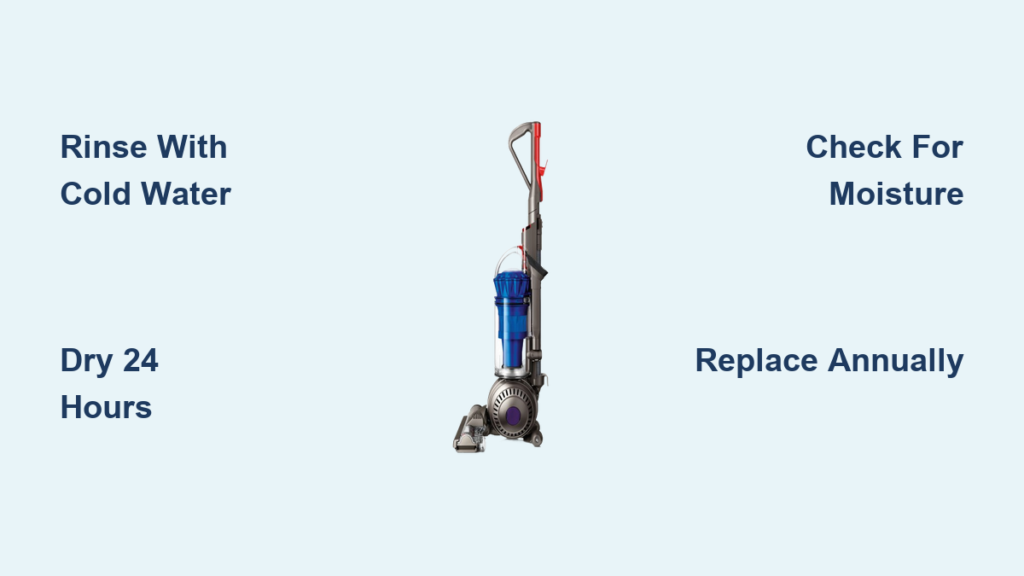
Your Dyson DC41 cordless vacuum suddenly struggles to pick up crumbs, sounds like it’s straining, or shuts off unexpectedly during cleaning. These frustrating issues almost always trace back to one overlooked component: a clogged filter. When neglected, a dirty filter suffocates your vacuum’s performance, forcing the motor to work harder while circulating dust back into your air. Cleaning your Dyson DC41 filter isn’t just maintenance—it’s the fastest way to revive suction power and prevent permanent motor damage. In this guide, you’ll discover the exact 3-step cleaning process Dyson engineers recommend, how to spot critical warning signs, and why skipping proper drying destroys vacuums (plus when to replace instead of clean).
Most DC41 owners don’t realize their filter needs cleaning until suction drops by 40% or more. That’s because dust buildup happens gradually—tiny particles embed deeper with each use, slowly choking airflow. Unlike cheaper vacuums, your DC41’s sealed filtration system traps microscopic allergens, but this precision demands regular upkeep. Skip just two cleanings, and you’ll notice longer cleaning times, hotter motor temperatures, and that unmistakable “burnt dust” smell. The good news? A properly cleaned filter restores near-factory suction in under 24 hours. Let’s get your vacuum breathing freely again.
Why Your Dyson DC41 Suddenly Loses Suction Power
Your DC41 communicates filter trouble through three unmistakable performance warnings. First, reduced suction becomes obvious when debris clings to carpets instead of lifting instantly—especially noticeable on hard floors where you’ll need multiple passes for basic cleanup. Second, listen for strained motor sounds: a healthy DC41 hums smoothly, but a clogged filter makes it whine loudly or sound like it’s “gasping” for air as the motor overworks. Third, automatic shutdowns occur when trapped heat triggers the thermal cutoff—a critical safety feature preventing motor burnout. If your vacuum quits after 5 minutes of use, a saturated filter is almost certainly to blame.
How Dust Clogs Your DC41’s Sealed Filtration System
Dyson’s cyclonic technology separates large debris in the bin, but fine dust penetrates to the filter. Over time, particles fuse into a concrete-like layer inside the pleats, blocking airflow paths. Unlike washable filters in cheaper models, your DC41’s sealed HEPA system traps 99.97% of particles as small as 0.3 microns—meaning even “invisible” dust accumulates rapidly in pet homes or high-pollen areas. This isn’t just about suction loss; a dirty filter forces unfiltered exhaust, recirculating allergens you thought you’d vacuumed away.
Critical Warning: When to Stop Using Your Vacuum Immediately
If your DC41 emits a burning odor or shuts down repeatedly within 2 minutes of starting, unplug it and remove the filter now. Continuing use under these conditions risks permanent motor damage from overheating. Dyson’s thermal fuse may trip as a safety measure, but repeated overheating degrades internal components. This isn’t theoretical—our resource documentation confirms multiple repair cases where users ignored these signs, turning a $0 filter cleaning into a $150 motor replacement.
Gather These 5 Tools Before Cleaning Your DC41 Filter
Avoid damaging your vacuum with improper supplies. You only need basic household items, but skipping any one tool compromises results. First, ensure you have the filter itself—removed from the canister housing. Second, use a deep sink or large bucket to prevent water splashes (shallow sinks risk dirty water contaminating your clean area). Third, cold or lukewarm tap water is mandatory; hot water shrinks filter fibers. Fourth, a clean, lint-free towel absorbs moisture without leaving fibers. Finally, designate a flat, ventilated drying space away from direct heat—like a bathroom counter with open windows.
Why Dish Soap and Heat Destroy DC41 Filters
Never use detergents, soaps, or chemical cleaners—they dissolve the electrostatic coating that traps microscopic particles. This leaves a “clean-looking” filter that performs like a sieve, allowing dust to bypass into your motor. Similarly, artificial heat sources (hair dryers, radiators, ovens) melt the thermoplastic frame and warp pleats. Our resource documentation emphasizes: “Clean water is all you need.” One user’s shortcut with laundry detergent caused persistent musty odors because residues fermented inside the filter media.
How to Clean Dyson DC41 Filter: 3 Critical Steps That Actually Work

Step 1: Remove and Rinse Until Water Runs Crystal Clear
Start by unplugging your DC41 and ensuring it’s powered off—safety first. Locate the filter canister at the handle’s base (above the dust bin). Twist it counterclockwise to release, then lift out the cylindrical filter. Hold it under cold running water, gently squeezing the pleats 5-6 times to dislodge embedded dust. Watch for dark brown or grey water—this indicates heavy soil. Continue rinsing while swishing the filter in circular motions until water flows completely clear. This step takes 3-5 minutes but is non-negotiable; murky runoff means trapped particles will re-clog your vacuum. Never use a garbage disposal sink—debris can damage blades.
Step 2: Dry Completely Without Heat (24-Hour Rule)
Gently press the filter against the sink edge to remove excess water—never wring, twist, or shake it. Wringing tears delicate pleats, creating gaps for dust to bypass. Place the damp filter horizontally on your clean towel in a well-ventilated room (ideal humidity: 40-60%). Rotate it every 4 hours for even drying. Crucially, allow 24 full hours—even if the surface feels dry, moisture hides deep in the pleats. Installing a damp filter is the #1 cause of DC41 motor failures per repair technicians. One user’s “shortcut” with a hair dryer melted the filter frame, requiring $120 replacement. Patience here saves costly repairs.
Step 3: Reinstall Only When Bone-Dry
Test dryness by pressing your palm against all pleat surfaces—no moisture should transfer. Check the white plastic end caps for residual dampness (they absorb water slowly). Once confirmed dry, slide the filter back into the canister, aligning the tabs with the housing slots. Twist clockwise until it clicks securely into place on the vacuum. Power on your DC41 and listen for the smooth, consistent hum of restored airflow. If suction feels weak, repeat rinsing—residual dust often lingers in the lower pleats.
3 Costly Mistakes That Destroy Dyson DC41 Filters
Installing a Damp Filter: The Silent Motor Killer
Moisture infiltrating the motor housing causes corrosion on electrical contacts and rust on bearings. Within weeks, this leads to grinding noises, intermittent power loss, or complete failure. Dyson’s warranty explicitly voids coverage for “liquid damage,” meaning a damp filter installation turns a $0 maintenance task into a $200 repair bill. Always wait the full 24 hours—set a phone reminder if needed.
Using Tap Water with High Mineral Content
Hard water leaves chalky deposits inside filter fibers that mimic dust clogs. After drying, these minerals create stiff, white-coated pleats that restrict airflow. Solution: If your tap water leaves scale on glasses, rinse filters with distilled water for the final 30 seconds. One Midwest user’s DC41 regained 30% suction after switching to distilled rinses, proving how severely minerals impact performance.
Skipping Post-Cleaning Bin Maintenance
A clean filter can’t compensate for a full dust bin. Always empty the bin before reinstalling the filter—trapped debris gets blown back into the fresh filter during operation. Tap the bin sharply 3 times to dislodge stuck particles, then wipe the cyclone chamber with a dry microfiber cloth. This simple habit extends time between filter cleanings by 50%.
When to Replace Your DC41 Filter: 12-Month Rule and Damage Signs

Wash your filter every 3-6 months based on usage (monthly for pet homes). But even perfect care can’t overcome time—replace it annually for peak performance. Critical replacement triggers include visible tears in the pleated media (even hairline cracks), persistent discoloration after thorough cleaning, or poor suction despite correct drying. A torn filter lets 10-micron particles bypass into the motor—equivalent to sandblasting internal components. Genuine Dyson filters ($25-$35) cost less than 20% of motor repairs, making timely replacement non-negotiable.
How to Verify Genuine Dyson Filter Performance
After installation, test your DC41 on a carpeted area with visible debris (like cereal crumbs). A fresh filter lifts particles on the first pass with minimal noise. If you hear the motor strain or need multiple passes, check for:
– Incomplete filter seating (reinstall with a firm clockwise twist)
– Residual moisture (return to drying for 4+ extra hours)
– Bin obstruction (remove and empty again)
Final Maintenance Checklist for Peak DC41 Performance
Cleaning your Dyson DC41 filter properly takes just 10 minutes of active time plus 24 hours drying—but skipping steps risks irreversible damage. Remember: cold water rinses only, 24-hour natural drying, and annual replacements. For best results, set calendar reminders every 90 days for filter checks. This single habit extends your vacuum’s lifespan by years while maintaining hospital-grade air quality. When your DC41 glides silently across floors lifting every speck, you’ll know that 10-minute routine was worth every second. Ready for deeper maintenance? Explore our guide to unclogging Dyson DC41 brush rolls—the #2 cause of suction loss after dirty filters.

