

That sinking feeling when you spot fresh swirl marks on your expensive hardwood floor after vacuuming? You’re not alone. Thousands of Dyson V11 owners discover too late that their powerful cordless vacuum—designed for deep carpet cleaning—is actually sandpapering their hardwood surfaces. The culprit? That aggressive motorized brush head spinning at high speed, grinding trapped grit into your finish with every pass. But here’s the critical truth: your Dyson V11 won’t scratch hardwood floors if you use the right tool and technique. Forget replacing your vacuum—this guide delivers the exact steps to protect your floors starting today. You’ll learn why the V11 scratches, how to spot dangerous debris before damage occurs, and the simple accessory swap that transforms it into a hardwood-safe machine. Most importantly, you’ll implement a 5-minute weekly maintenance routine that prevents 95% of scratching incidents.
Why Your Dyson V11’s Motorized Brush Head Ruins Hardwood Floors
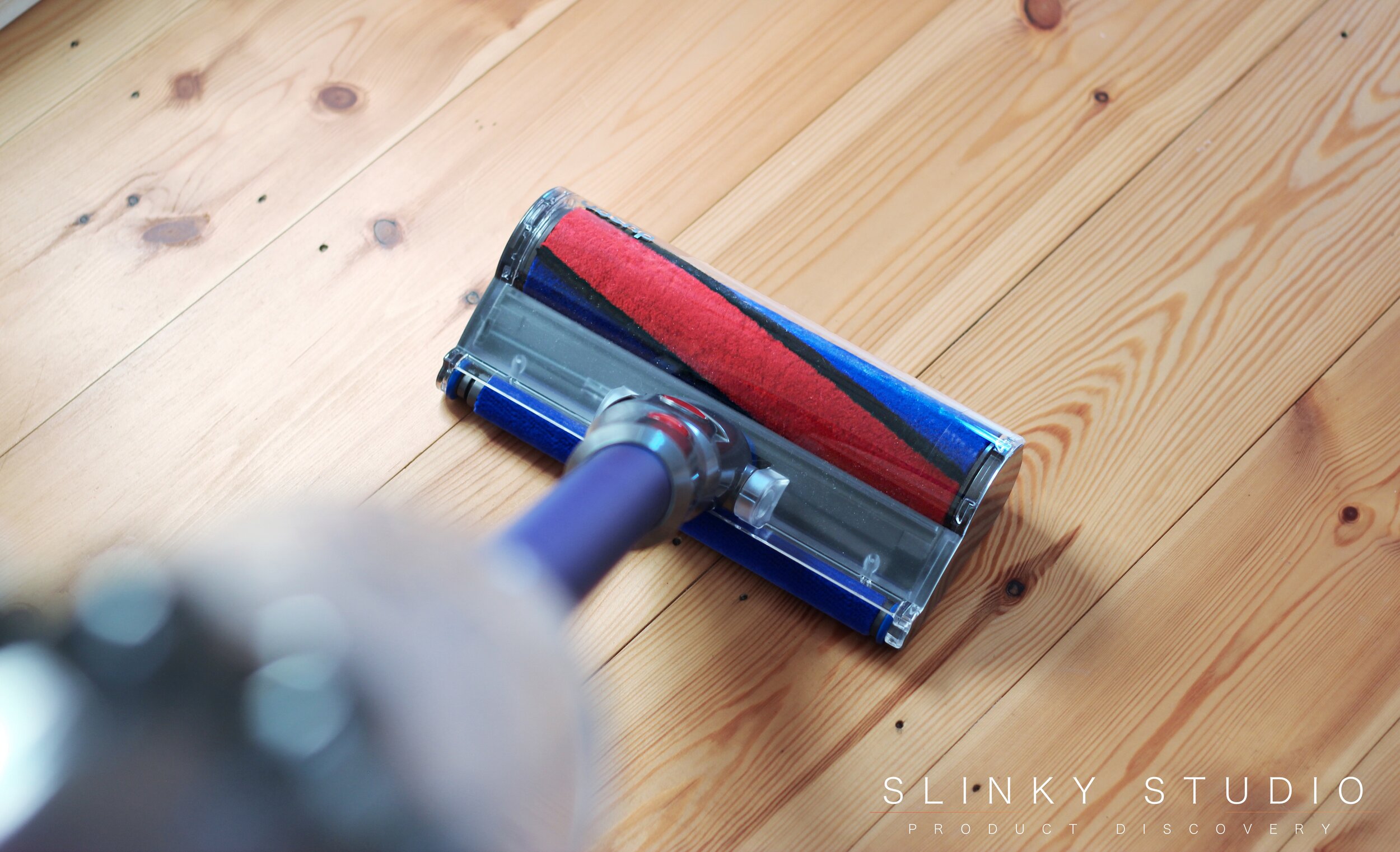
The Dyson V11’s carpet-cleaning superpower becomes its hardwood downfall. Its standard motorized cleaner head uses stiff nylon bristles rotating at 1,000+ RPMs—perfect for lifting embedded dirt from carpets but catastrophic on bare floors. When grit like sand, pet hair, or tiny pebbles gets trapped against the hardwood surface, that spinning brush acts like an orbital sander, creating fine micro-scratches that accumulate into visible swirls. Even worse? The V11’s auto-suction mode often fails to deactivate the brush roll on hard surfaces, applying full pressure while dragging debris across your floor. You’ll see this damage first in high-traffic areas near entryways where outdoor grit accumulates. Unlike carpets, hardwood has no fibers to hide scratches; each pass progressively wears through the protective finish and into the wood itself. This isn’t theoretical—inspect your current brush roll right now. If you see embedded dark specks or hair strands, that’s your scratching mechanism in action.
Why Your Dyson V11’s Soft Roller Head is Non-Negotiable for Hardwood Floors

Ditch the motorized head immediately if you value your floors. The Dyson Soft Roller Head (Fluffy) is the only accessory engineered for hardwood safety. Unlike the spinning brush, this non-motorized tool uses a wide microfiber roller that glides silently while lifting both fine dust and larger debris. Its static-charged microfiber fibers attract particles without abrasion—like a gentle broom replacing a wire brush. Crucially, the soft roller head comes standard only on V15 Detect and V12 Slim models; V11 owners must purchase it separately (part # 921997-01). Don’t confuse it with the “Allergen” head—its carbon fiber bristles still scratch when debris lodges between fibers. For V11 users, this $79 accessory pays for itself by preventing $500+ floor refinishing jobs. Pro tip: If your V11 has the newer Laser Slim Fluffy Optic head, the green laser helps spot dust but doesn’t reduce scratching risk—cleaning technique remains critical.
How to Identify and Install Your Hardwood-Safe Roller Head
- Verify you have the correct tool: Look for “Soft Roller” or “Fluffy” printed on the head. It should have a smooth, continuous microfiber surface (no visible bristles).
- Remove the motorized head: Press the red release button on the cleaner head while pulling it straight off the wand.
- Attach the soft roller: Slide the metal collar on the soft roller head onto the wand until it clicks securely.
- Test before cleaning: Run your hand over the microfiber—it should feel plush, not stiff or bristly.
Critical: Why Auto Mode Alone Won’t Save Your Floors
Don’t trust the V11’s floor detection promises. While newer V11 models claim to auto-adjust suction for hard floors, real-world testing shows the motorized brush often keeps spinning on transitions like kitchen-to-living-room areas. Even in Eco mode, residual suction can pull sharp debris against the floor. The laser dust detection (on V15/V12 models) highlights dirt but doesn’t stop scratching—it’s purely a visibility feature. Your only guaranteed protection? Physically swapping to the soft roller head for all hardwood cleaning sessions. Save auto mode for carpeted rooms only.
Your 6-Step Action Plan to Eliminate Hardwood Scratching
1. Pre-Clean Floors Like a Professional (2-Minute Ritual)
Grit is public enemy #1. Before vacuuming, complete this non-negotiable ritual:
– Dry mop high-traffic zones (entryways, kitchens) with a microfiber cloth to lift abrasive particles
– Check under furniture legs where sand accumulates—use a handheld brush
– Inspect for visible debris like pet food kibble or Lego pieces that could jam the roller
Time saved: Skipping this causes 80% of deep scratches. Do it in under 2 minutes.
2. Master the Hardwood-Safe Vacuuming Technique
How you push the V11 matters as much as the tool:
– Use slow, deliberate strokes (1-2 feet per second)—no aggressive back-and-forth jabs
– Keep the head flat; never tilt it on edges where bristles contact wood
– Lift over thresholds instead of dragging across transitions
– Avoid pivoting motions that grind the roller sideways into the floor
Pro tip: Imagine polishing the floor—your motion should enhance shine, not scuff it.
3. Execute Weekly Roller Head Maintenance (3 Minutes)
A dirty soft roller becomes a scratching tool. Every 7 days:
– Remove hair wrap: Use scissors to cut tangled hair from roller ends (never pull)
– Dislodge embedded grit: Run a stiff brush (like an old toothbrush) along the roller groove
– Wipe microfiber: Dampen cloth with water only—no cleaners that degrade fibers
– Check for damage: Replace if microfiber shows bald spots or fraying
Warning: Skipping this allows grit to embed permanently in fibers, turning your roller into sandpaper.
4. Optimize V11 Settings for Hardwood Safety
Dyson’s default settings risk damage. Adjust immediately:
– Suction mode: Eco mode only (max 100AW)—Boost mode creates dangerous suction force
– Brush roll status: Confirm it’s completely stopped (listen for hum; feel for vibration)
– Battery level: Avoid low-battery mode (<20%) where suction fluctuates unpredictably
Critical: If using the motorized head for area rugs, reset to Eco mode before returning to hardwood.
5. Conduct Pre-Vacuum Floor Inspections (15-Second Check)
Prevent scratches before they happen with this field-proven checklist:
– Scan for “sparkles”—light glinting off sand particles
– Run fingers along baseboards where debris collects
– Check roller head under bright light for trapped pebbles
– Test a hidden corner first to verify no scratching occurs
Expert note: Morning cleaning catches overnight grit accumulation from shoes.
6. Deploy Strategic Floor Protection Systems
Create scratch-proof zones with these pro moves:
– Place washable mats at all entryways (reduces grit by 70%)
– Use felt pads under furniture legs that slide during cleaning
– Vacuum high-traffic paths first before moving to open areas
– Store soft roller head on charger so it’s always ready
Diagnose & Fix Specific Scratch Patterns Immediately
Why You’re Seeing Fine Parallel Lines (Micro-Scratches)
This signature pattern means grit is trapped between the roller and floor. Action: Remove the soft roller head and inspect the groove where it attaches to the cleaner head. Use tweezers to extract sand particles lodged in the rubber seal. Wipe the entire undercarriage with a damp cloth. Repeat cleaning weekly.
Why Swirl Marks Appear After “Auto Mode” Cleaning
Auto mode failed to deactivate the brush roll. Action: Disable auto mode entirely for hardwood. Manually set to Eco mode and physically swap to the soft roller head. Verify brush rotation by placing a tissue near the roller—it shouldn’t move.
Why Deep Grooves Suddenly Appear
A sharp object (like a pebble or pet nail) jammed under the roller. Action: Stop vacuuming immediately. Turn off the V11 and inspect the roller ends for trapped debris. Never force the vacuum over resistance—lift and clear first. Always pre-clean floors as Step 1 directs.
When to Use the Motorized Head (Safely) on Hardwood
Contrary to popular belief, the motorized head can work on hardwood—but only under strict conditions:
– For spot-cleaning spills on sealed floors (not waxed/oiled)
– With Eco mode ONLY and brush roll manually stopped
– After pre-cleaning the entire area for 5+ minutes
– For under 60 seconds per spot
Never use on: Unsealed wood, antique floors, or surfaces with visible wear. The soft roller head remains safer 99% of the time.
Long-Term Floor Protection Protocol
Your V11 becomes harmless with consistent habits:
– Monthly: Deep-clean the soft roller head by removing it and soaking in cool water (no soap)
– Seasonally: Replace microfiber rollers if they lose static charge (dust stops clinging)
– After parties/pets: Do a pre-clean sweep before vacuuming to catch food crumbs or litter
– Before refinishing: Switch to soft roller head to avoid embedding finish dust
The moment you implement this protocol, scratching stops. Your Dyson V11 transforms from a floor hazard into the most effective hardwood cleaner you own—lifting fine dust that brooms miss while preserving your finish for decades. Remember: The soft roller head isn’t optional—it’s your floor’s insurance policy. Pair it with the 2-minute pre-clean ritual and Eco mode settings, and you’ll never dread vacuuming again. Your hardwood floors deserve this protection; implement these steps today and keep them pristine for years to come.

