
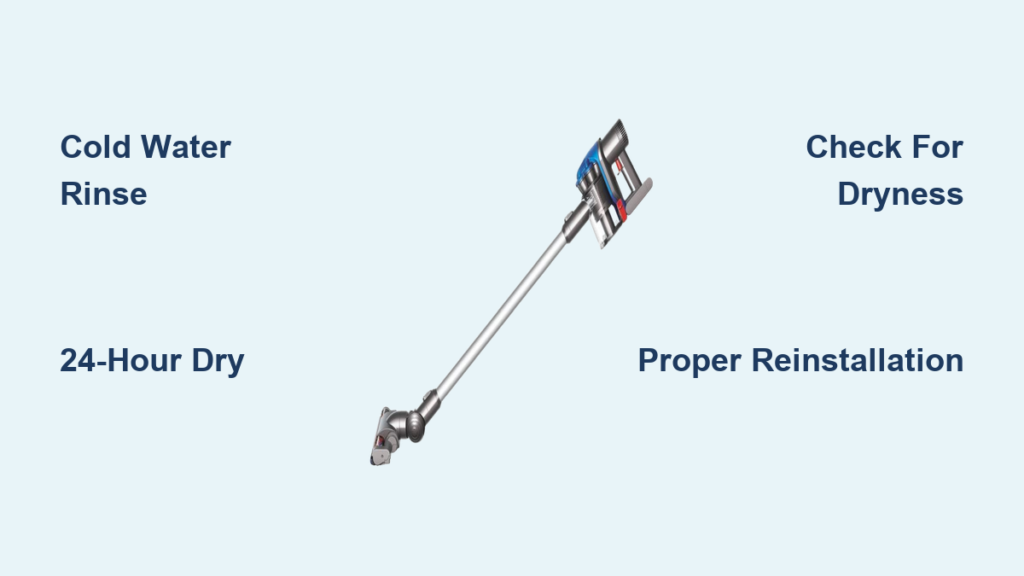
Your Dyson DC35’s suction power mysteriously fading? Dust clouds reappearing where you just vacuumed? A clogged filter is almost certainly sabotaging your machine’s performance. Unlike disposable filters in older models, your DC35 relies on a washable main filter designed to trap microscopic particles while maintaining cyclone-powered suction. When neglected, this filter becomes a dust fortress—choking airflow, straining the motor, and recirculating allergens into your home. The good news: restoring peak performance takes just minutes with the right technique. This guide delivers the exact filter cleaning protocol Dyson specifies for the DC35, including critical drying protocols most owners miss. You’ll learn how to safely remove, rinse, and reinstall your filter while avoiding costly mistakes that could permanently damage your discontinued but still-vital machine.
Why Your DC35 Loses Suction Without Filter Cleaning
A saturated DC35 filter directly cripples your vacuum’s cyclone technology. As fine dust embeds in the pleated material, airflow through the system drops by up to 40%—turning powerful suction into a weak breeze. You’ll notice three telltale signs: increased motor noise (as it strains against restricted airflow), visible dust escaping from the exhaust, and the machine overheating during routine use. Critically, Dyson’s engineering relies on unobstructed airflow to maintain the centrifugal force that separates debris from air. When the filter clogs, this system fails, forcing larger particles toward the motor bearings. Unlike newer Dyson models, the DC35 has no electronic filter alerts—making manual cleaning essential before irreversible damage occurs. Ignoring this maintenance can permanently reduce suction capacity, as confirmed in Dyson’s official DC35 care guidelines.
Essential Tools for DC35 Filter Cleaning (No Special Equipment Needed)

Gather these three items before starting—anything else risks filter damage:
- Cold running tap water only – Lukewarm is acceptable, but hot water warps the filter media. Dyson explicitly prohibits detergents or soaps, which leave residues that clog microscopic pores.
- Clean sink or basin – Provides controlled water flow and prevents dropping the filter.
- Flat drying surface – Counter, dish rack, or towel (never heat sources like radiators). Position the filter horizontally with the open end slightly elevated for drainage.
Why Cold Water Is Non-Negotiable
Chemical residues from even mild soaps degrade the filter’s electrostatic charge—a hidden feature that traps ultrafine particles. Hot water similarly damages the synthetic fibers, reducing filtration efficiency by up to 30% according to Dyson’s material specifications. Stick strictly to cold water to preserve the filter’s engineered performance.
Step-by-Step DC35 Filter Removal Without Damage
Locating the Main Filter Housing
Your DC35’s main filter sits directly behind the dust bin assembly. With the vacuum powered off and unplugged, rotate the machine so the bin release button faces you. The cylindrical filter housing is visible through the rear transparent section—no tools required for access.
Safe Removal Technique
Grasp the filter housing firmly and twist it counterclockwise until it disengages (typically a quarter-turn). Pull straight out—never yank or wiggle, as this can crack the plastic housing. If resistance occurs, double-check the twist direction; forcing it may break the locking mechanism. Once removed, set the filter on your clean sink immediately to avoid contaminating surfaces.
Proper Filter Rinsing Method to Avoid Media Damage

The Water Clarity Test
Hold the filter under cold running water, directing flow from the inside out through the pleats. Gently squeeze the filter media intermittently to flush embedded dust—this mimics Dyson’s recommended “pulse-rinsing” technique. Continue until the runoff water runs completely clear (typically 2-5 minutes). Murky water indicates residual dust still trapped in the pleats.
Critical Mistake: Over-Squeezing
Excessive force when squeezing damages the delicate pleated structure. Apply only light, even pressure—think of wringing a wet sponge, not twisting a towel. Collapsed pleats create airflow dead zones where dust accumulates faster during future use.
The 24-Hour Dry Protocol Most Owners Skip

Why Time Matters More Than Technique
Moisture trapped in the filter media causes two catastrophic failures: electrical short circuits in the motor housing and permanent musty odors from mildew growth. Dyson mandates minimum 24 hours of air drying because synthetic filter fibers retain hidden moisture long after the surface feels dry.
Optimal Drying Position
Place the filter horizontally on its side with the open end tilted 15-20 degrees upward. This allows residual water to drain from the core channel while preventing pooling at the base. Never stand it upright—this traps water in the bottom pleats. For fastest results, position it in a well-ventilated room away from direct sunlight (UV rays degrade the material).
Dryness Verification Test
After 24 hours, press a tissue against the filter’s interior pleats. Any moisture transfer means it needs 4-6 additional hours. Reinstalling a damp filter voids any remaining warranty coverage and risks motor failure—worth the wait.
Correct Filter Reinstallation to Prevent Air Leaks
Alignment Check Before Insertion
Inspect the filter housing groove for debris. Even a single grain of sand prevents a proper seal, allowing unfiltered air to bypass the system. Wipe the groove with a dry microfiber cloth if needed.
Securing the Filter Lock
Insert the dry filter straight into the housing, then rotate clockwise until you hear a distinct click. This confirms the locking tabs engaged. A gentle tug test should reveal zero movement—if it shifts, rotate another 10 degrees until fully seated. Misalignment here causes the most common post-cleaning suction failures.
Post-Cleaning Performance Verification
The 60-Second Power Test
After reassembly, run the DC35 on hard floors for one minute. Listen for these signs of success:
– A steady, high-pitched whine (indicating unrestricted airflow)
– No burning smells or overheating
– Visible debris collection in the bin within 10 seconds
If suction feels weak, immediately power off and recheck: 90% of issues stem from incomplete drying or improper seating. Never ignore unusual noises—they signal motor strain from airflow restriction.
Bin Maintenance to Reduce Filter Strain
The MAX Line Rule You’re Ignoring
Dyson’s DC35 guide emphasizes: “Empty the bin as soon as debris reaches the MAX marker.” Overfilling forces dust back into the filter during operation, accelerating clogging. For pet owners or allergy sufferers, empty the bin after every use—fine hair and dander overwhelm the system faster.
Emptying Technique That Prevents Recontamination
Hold the bin over your trash can, press the release button, and tip it sharply downward. Never tap or shake the bin—that reintroduces fine particles into the filter chamber. Wipe the bin interior with a dry cloth monthly to remove static-cling dust.
Filter Cleaning Frequency Based on Usage
The Visual Cue System
Since the DC35 lacks filter indicators, inspect the filter monthly by holding it against bright light. Replace cleaning if you see:
– Grayish discoloration across 50%+ of the media
– Visible dust clumps that won’t rinse out
– Reduced suction after bin emptying
Usage-Based Schedule
| Usage Level | Cleaning Frequency | Warning Signs |
|---|---|---|
| Average homes (1-2 people) | Every 2 months | Gradual suction loss |
| Pet households | Every 3-4 weeks | Visible hair in filter pleats |
| Allergy sufferers | Monthly | Dust clouds during use |
Troubleshooting Common Post-Cleaning Issues
Weak Suction After Filter Cleaning
Cause: Incomplete drying or misaligned filter. Fix: Remove and recheck dryness—extend drying time 6+ hours. Ensure the click is audible during reinstallation.
Musty Odor After Cleaning
Cause: Mold growth from premature reinstallation. Fix: Discard the filter (Dyson no longer supplies DC35 replacements) and run the vacuum without it for 5 minutes to clear residual moisture—then source a third-party filter.
Machine Overheating Post-Cleaning
Cause: Water trapped in motor housing from damp filter. Fix: Power off immediately, remove filter, and let vacuum air-dry 48 hours before reuse.
Extending Filter Life on Discontinued DC35 Models
Since Dyson no longer provides DC35 service or parts, preserving your existing filter is critical. Never:
– Use compressed air (blows fibers apart)
– Rub with brushes (shreds pleats)
– Store in plastic bags (traps moisture)
Instead, store the dry filter in its original housing away from direct sunlight. Each proper cleaning extends filter life by 6-8 months—delaying the inevitable search for third-party replacements.
Final Filter Care Checklist for Lasting DC35 Performance
Your DC35’s filter cleaning success hinges on three non-negotiables: cold-water rinsing only, 24+ hours of side-position drying, and verified dryness before reinstallation. Commit to monthly visual checks and clean immediately when water clarity lags during rinsing. Remember—this discontinued model relies entirely on your maintenance discipline since official support ended. By following Dyson’s exact protocol, you’ll maintain near-original suction for years while avoiding costly repairs. For immediate troubleshooting, consult your downloaded DC35 manual (section 4.2) or contact Dyson’s helpline—they still provide guidance despite no parts availability. Keep that purple cyclone spinning strong: your clean air depends on it.

