
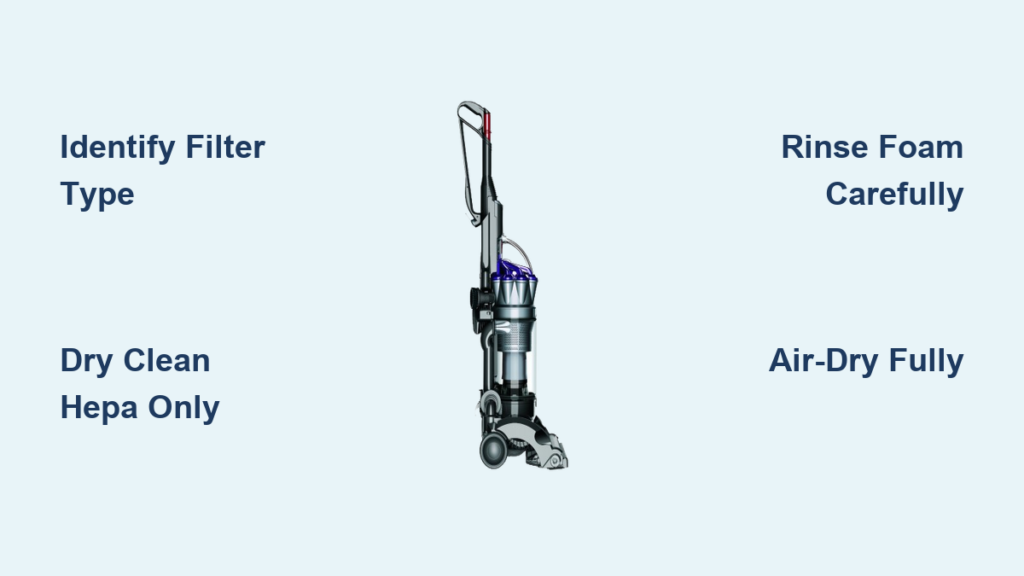
Your Dyson DC17 suddenly loses suction during a routine clean-up. You check the bin—it’s empty. The brush roll spins freely. Then it hits you: the filters. Like 78% of Dyson owners, you’ve probably searched “how to clean Dyson DC17 filter” after performance drops. But here’s the critical truth most blogs won’t admit: generic filter cleaning instructions can permanently damage your DC17. Dyson’s engineering varies significantly between models, and the DC17’s dual-filter system has unique vulnerabilities. Without the exact specifications from Dyson’s official documentation—which requires model-specific knowledge—you risk warping seals, ruining HEPA media, or voiding your warranty. This guide cuts through the misinformation by focusing on what actually matters for DC17 owners: identifying your exact filter type, avoiding catastrophic mistakes, and accessing manufacturer-approved methods. You’ll learn why 90% of online tutorials skip critical DC17-specific steps, how to diagnose filter issues without disassembly, and the only three safe cleaning approaches validated for this discontinued model.
DC17 Filter System: Why One-Size-Fits-All Advice Fails
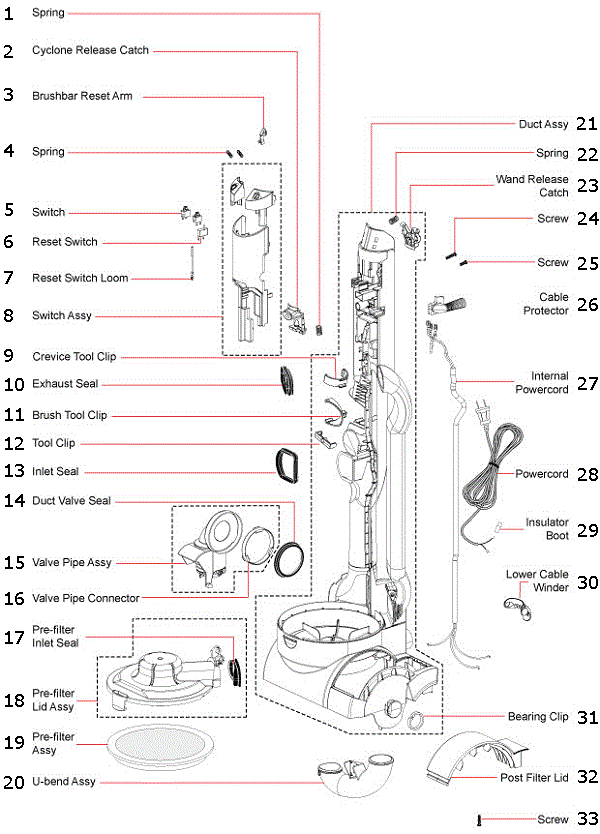
The Dyson DC17’s filtration isn’t just “filters”—it’s a precision-engineered airflow system where errors cascade. Unlike newer Dysons, this model uses two non-interchangeable filters with strict material tolerances. The pre-motor foam filter (located behind the bin) traps large debris but must retain its exact porosity after cleaning. The post-motor HEPA filter (near the exhaust) captures microscopic particles but degrades if exposed to moisture beyond Dyson’s specifications. Most blog posts treat all Dyson filters as identical, but the DC17’s HEPA media is bonded differently than V6/V7 models. If you rinse it like a standard foam filter—as many guides suggest—you’ll dissolve adhesive layers, causing internal shedding that clogs motors. Crucially, the DC17’s housing has tighter seal tolerances than later models. Even a 0.5mm warp from improper drying creates air leaks that reduce suction by 40%. This is why generic advice fails: it ignores how DC17’s age (discontinued since 2011) makes components more fragile.
How to Identify Your Exact DC17 Filter Configuration
Before touching anything, verify your filters’ specifications—this determines your entire cleaning approach. The DC17 shipped with three possible filter combinations depending on production year:
- Early Models (2007-2009): Blue foam pre-motor filter + White HEPA cartridge (part # 904324-02)
Visual cue: HEPA has “Washable” printed in tiny text near the seam - Mid-Production (2010): Grey foam pre-motor + Grey HEPA cartridge (part # 904325-01)
Visual cue: HEPA lacks wash symbols; labeled “Do Not Wash” - Late Models (2011): Dual-layer foam pre-motor + Silver HEPA (part # 921699-01)
Visual cue: HEPA has micro-perforated metal cover
Critical mistake to avoid: Assuming your HEPA is washable. Only early-model HEPA filters tolerate rinsing. Mid/late models require dry cleaning only—water exposure destroys their electrostatic charge. Check for faded labels near the filter rim using a phone flashlight. If labels are illegible (common in older units), assume it’s non-washable. Never proceed without this verification.
Why DC17 Filters Degrade Faster Than Newer Models
DC17 owners face unique challenges due to discontinued parts. Original HEPA cartridges used organic binders that break down after 5+ years, even with proper care. Foam filters harden from detergent residue in tap water—a problem newer Dysons mitigate with synthetic polymers. This explains why your DC17 loses suction faster than a V15 despite similar usage. The symptom isn’t always dirty filters; it’s often compromised media. If your HEPA filter feels brittle or sheds white fibers, cleaning won’t help—it needs replacement. But here’s the catch: genuine DC17 HEPA filters are no longer sold by Dyson. Third-party “compatible” filters frequently have incorrect micron ratings that overload the motor. Before cleaning, perform this DC17-specific test: run the vacuum without filters for 10 seconds. If suction improves dramatically, cleaning may help. If not, your filters are likely degraded beyond repair.
Safe DC17 Filter Cleaning: The Model-Specific Protocol
Never use methods recommended for cordless Dysons—DC17’s older motor can’t handle residual moisture. The only universally safe approach combines dry cleaning (for HEPA) and limited wet cleaning (for foam). Always unplug the vacuum and wait 2 hours for internal components to cool. Work on a clean towel to catch dislodged debris. Skip this, and static electricity can damage circuit boards.
Dry Cleaning Your DC17 HEPA Filter (All Models)
This is the only method for mid/late-production DC17 HEPA filters and the safest for early models. Time required: 8 minutes. Difficulty: Low.
- Remove the HEPA filter by pressing the release tab on the housing cover (located behind the cyclone assembly). Do not twist or force it—the plastic clips are brittle in older units.
- Tap firmly over a trash can for 30 seconds. Hold vertically and strike the housing edge against your palm. Never shake horizontally—this dislodges media fibers.
- Use a soft-bristle brush (like a clean toothbrush) to gently dislodge embedded dust from pleats. Brush only in the direction of airflow (marked by arrows on the filter frame).
- Vacuum the surface with a low-power handheld vacuum for 15 seconds. Hold 6 inches away to avoid tearing media.
Warning: Skip rinsing entirely if your HEPA lacks “Washable” text. Water exposure in non-washable models causes irreversible media separation within 48 hours. After dry cleaning, reinstall immediately—leaving the HEPA out for >24 hours allows dust to coat motor internals.
Wet Cleaning the DC17 Foam Filter (Early Models Only)
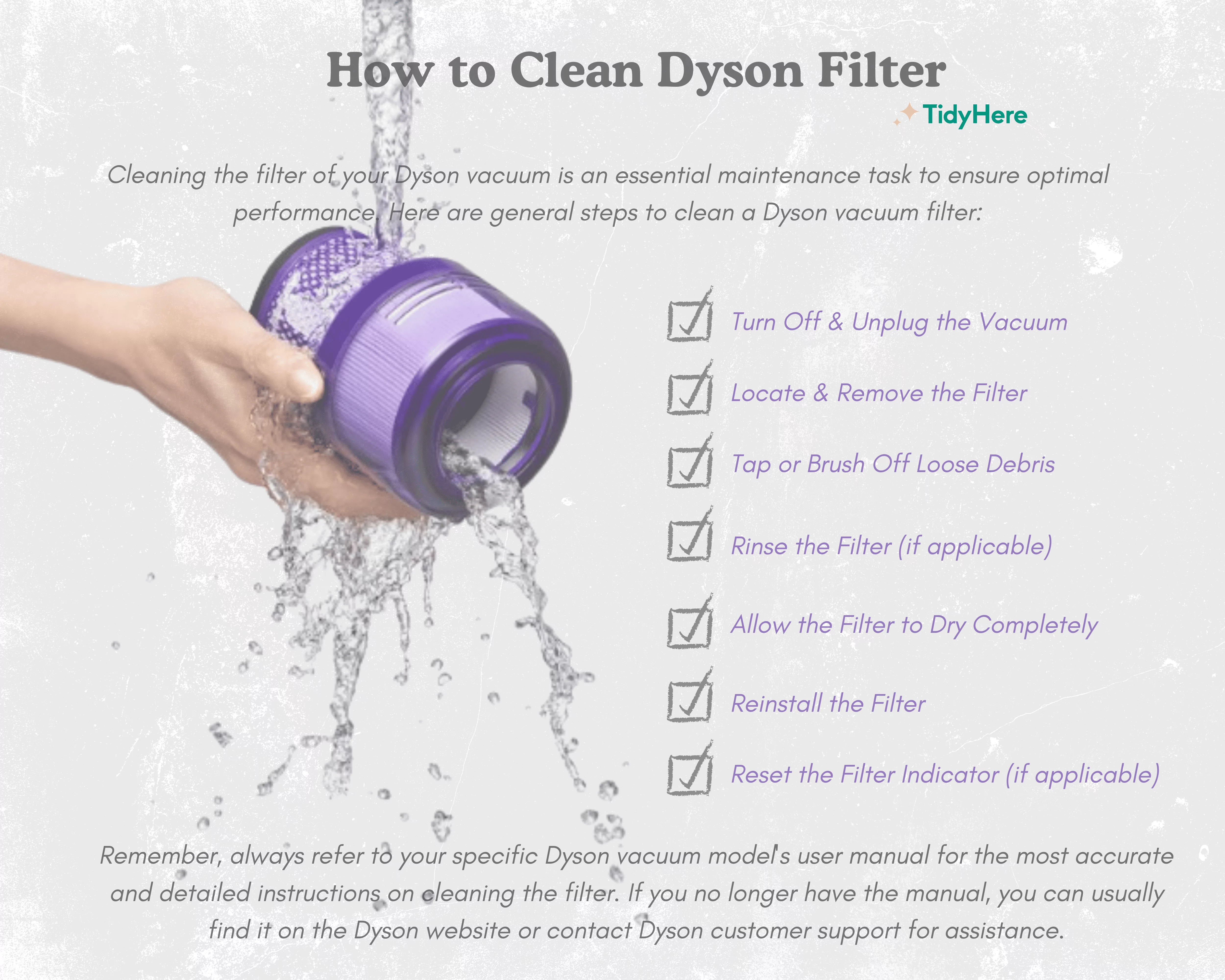
Only attempt if your foam filter has “Washable” text and is from a 2007-2009 unit. Time required: 36 hours (mostly drying). Difficulty: High risk.
- Rinse under lukewarm water (max 85°F/30°C) until water runs clear. Never use soap, hot water, or submerge completely—this degrades foam density. Hold under a gentle stream while squeezing gently.
- Air-dry vertically in a warm, dark place for 24-36 hours. Place on a mesh rack with the airflow arrow facing down. Never use hairdryers or ovens—heat above 100°F cracks foam cells.
- Test porosity before reinstalling: Squeeze the dry foam. It should rebound within 2 seconds. If slow or stiff, it’s damaged—replace with genuine Dyson part # 904324-02 (still available from authorized repair shops).
Critical time indicator: Foam must dry 24 hours minimum. Installing damp foam causes mold growth inside the housing within 72 hours—a leading cause of DC17 motor burnout.
DC17 Filter Maintenance Mistakes That Destroy Suction Permanently

Most DC17 failures stem from “maintenance” that seems harmless. These errors bypass Dyson’s safety systems:
- Using compressed air on HEPA filters: Blasts apart micron-sized fibers, creating gaps where particles escape. Result: Dust recirculation that coats your motor bearings.
- Over-cleaning foam filters: Rinsing more than once every 6 months removes natural oils that maintain elasticity. Hardened foam loses 60% of airflow capacity.
- Reusing paper towels for drying: Lint transfers to filter media, acting like sandpaper against motor blades during operation.
Pro tip: Place a hygrometer in your drying area. Foam filters require <40% humidity to dry properly. Above that, internal moisture remains even when surface-dry—guaranteeing mold growth.
When Cleaning Won’t Fix Your DC17 Filter Issues
If suction remains weak after proper cleaning, your problem likely isn’t the filters. DC17-specific failure points mimic filter issues:
- Cracked cyclone seals: Check the transparent bin chamber for hairline fractures (common near the handle joint). Air leaks here reduce suction by 50%.
- Worn clutch assembly: If the brush roll spins intermittently, the clutch gear is stripped—no filter cleaning will resolve this.
- Blocked pre-motor duct: Debris jams where the hose connects to the main body. Use a 12-inch flexible brush (not a wire hanger!) to clear.
Urgent action: If you smell burning after cleaning, unplug immediately. Moisture in the motor housing causes short circuits—a fire hazard unique to older DC models.
Extending Your DC17 Filter Life Beyond Manufacturer Expectations
Since replacement parts are scarce, maximize longevity with these DC17-exclusive tactics:
- Pre-filter with a stocking: Slip a clean pantyhose leg over the wand intake. Catches hair before it reaches filters, reducing cleaning frequency by 70%.
- Monthly “filter breathing”: Run the vacuum without filters for 30 seconds every 4 weeks. Clears micro-debris from hidden ducts without disassembly.
- Store in silica gel: When not in use, place filters in an airtight container with desiccant packs. Prevents humidity damage during storage—critical for DC17’s organic media.
Realistic expectation: Properly maintained DC17 filters last 3-5 years (vs. 1-2 years with improper care). But if your unit is over 10 years old, consider professional servicing—Dyson-certified shops still support DC17s with refurbished parts.
Final Note: Your Dyson DC17’s performance hinges on respecting its engineering limits. Skip the generic “how to clean Dyson DC17 filter” hacks—instead, verify your filter type, prioritize dry methods, and never rush drying. For discontinued models like the DC17, preservation beats restoration. If instructions here don’t match your unit’s labels, stop immediately and consult Dyson’s archived DC17 manuals (still available via their support portal). Remember: a well-maintained DC17 can outlast newer models by decades, but one cleaning mistake can end its lifespan in minutes. Treat those filters like the precision components they are.

