
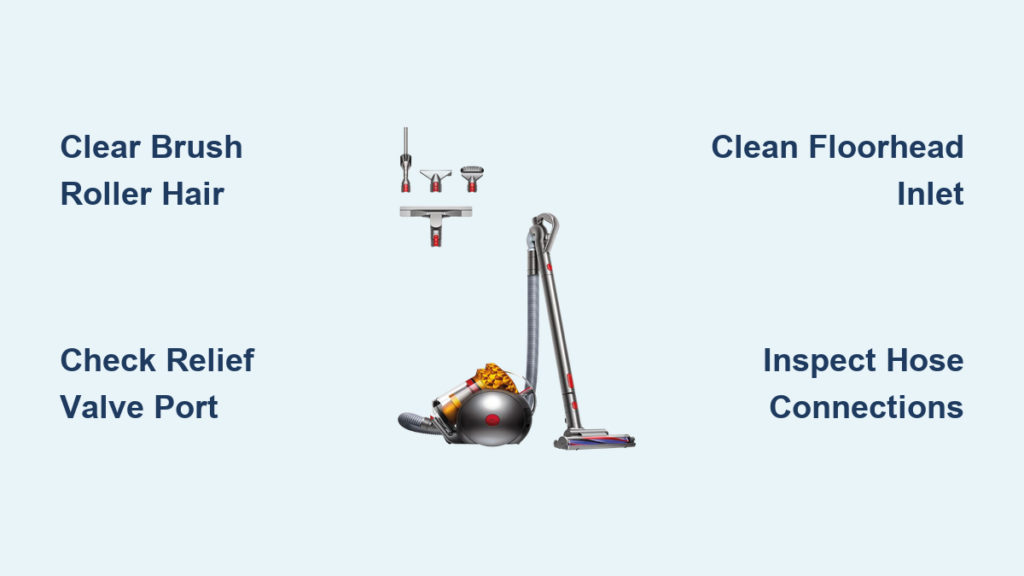
That deafening roar from your Dyson vacuum isn’t just annoying—it’s a critical warning sign. When your machine shifts from a powerful hum to a jet-engine-like suction noise during floor cleaning mode, your Dyson is literally struggling to breathe. Dyson vacuum making loud noise issues almost always stem from one culprit: a severe airflow blockage forcing your vacuum’s relief valve to activate. This isn’t motor failure—it’s your machine’s built-in safety system screaming for help as air violently rushes through a small black port to prevent overheating. The good news? Over 90% of these ear-splitting problems vanish with systematic cleaning. Skip the panic and expensive repairs—this guide delivers the exact steps to silence that roar and restore quiet, powerful cleaning in under 30 minutes.
You’ll recognize this specific Dyson vacuum making loud noise problem by its telltale pattern: full suction when using hose attachments (like crevice tools), but weak or nonexistent airflow at the floorhead. Cover that black circular port near the dustbin with your finger, and the noise stops instantly—confirming a blockage is triggering the relief valve. Left unaddressed, this strain can damage seals and motors over time. But don’t replace your vacuum yet. By methodically checking five critical zones—from the brush roller to hidden internal ports—you’ll pinpoint and eliminate the obstruction causing that alarming sound. Let’s get your Dyson back to whisper-quiet operation.
Why Your Dyson’s Relief Valve Creates That Jet-Engine Roar

That unmistakable Dyson vacuum making loud noise isn’t random—it’s physics in action. Your machine’s black circular relief valve (usually near the dustbin) is a pressure-release hatch designed to open when airflow drops below 15 kPa. When a major blockage—like a sock, dense hair clump, or compressed carpet fibers—jams the floorhead or wand, suction pressure spikes past 22 kPa. The valve instantly snaps open, creating a narrow air tunnel where massive volumes of air violently rush in. This isn’t “normal operation”—it’s your vacuum’s emergency response to prevent motor burnout, and it sounds like a miniature tornado.
Crucially, this symptom reveals where the blockage lives. If hose attachments work perfectly but floor cleaning mode triggers the roar, the obstruction is always in the floorhead-to-wand path—not the motor or main hose. The relief valve only activates when the primary airflow path is fully blocked, forcing air through this emergency port. Ignoring it risks permanent seal damage from constant over-pressurization. But here’s the fix: restoring unobstructed airflow below 20 kPa lets the valve close silently. No tools needed yet—just your hands and a flashlight.
How to Confirm a Blockage (Not Motor Failure)
Before disassembling anything, run these two diagnostic tests to confirm your Dyson vacuum making loud noise stems from a blockage. This eliminates unnecessary repairs and saves 20+ minutes of work.
Test Suction Modes Separately
Unplug your vacuum and detach the floorhead. Turn it on in hose mode using only the wand and a crevice tool. If suction feels strong (holds paper firmly against the tool), your motor and main hose are functional—proving the blockage is isolated to the floorhead path. Now reattach the floorhead. If the roar returns only during floor cleaning, the obstruction is confirmed in the lower airflow path.
The Finger Test for Instant Diagnosis
Locate the small black circular port (about 1 inch wide) on your Dyson’s body near the dustbin. With the vacuum running in floor mode, firmly cover it with your thumb. If the loud roar stops immediately while suction at the floorhead remains weak, you’ve 100% confirmed a blockage. Why? You’ve manually closed the relief valve, forcing the machine to pull air through the intended path—but the clog is still there. This test is foolproof: no blockage means no valve activation and no noise change when covered.
Step-by-Step: Clearing Floor Head Blockages (The #1 Cause)

Over 70% of Dyson vacuum making loud noise cases originate here. Hair, thread, and carpet fibers wrap around the brush roller axle so tightly they seal the entire air inlet. This takes 5 minutes with basic tools.
Removing Hair from the Brush Roller
Unplug your vacuum and flip the floorhead over. Use a Phillips screwdriver to remove the soleplate (the plastic undercarriage). You’ll see hair and string coiled like a steel cable around both ends of the brush roller. Never pull straight—this strains bearings. Instead, cut through the hair layers with scissors near the axle ends, then unwind debris clockwise. Remove all fibers from the roller’s grooves and the inlet channel above it. Pro tip: Spray the axle with rubbing alcohol to dissolve sticky residue before reassembling.
Clearing the Floor Head Inlet Channel
With the brush roller removed, shine a flashlight into the rectangular air inlet slot at the front of the floorhead. Look for compacted dust boulders or small objects (like LEGO pieces) wedged deep inside. Use a straightened wire coat hanger bent into a small hook to gently dislodge debris—never force it deeper. If you see light through the channel when holding it against a window, airflow is restored. Reattach the soleplate only after verifying zero obstructions.
Step-by-Step: Checking Wand and Hose Connections
If floorhead cleaning didn’t silence the roar, move upward. Wand joints and hose bends trap debris that’s invisible during casual use.
Inspecting the Wand for Hidden Debris
Detach the wand from both the floorhead and main body. Hold it vertically and peer through one end toward a bright light. A blockage appears as a dark shadow. Critical check point: Examine the wand’s lower connector where it meets the floorhead. Debris often jams in the rubber gasket groove here. Use a cotton swab dipped in vinegar to clean gasket channels—dried dirt here creates micro-blockages that trigger the relief valve.
Clearing Hose Blockages Without Damage
Remove the hose completely. Hold it horizontally and shake vigorously—if you hear debris rattling, you’ve found the culprit. For stubborn clogs:
1. Submerge the hose in warm, soapy water for 10 minutes to loosen grime
2. Feed a plumbing snake (or flexible bottle brush) through from the wand end
3. Rinse thoroughly and air-dry for 24 hours before reattaching
Never use a vacuum cleaner hose attachment—this can melt internal fibers.
Critical: Cleaning Filters and Internal Access Points

Clogged filters are the silent second cause of Dyson vacuum making loud noise. A saturated HEPA filter acts like a cork, forcing air through the relief valve even with clear tubing.
Why Clogged Filters Cause Loud Noise
Your Dyson’s pre-motor filter (below the dustbin) and post-motor HEPA filter (at the exhaust) must breathe freely. When packed with fine dust, airflow drops below 18 kPa during floor mode, triggering the valve. Test this: run your vacuum without filters installed. If the roar stops, filters are the issue. Always reinstall dry filters—wet filters cause immediate blockage.
Accessing the Clear Bin and Cyclone Assembly
Remove the dustbin and locate the “clear access door” behind it—a small plastic panel snapped into the cyclone housing. Pop it open to reveal the cyclone air channels. Tap the assembly firmly over a trash can to dislodge compacted dust. Use a soft brush to clean the 15+ narrow channels at the top—this is where fine debris creates “invisible blockages” users miss. Reassemble only when channels are completely clear.
When to Seek Professional Help
If roaring persists after clearing all zones, two rare issues remain:
– Seal failure: Cracked rubber gaskets in the wand path (check for light leaks)
– Internal obstruction: Debris lodged past the cyclone housing (requires factory tools)
Stop disassembling immediately—forcing components risks snapping plastic clips. Contact Dyson support with your model number; they’ll confirm if your machine qualifies for free warranty service (most blockage-related damage isn’t covered, but seal replacements often are).
That relentless roar from your Dyson vacuum making loud noise is your machine’s lifeline—not its death rattle. By methodically clearing blockages from the brush roller to hidden cyclone channels, you’ve restored the 20 kPa airflow threshold that keeps the relief valve silent. Prevention is simple: clean your floorhead after every use (hair wraps in 3 minutes!), wash filters monthly, and never vacuum large debris. Your Dyson’s designed for 15+ years of quiet operation—when it roars, it’s not broken. It’s begging you to clear its airway. Now that you know its language, you’ll never fear that sound again. For model-specific visuals, check Dyson’s official maintenance guides—your quiet clean is just one blockage away.

