
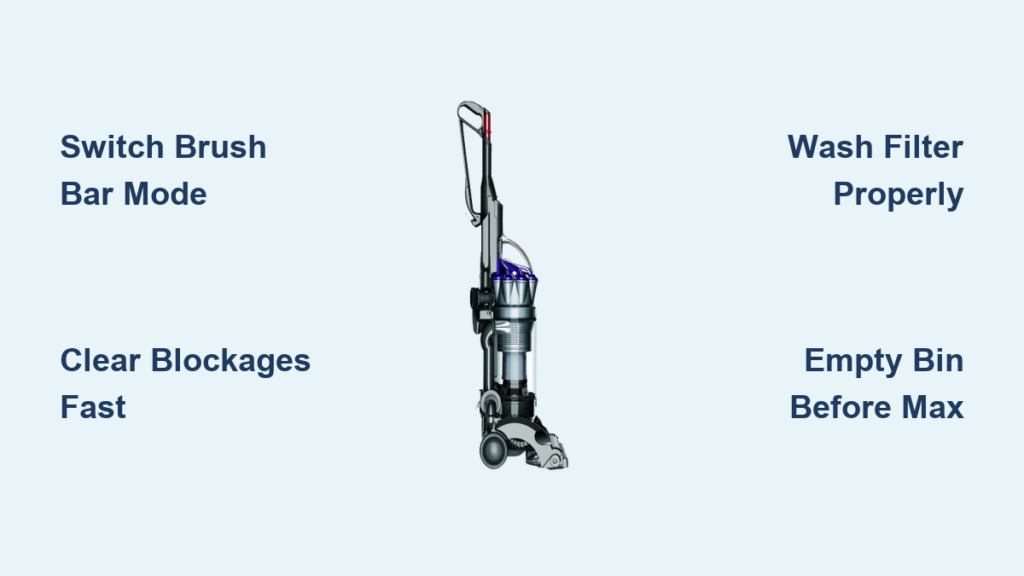
That sinking feeling when your Dyson DC17 suddenly loses suction during a quick clean-up? You’re not alone. Despite Dyson discontinuing official service and parts for this reliable workhorse, thousands still depend on its powerful cleaning. Knowing exactly how to use Dyson DC17 features correctly makes the difference between mediocre results and effortless deep cleaning. This guide cuts through the confusion with actionable steps verified by Dyson’s own documentation. You’ll learn precise brush bar switching techniques, emergency blockage fixes, and filter care that restores lost suction—keeping your aging machine performing like new. Forget generic advice; we focus on the specific quirks of your DC17 model.
Unlike newer Dyson vacuums, the DC17 relies on manual operation rather than smart sensors. Its signature “Ball” technology provides unmatched maneuverability around furniture legs and tight corners, but only if you understand its tilt mechanism. When the handle lowers nearly parallel to the floor, the machine automatically disengages the brush bar—perfect for cleaning under low couches. Crucially, Dyson no longer supplies replacement parts or repairs for this model, making your maintenance skills essential for extending its lifespan. By the end of this guide, you’ll confidently switch between surface types, clear clogs in under two minutes, and implement a filter care routine that prevents 90% of suction issues.
DC17 Surface Switching: Carpet vs. Hard Floor Mode
Your DC17’s rotating brush bar is designed specifically for embedded carpet dirt. Leaving it running on hard surfaces like tile or wood causes unnecessary wear and can scatter debris. The critical how to use Dyson DC17 technique involves activating the brush bar shutoff button—located on the handle near the trigger—before transitioning between surfaces. Press this button once for hard floors; a second press reactivates it for carpets. You’ll hear the brush bar disengage with a distinct click followed by reduced motor noise.
Why Your Brush Bar Won’t Spin on Carpet
If the brush bar remains stationary despite carpet settings, immediately check for these common issues:
– Hair or thread jam: Turn the machine on its back. Use scissors to cut tangled fibers wrapped around the brush bar ends (never pull—they’ll tighten).
– Automatic safety lock: The brush bar cuts off if the vacuum tips beyond 45 degrees. Return it upright and press the shutoff button twice.
– Worn drive belt: Visible through the soleplate grille, a frayed or snapped belt requires replacement. While Dyson no longer supplies official parts, third-party belts (model #904124-01) remain available.
Pro Tip: After vacuuming long-haired rugs, spend 30 seconds checking both brush bar ends. A single hair strand can wind tighter with each use, eventually straining the motor. Keep a seam ripper clipped to your hose for instant tangle removal.
Clearing Blockages in Under 5 Minutes
Loss of suction is the #1 DC17 complaint—and 80% of cases stem from blockages. Before panicking, perform this targeted blockage check sequence. Always unplug the machine first—safety is non-negotiable with older models. Start at the cleaning head: remove the soleplate by twisting the yellow tab counterclockwise. Inspect the brush bar housing for visible debris like coins or bobby pins.
Hose and Wand Clog Removal Technique
If the bin inlet looks clear, proceed to the wand and hose:
1. Detach the wand from the cleaner head
2. Hold it vertically and drop a coin through—any obstruction stops its fall
3. For stubborn clogs: Insert the crevice tool handle into the wand’s elbow joint (the most common blockage point) and push firmly
4. Check the hose connection at the bin. A kinked hose reduces suction by 70%
Critical Mistake to Avoid: Never use wire coat hangers. They puncture the flexible hose lining, causing permanent suction leaks. The crevice tool’s rigid plastic handle is the only safe implement.
Filter Maintenance That Restores Suction Power

Contrary to common belief, your DC17’s filter requires washing—not just tapping. Dyson’s official guidance states: “Rinse under a cold tap until water runs clear. Leave to dry fully (at least 24 hours) before refitting.” Skipping this step causes the #1 reason for permanent suction loss: compressed, caked-on dust. Replace filters every 6 months, or quarterly in pet-heavy homes.
Correct Filter Washing Procedure
Follow these exact steps to avoid mold growth:
1. Twist the filter counterclockwise to remove from the bin
2. Hold under cold running water, gently squeezing the foam (never scrub)
3. Continue until流出 water is completely clear—this takes 2-5 minutes
4. Place filter on a clean towel in a well-ventilated area (not in direct sunlight)
5. Wait minimum 24 hours before reinstalling—damp filters restrict airflow
⚠️ Warning: Never operate with a wet filter. Moisture damages the cyclone assembly and creates mold spores in your airflow. Set phone reminders for filter washes every 2 months.
Bin Emptying Protocol for Maximum Airflow
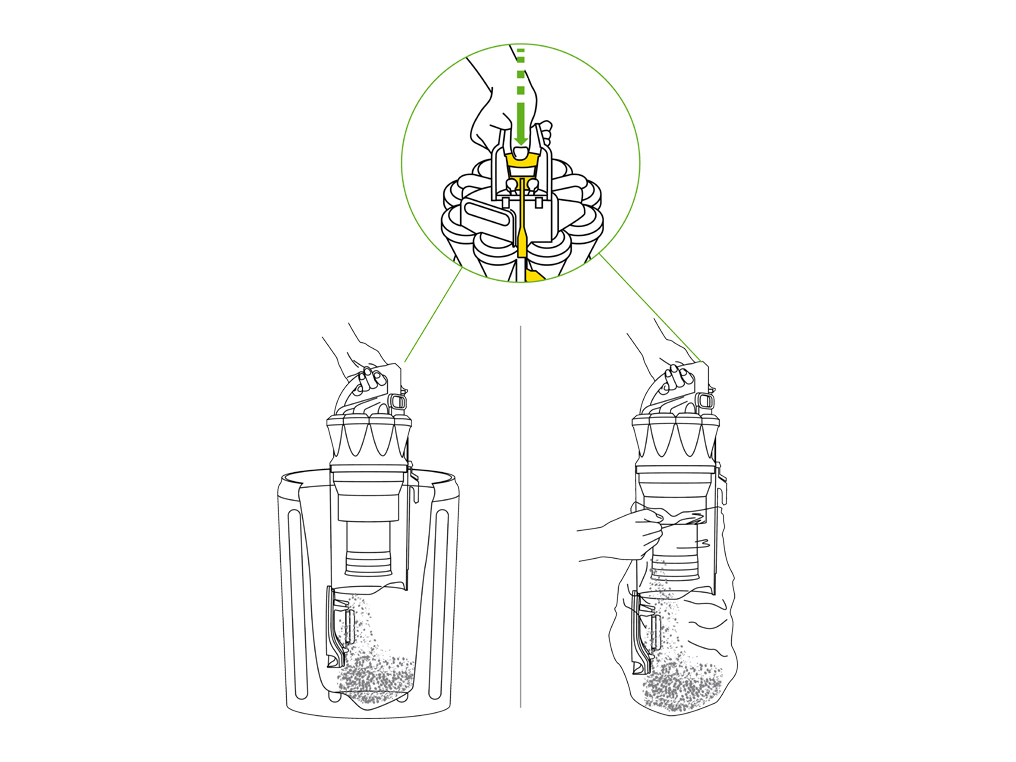
Overfilling destroys suction efficiency. Your DC17’s bin has a critical MAX fill line—debris past this point blocks the cyclone’s airflow path. Empty the bin before it reaches capacity, especially when vacuuming fine dust like drywall or flour.
One-Step Bin Emptying Technique
- Stand over a trash can with the bin facing downward
- Press the red bin-release button while simultaneously twisting the clear bin counterclockwise
- The entire bottom plate drops open—no touching dirty debris
- Wipe interior with a dry microfiber cloth (never use water)
Pro Tip: Empty the bin after every cleaning session. Residual dust cakes inside overnight, making next-time emptying messy and reducing capacity.
Tool Attachment Hacks for Stairs and Tight Spaces
The DC17’s tool storage system often confuses new users. The wand must be fully extended and locked (you’ll hear a snap) before attaching tools. For above-floor cleaning:
– Stairs/upholstery: Click the 2-in-1 stair tool directly into the wand handle
– Baseboards/car vents: Use the combination dusting brush/crevice tool—wider end for dusting, narrow end for crevices
– Under furniture: Lower the handle to floor position then attach the crevice tool
Critical Setup Step: Always disconnect the hose from the wand before extending the telescopic section. Forcing extension with the hose attached cracks the plastic collar.
Emergency Suction Fix When Power Drops

If suction plummets mid-clean, skip guesswork with this diagnostic flow:
1. Check bin fill level—empty if near MAX line
2. Inspect filter—if discolored gray, wash immediately
3. Examine brush bar—spin manually; resistance indicates hair jam
4. Test without tools—attach wand directly to cleaner head to rule out blockages
Time-Saver: Keep a “DC17 Emergency Kit” clipped to your vacuum: seam ripper, microfiber cloth, and spare filter. Most suction issues get resolved in <3 minutes with these on hand.
Long-Term Care to Extend DC17 Lifespan
Since Dyson no longer services this model, proactive maintenance is non-optional. Implement these habits immediately:
– Monthly: Wash filter and inspect brush bar for wear
– Quarterly: Check hose for internal cracks (shine a phone light through it)
– Biannually: Replace filter (third-party filters like “Dyson DC17 HEPA” on Amazon)
– After pet hair sessions: Perform immediate brush bar inspection
Critical Warning: Never store the DC17 upright without engaging the parking brake. The constant pressure on the brush bar mechanism causes premature wear. Always lock it in the reclined position using the foot pedal.
When to Seek Third-Party Repair Help
While Dyson USA (1-866-693-9766) still answers DC17 questions, they can’t provide parts. For motor issues or broken handles:
– Contact independent repair shops specializing in vintage appliances
– Search eBay for “DC17 used parts”—many sellers test components
– Avoid universal replacement belts—they often snap under DC17 torque
Pro Tip: Film a 10-second video of the issue before calling repair shops. Mechanics diagnose DC17 problems faster from sound/visual cues than verbal descriptions.
Your Dyson DC17 wasn’t designed to be disposable. By mastering these specific how to use Dyson DC17 techniques—from precise brush bar switching to scientifically timed filter drying—you transform an unsupported machine into a decade-long cleaning partner. Start tonight: empty the bin before MAX fill, wash that filter properly, and clear the brush bar of hidden hair tangles. These three actions alone resolve most suction complaints. Remember, the secret isn’t in the machine—it’s in your maintenance rhythm. Set recurring calendar alerts for filter washes and brush bar checks, and your DC17 will keep delivering that signature Dyson power long after its official support ends. For visual reinforcement, watch Dyson’s official YouTube tutorials—they still host DC17-specific content despite discontinued support.

