
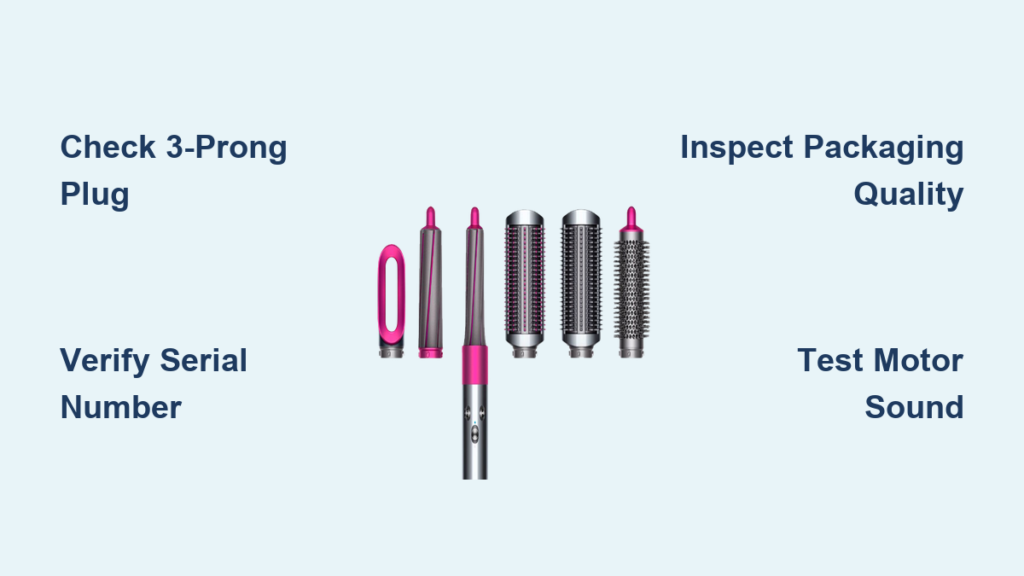
That too-good-to-be-true Dyson Airwrap deal you found online might actually be too good to be true. Thousands of consumers unknowingly purchase counterfeit Dyson Airwrap stylers each year, only to discover they’ve wasted hundreds of dollars on a potentially dangerous imitation. These fake devices not only deliver subpar performance but can pose serious fire hazards due to inferior electrical components. If you’re wondering how to know if Dyson is fake, this guide delivers the concrete verification methods you need before making your purchase.
Counterfeit Airwraps have become so sophisticated that even experienced buyers struggle to identify fakes at first glance. The difference between a genuine Dyson Airwrap and a counterfeit isn’t just about performance—it’s about safety, longevity, and getting what you paid for. By the end of this guide, you’ll have a complete toolkit to verify any Dyson Airwrap’s authenticity through physical inspection, serial number verification, and performance testing—saving you from costly mistakes and potential hazards.
Decode the Power Cord and Plug

Your first and most reliable indicator of authenticity lies in the power cord and plug, especially for North American models. This is where counterfeiters most often cut corners while genuine Dyson products maintain strict manufacturing standards.
Why this matters: The power cord isn’t just a component—it’s a critical safety feature that counterfeit manufacturers frequently get wrong. A compromised cord can lead to electrical hazards, including potential fire risks.
Genuine vs. Counterfeit Power Cords
Examine the plug closely before purchasing. Authentic Dyson Airwrap cords for North American models feature a three-prong grounded plug (NEMA 5-15P standard) manufactured by SEBA Cable. Look for a small but distinct protrusion near the plug base—that’s a strain relief feature designed to prevent cord damage from accidental tugs. The plug itself should feel substantial, with perfectly molded plastic and securely embedded prongs that don’t wiggle.
Counterfeit cords often reveal themselves immediately. Watch for these red flags:
– Only two prongs instead of three (missing the grounding pin)
– Absence of the strain relief bump near the plug
– Noticeably lighter weight with flimsy, thin plastic
– Loose or wobbly prongs that move when touched
– Shorter cord length than the standard 6-foot genuine version
Pro tip: Gently bend the cord near the plug. A genuine Dyson cord will resist kinking and return to its original shape, while counterfeit cords often crease permanently or feel stiff and brittle.
Verify the Serial Number
Your most powerful weapon against counterfeits is the 10-digit serial number. Unlike packaging or cosmetic features that can be replicated, the serial number connects directly to Dyson’s manufacturing database—making it nearly impossible for counterfeiters to fake successfully.
Step-by-Step Verification Process
-
Locate the serial number: Find the engraved 10-digit code on the main body of the Airwrap, typically near the power cord entry point. Genuine units have deeply etched serial numbers, not stickers that could be transferred between devices.
-
Access official verification: Go directly to Dyson’s website—never trust a seller’s “verification” screenshot. Navigate to their warranty registration or support page.
-
Enter the serial number: Type it carefully. A genuine Airwrap will be recognized immediately, allowing you to register the product and activate your warranty. If the system rejects the number, shows it as already registered, or indicates it doesn’t match your model, walk away.
Warning: Some sophisticated fakes use recycled serial numbers from legitimate products. If the serial number verifies but other aspects seem off, contact Dyson customer service directly with the number for additional verification.
Scrutinize Packaging and Documentation
The unboxing experience reveals crucial authenticity clues that counterfeiters struggle to replicate consistently. Genuine Dyson packaging reflects the brand’s premium quality standards from the moment you receive the box.
Packaging Red Flags
Examine these critical elements before opening the box:
– Printing quality: Authentic boxes feature crisp, high-resolution printing with perfect color registration. Counterfeit boxes often have blurry logos, mismatched colors, or text that smudges when lightly rubbed.
– Cardboard quality: Genuine packaging uses thick, rigid cardboard that maintains its shape. Fake boxes feel flimsy and may warp easily.
– Barcode verification: The barcode on the box must match the serial number on the device itself. Mismatches are an immediate red flag.
Inside the box, check:
– Manuals and paperwork: Genuine documentation uses high-quality paper with professional printing, region-specific language, and clear safety information. Counterfeits often feature poor translations, low-resolution images, or missing pages.
– Accessory organization: Authentic Airwraps have precisely fitted compartments for each attachment. Counterfeits often have loose-fitting inserts or haphazard organization.
Assess Build Quality and Materials

When you hold a genuine Dyson Airwrap, the premium construction is immediately apparent. Counterfeits compromise on materials and precision engineering to cut costs.
Physical Inspection Checklist
Before turning the device on, conduct this hands-on inspection:
– Weight and balance: Genuine units feel substantial (approximately 1.8 pounds) with balanced weight distribution. Counterfeits often feel unnaturally light or top-heavy.
– Surface finish: Run your fingers over the body. Authentic Airwraps have a consistent matte finish without visible seams, mold lines, or flashing (excess plastic from manufacturing).
– Attachment connections: Genuine magnetic attachments snap into place with precise, confident alignment. Counterfeit attachments often feel loose, wobbly, or misaligned.
– Color consistency: All components should match perfectly in color and texture. Counterfeits frequently have mismatched shades between the main body and attachments.
Pro tip: Shake the unit gently near your ear. A genuine Airwrap should be silent, with no internal rattling. Counterfeits often contain loose components that create noise when shaken.
Test Performance and Sound
The true test of authenticity happens when you turn the device on. Genuine Dyson Airwraps deliver consistent, reliable performance that counterfeiters cannot replicate due to inferior motors and engineering.
Performance Verification Steps
When testing the Airwrap:
1. Listen to the motor sound: A genuine unit produces a consistent, relatively quiet hum that remains stable across all settings. Counterfeits often emit high-pitched whines, grinding noises, or inconsistent motor sounds that change unexpectedly.
2. Feel the airflow: Genuine Airwraps deliver powerful, focused airflow that increases smoothly with each speed setting. Counterfeits typically have weak, inconsistent airflow that may sputter or change dramatically between settings.
3. Test heat distribution: Genuine units provide even heating without hot spots. After 30 seconds on high heat, run your hand around the barrel—temperature should feel consistent. Counterfeits often have uneven heating with noticeable hot and cold zones.
4. Check heat-up time: Authentic Airwraps reach set temperature in 3-5 seconds and maintain it consistently. Counterfeits take longer to heat up and may cycle between hot and cold.
Warning: Never leave a suspected counterfeit Airwrap unattended while testing. Inferior electrical components can overheat dangerously.
Analyze Price and Seller Source
Your purchase source provides the strongest initial indicator of authenticity. If the price seems too good to be true, it almost certainly is.
Authorized Retailer Verification
Before purchasing, confirm the seller’s authorization:
– Official channels: Only buy from Dyson’s website, authorized retailers like Best Buy or Target, or verified department stores.
– Online marketplace caution: Be extremely wary of third-party sellers on Amazon, eBay, or social media marketplaces. Even “fulfilled by Amazon” listings can contain counterfeits.
– Price reality check: Genuine Airwraps maintain consistent pricing around $599-$650. Deals below $400 should raise immediate suspicion.
Pro tip: Visit Dyson’s official website and check their “Where to Buy” section to verify if a retailer is authorized before making your purchase.
Final Verification Checklist Before Buying
Before completing your purchase, run through this 10-second authenticity check:
– Serial number verification: Did you check it on Dyson’s official site?
– Plug inspection: For North America, does it have a proper 3-prong plug with strain relief?
– Packaging quality: Is the box rigid with crisp printing and no spelling errors?
– Weight test: Does it feel substantial and well-balanced in your hands?
– Price reality: Is the price suspiciously low compared to authorized retailers?
What to Do If You Bought a Fake Dyson Airwrap
If you discover you’ve purchased a counterfeit:
1. Stop using it immediately—counterfeit electronics pose serious fire hazards
2. Document everything with photos of the device, packaging, and purchase receipt
3. Report to the seller and payment provider for potential refunds
4. Contact Dyson’s anti-counterfeit team with your findings
5. File reports with the FTC and consumer protection agencies
Genuine Dyson products come with a 2-year warranty and dedicated customer support—counterfeits offer neither. When in doubt about how to know if Dyson is fake, always err on the side of caution and purchase only from authorized retailers. The peace of mind and safety of a genuine Dyson Airwrap far outweigh any temporary savings from a suspiciously low-priced alternative. Remember, authenticating your Dyson isn’t just about getting what you paid for—it’s about protecting yourself from potentially dangerous counterfeit electronics.

