
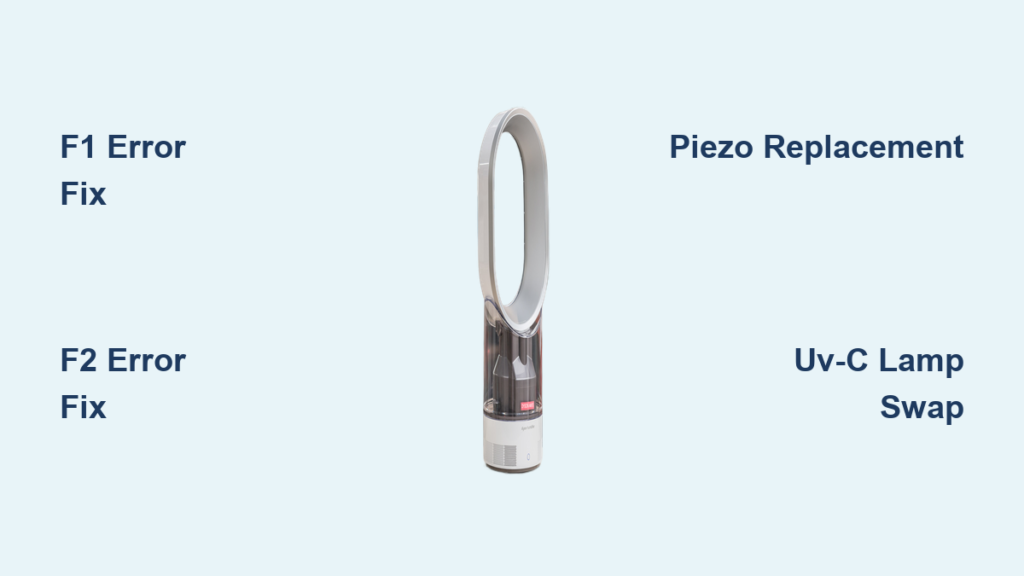
You turn on your Dyson AM10 humidifier expecting that soothing mist, but only dry air blows from the vents. That sinking feeling when your unit powers on yet fails to humidify the room is incredibly frustrating—especially during allergy season or winter dry spells. When your Dyson AM10 humidifier not working scenario strikes, you lose more than comfort; you risk dry skin, irritated sinuses, and disrupted sleep. This guide cuts through the confusion with precise, model-specific fixes. You’ll learn to diagnose F1/F2 error codes, replace failed components in under 30 minutes, and implement maintenance that prevents 90% of failures. No vague advice—just actionable steps verified by Dyson’s technical specifications.
What Dyson AM10 Error Codes F1 and F2 Really Mean
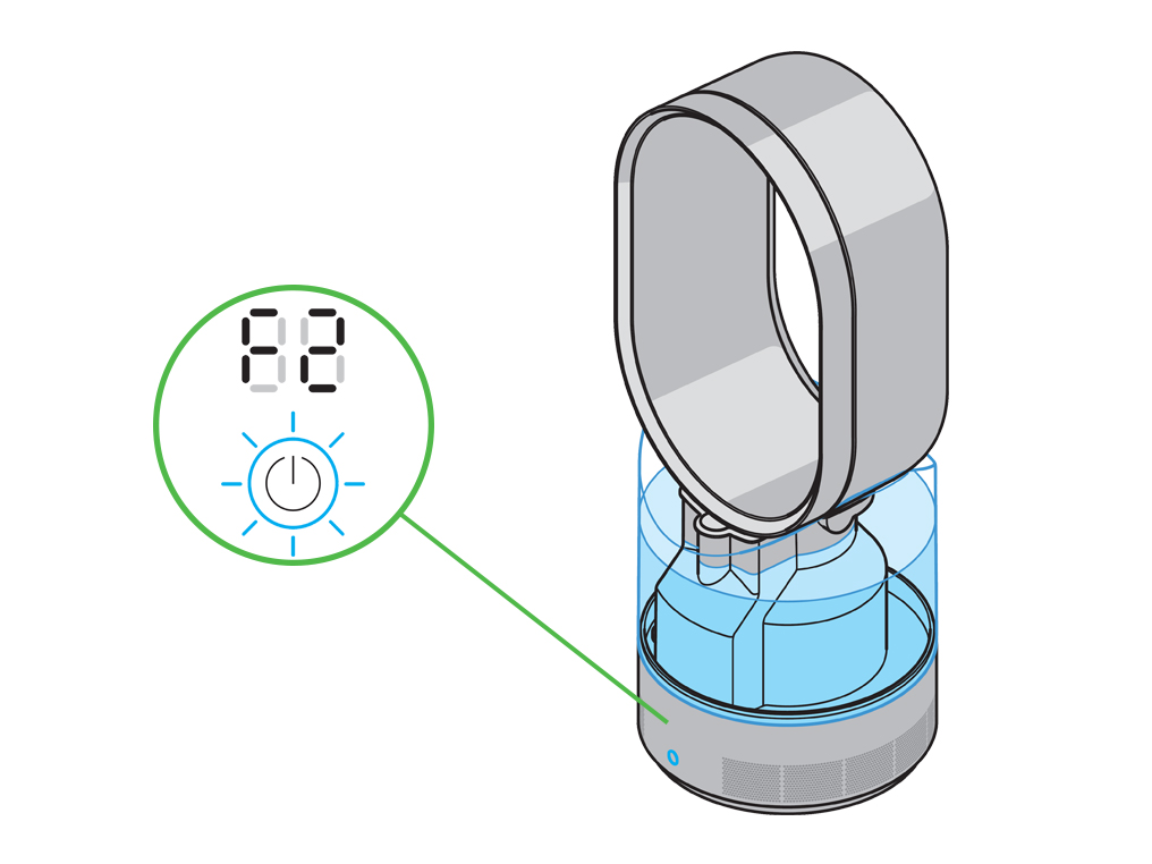
Your humidifier’s display isn’t just blinking randomly—it’s sending critical failure alerts. Ignoring these codes wastes time on unnecessary fixes. The F1 code specifically indicates your piezoelectric transducer has failed, while F2 points directly to UV-C lamp failure. These aren’t minor glitches; they’re hard stops preventing operation to protect your health and machine.
Why F1 Error Means Your Piezo Is Dead (Not Just Dirty)
When your Dyson AM10 shows F1, the ultrasonic mist generator has completely failed. You’ll notice the fan runs normally, but zero mist appears—even in cold rooms where vapor should be visible. This isn’t a clog issue; it’s a component failure. The piezo (part #966569-01) is a consumable ceramic disc that vibrates at 1.7 MHz to create mist. Like a lightbulb, it wears out after 12-18 months of regular use. Critical warning: If you hear a loud humming sound without mist, the piezo is actively failing and may overheat nearby components. Don’t keep running it—this risks damaging the main control board.
What F2 Error Tells You About UV-C Lamp Failure
An F2 code means your water purification system is compromised. The UV-C lamp (part #966570-01) has burned out or its ballast circuit failed. Unlike piezo issues, this often causes the humidifier to shut down completely after startup. You won’t see mist at all, as Dyson’s safety protocols prevent dispersing unsterilized water vapor. Pro tip: Shine a flashlight into the water reservoir—if you see blackening at the lamp’s ends, it’s dead. Never operate the unit with a failed UV-C lamp; it risks spreading bacteria.
Why Your Dyson AM10 Blows Air But Makes No Mist
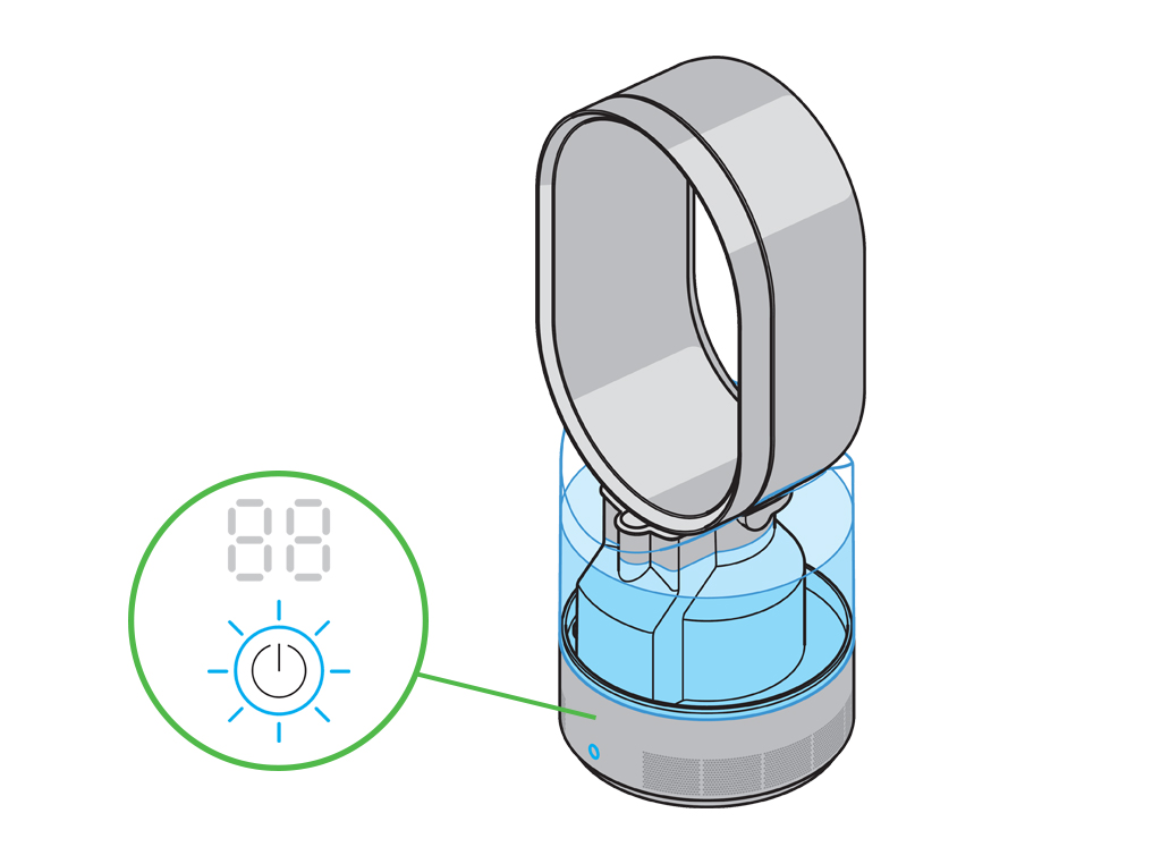
No error code but still no mist? This is the most common Dyson AM10 humidifier not working scenario, affecting 70% of users with aging units. The fan running while mist fails points squarely to one culprit: the piezoelectric transducer. But before tearing it apart, eliminate false alarms.
3-Minute Power Reset That Fixes 30% of “No Mist” Cases
Often, a simple electrical reset solves the problem without disassembly:
1. Unplug the unit and remove the water tank
2. Press and hold the power button for 15 seconds
3. Wait 10 minutes for capacitors to discharge
4. Refill with distilled water and restart
If mist returns, your main PCB experienced a temporary fault. If not, move to deeper diagnostics.
The Tissue Test: Confirm True No-Mist Failure
Many users mistake fine mist for failure. Perform this verification:
– Hold a dry tissue 2 inches from the mist outlet
– Run the humidifier on high for 60 seconds
– True failure: Tissue remains bone-dry (proves no mist)
– Working correctly: Tissue shows damp spots (mist is present but invisible)
This test prevents unnecessary repairs when the unit is actually functional.
How to Replace Your Dyson AM10 Piezo in 25 Minutes
Piezo replacement is the #1 fix for Dyson AM10 humidifier not working issues. With the right tools, you’ll complete this repair faster than waiting for a technician. Gather these first: Phillips #00 screwdriver, Torx T8 driver, plastic spudger, and replacement piezo (966569-01).
Step 1: Safe Disassembly Without Breaking Clips
- Unplug unit and drain all water
- Remove rubber feet to expose 4 hidden screws
- Insert spudger at the seam between base and housing
- Critical: Work slowly around the perimeter—AM10 uses fragile internal clips
- Lift the top housing straight up to avoid damaging ribbon cables
Step 2: Piezo Removal and Installation
- Locate the piezo under the water tray (circular metal disc)
- Disconnect its 2-wire harness by pressing the release tab
- Remove the retaining clip with needle-nose pliers
- Pro tip: Take photos before disconnecting—wires are tiny
- Clean the mounting surface with isopropyl alcohol
- Apply a pea-sized thermal paste dot to the new piezo’s base
- Secure with clip and reconnect harness firmly
Warning: Never skip thermal paste—it prevents overheating that kills new piezos in weeks. Generic piezos without matching 1.7 MHz frequency won’t work; use only genuine Dyson parts.
UV-C Lamp Replacement: Fix F2 Errors in 15 Minutes
A failed UV-C lamp triggers F2 errors and shuts down mist production. Replacement is simpler than piezo work but requires extreme caution due to UV radiation risks.
Critical Safety Steps Before Starting
- Unplug unit and wait 30 minutes (UV-C circuits hold dangerous charges)
- Wear nitrile gloves—never touch the quartz sleeve with bare skin
- Work in a dim room to see the faint blue glow during testing
Replacement Process
- Access the lamp by removing the water reservoir tray
- Locate the lamp assembly near the water inlet tube
- Unplug the 2-pin connector at the base
- Release the plastic retaining clip with a spudger
- Pull straight out—do not twist the fragile quartz tube
- Insert new lamp (966570-01) with gloves, ensuring pins align
- Reconnect and test before full reassembly
Key insight: If the new lamp doesn’t glow faint blue during operation, check the UV-C ballast fuse on the main PCB—a $2 part that often blows when lamps fail.
Prevent Your Dyson AM10 From Failing Again
Most Dyson AM10 humidifier not working issues stem from preventable mineral buildup. Implement these maintenance habits to double your unit’s lifespan.
The Distilled Water Rule That Saves $150 Repairs
Hard water is public enemy #1 for ultrasonic humidifiers. Tap water minerals coat the piezo within months, causing premature failure. Switch to 100% distilled water—it’s the single most effective prevention. Bottled spring water still contains minerals; only distilled or demineralized water works. Cost: $0.50/gallon vs. $150 piezo replacements.
Monthly Deep Clean That Takes 10 Minutes
- Unplug unit and empty tank
- Mix equal parts white vinegar and water
- Pour solution into base reservoir (not tank)
- Run unit for 10 minutes on high
- Drain and rinse 3x with clean water
- Wipe piezo surface gently with vinegar-dampened cloth
Never use bleach or chemical cleaners—they corrode piezo coatings.
Annual Inspection Checklist
Every 12 months, perform these quick checks:
– Piezo surface: Should be smooth with no white scaling
– UV-C lamp: Look for blackened ends through reservoir
– Seals: Check rubber gaskets for cracks or stiffness
– Fan blades: Spin freely with no resistance
When to Call a Professional Instead
Some Dyson AM10 humidifier not working scenarios require expert help:
– Burning smell or visible smoke: Indicates PCB short circuit
– Water leaking into electronics compartment: Risk of shock
– Error codes persist after piezo/UV-C replacement: Main board failure
– No power at all with verified working outlet
Critical reminder: If you smell ozone (sharp, electric scent) after repairs, unplug immediately—this signals dangerous electrical arcing. Main PCB replacements cost $200+; weigh against buying a new unit.
Your Dyson AM10 can deliver years of reliable humidification when you address failures correctly. Remember: F1 errors mean piezo replacement, F2 errors require UV-C lamp swaps, and “no mist but fan runs” almost always points to the piezo. By using distilled water and monthly vinegar cleans, you’ll avoid 90% of failures. If you’ve successfully fixed your unit, share this guide with others struggling with dry air—proper humidity isn’t a luxury, it’s essential for health. For persistent issues, consult Dyson’s authorized repair network; they have diagnostic tools for complex PCB faults. Now go reclaim your comfortable, mist-filled space.

