
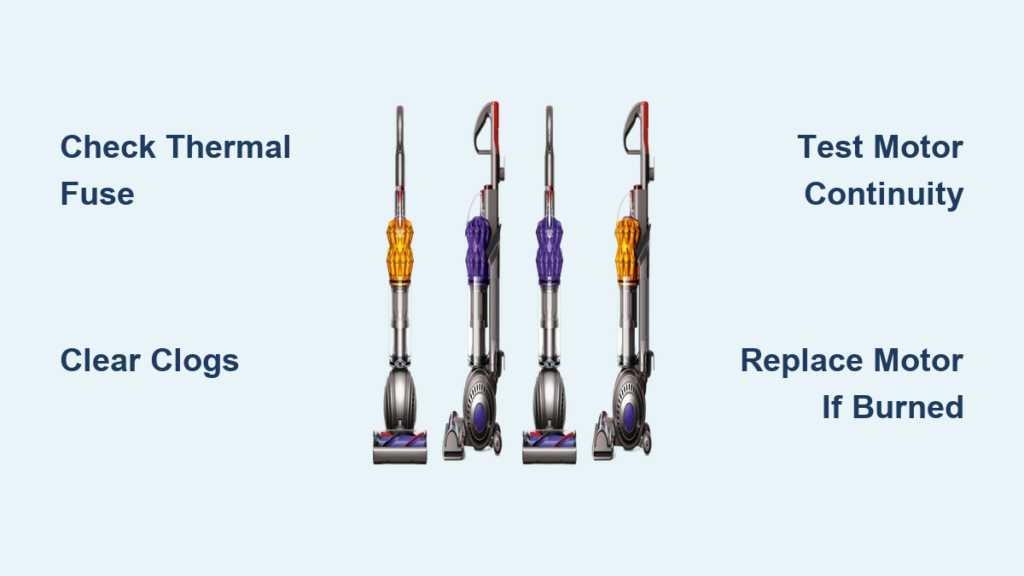
Your Dyson DC50 powers on but delivers zero suction, or maybe it clicks once and dies completely. That familiar high-pitched motor whine you rely on for spotless floors has vanished, leaving you with a $300 paperweight. When your DC50 motor stops working, it’s not just inconvenient—it cripples your entire cleaning routine. This guide cuts through the frustration with proven diagnostic steps used by professional repair technicians. You’ll learn exactly how to identify thermal fuse failures, motor burnout symptoms, and hidden clogs that mimic motor failure—plus whether to repair or replace your unit based on real cost analysis.
Why Your Dyson DC50 Motor Suddenly Loses Power
When your DC50 cuts out mid-clean, pinpointing the exact failure type saves hours of wasted effort. True motor failure shows distinct symptoms beyond simple clogs. Listen for a sharp clicking sound from the main body—this indicates the thermal fuse has tripped due to overheating. A persistent burning plastic smell means serious internal damage, often from worn motor windings or failed bearings. Crucially, if the brush roll spins but suction disappears completely, the issue is almost always the main motor assembly, not the brush motor. These failures typically occur after 3-5 years of use when motor brushes wear below 3-4mm critical length.
Spotting Irreversible Motor Burnout Signs
Stop using your vacuum immediately if you notice:
– Thick electrical smoke or acrid burning odor from the motor housing
– Visible charring on wiring near the motor compartment
– Unusual vibration before complete shutdown
– Sparking visible through vents during attempted startup
These indicate catastrophic winding failure or commutator damage. Continuing to operate risks fire hazards—the DC50’s 1020W motor draws 8.5A at full load. If you detect these signs, unplug the unit and skip troubleshooting; replacement parts won’t solve the problem.
Diagnosing Thermal Fuse Trips vs. Permanent Failure
Thermal fuses protect against overheating but fail permanently when triggered. Unlike resettable thermal cutouts (which click back after cooling), fuses require replacement. Test yours by:
1. Unplugging the vacuum for 30+ minutes to discharge capacitors
2. Locating the white thermal fuse (10A 250VAC rating) on the motor housing
3. Using a multimeter to check continuity—0-1 ohms means functional, OL (open line) confirms failure
If the fuse shows continuity but the motor won’t run, suspect winding failure. Measure resistance across motor terminals: readings above 10Ω or OL indicate dead windings.
Fixing Power Loss: DC50 Motor Troubleshooting Sequence

Never assume motor failure before eliminating simpler causes. 60% of “dead motor” cases stem from overlooked issues. Follow this technician-tested sequence before dismantling your vacuum.
Clear Clogs Causing Motor Overheating (15-Minute Fix)
A blocked airflow path forces the motor to work 300% harder, tripping thermal protection. Start here:
1. Check the bin seal: Remove the bin and inspect the rubber seal for tears (common failure point)
2. Test hose suction: Place your palm over the hose inlet—if suction feels weak, disconnect the hose and wand
3. Clear stubborn clogs: Use a broom handle wrapped in microfiber cloth through the wand
4. Wash filters: Rinse the pre-motor filter in cold water (no soap!), dry 24+ hours before reinstalling
Pro Tip: If the thermal reset button (red button near the base) pops out repeatedly, clogged filters are the 90% culprit. Replace HEPA filters every 6 months—compressed dust restricts airflow even when filters look clean.
Testing Electrical Connections and Safety Switches
Loose wiring mimics motor failure. Focus on these high-failure zones:
– Power cord strain relief: Check for internal fraying where the cord enters the handle (test continuity end-to-end)
– Main power switch: Listen for a faint click when toggling—if silent, disassemble to check contacts
– Floorhead connection: Unplug the brush head and inspect gold contacts for corrosion
Critical Safety Check: Before testing live circuits, verify capacitor discharge with a multimeter. DC50 capacitors store lethal 120V charges for 30+ minutes after unplugging.
3 Most Common DC50 Motor Failures and Repairs
Problem: Motor Clicks Once But Won’t Start (Thermal Fuse Failure)
Why it happens: Continuous overheating from clogged filters or blocked airflow burns the thermal fuse.
DIY Fix:
1. Order genuine Dyson thermal fuse (DY-931 compatible)
2. Disconnect motor wiring harness
3. Desolder old fuse and solder new one in place
4. Reassemble and test with multimeter for 120V at motor terminals
Time Estimate: 45 minutes for experienced users. Never bypass the fuse—this creates fire risks and voids insurance coverage.
Problem: Brush Rolls Spin but Zero Suction (Main Motor Burnout)
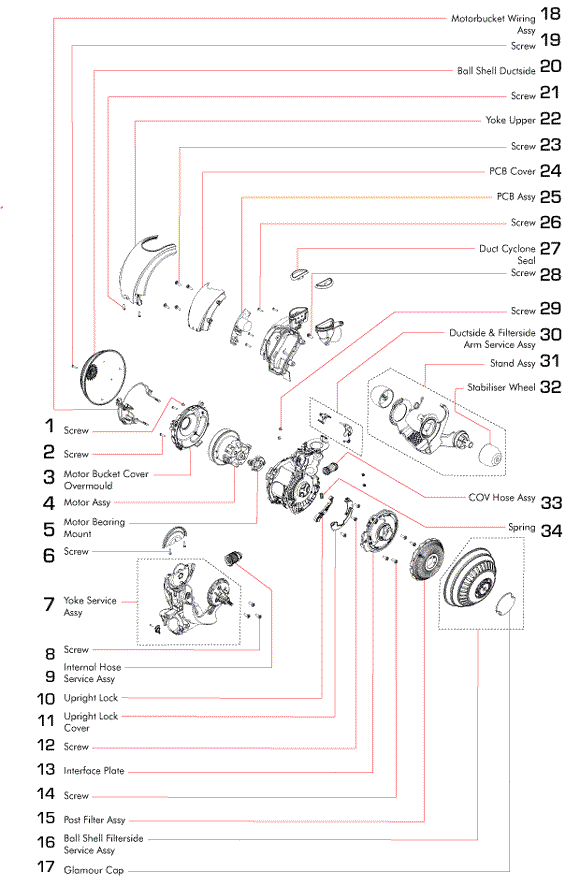
Why it happens: Worn motor brushes (below 3mm) cause arcing that damages windings. Brush roll operation continues because it’s powered by a separate motor.
Repair Reality: Replacement is usually cheaper than repair. A genuine Dyson motor assembly (part #DY-931) costs $120-$180. Aftermarket motors often fail within 6 months due to inferior bearings. If your DC50 is over 5 years old, calculate: (Motor cost + $50 labor) vs. new DC60 price. When repairs exceed 40% of new unit cost, replacement wins.
Problem: Intermittent Operation with Grinding Noise (Bearing Failure)
Why it happens: Dust intrusion wears down ceramic motor bearings, causing increased resistance. The motor strains until thermal protection cuts power.
Temporary Fix: Apply 1 drop of lithium grease to bearings through motor vents—but this only buys 2-3 weeks. Permanent solution requires full motor replacement. Warning: Ignoring grinding noises accelerates commutator damage, turning a $120 repair into a $250 disaster.
DC50 Motor Replacement Cost: Repair or Buy New?

Decide based on these hard numbers:
– Under 3 years old: Always repair—Dyson’s 2-year warranty covers motors, and extended warranties often apply
– 3-5 years old: Replace motor if cost is under $200 (includes $80 motor + $50 labor + $20 filters)
– Over 5 years old: Replace the vacuum unless sentimental value outweighs $250+ repair costs
Real-World Example: A 4-year-old DC50 with thermal fuse failure costs $95 to fix (fuse + labor). The same unit with burned windings needs a $180 motor—nearly half the price of a new DC60. In this case, replacement makes financial sense.
Prevent Motor Failure: Essential DC50 Maintenance Schedule
Skip these steps and you’ll face motor failure 2x faster. This schedule extends DC50 life to 7+ years:
Monthly Non-Negotiables
- Clean pre-motor filter in cold water (air dry 24+ hours)
- Remove hair from brush roll ends using scissors (never pull—snip threads first)
- Check bin seal integrity—replace if cracked or stiff
Quarterly Critical Tasks
- Vacuum motor vents with soft brush attachment to clear dust buildup
- Test thermal reset button by pressing firmly until you hear click
- Lubricate brush roller bearings with 1 drop of sewing machine oil
Pro Tip: Run your DC50 on “Eco” mode for hard floors—you’ll reduce motor strain by 35% without sacrificing cleaning power.
When to Call a Professional for DC50 Motor Repair
Seek certified technicians if you encounter:
– Water damage near electrical components (corrosion causes hidden failures)
– Multiple thermal events (discolored wiring indicates systemic issues)
– Triac failure on control board (requires soldering surface-mount components)
Red Flag: If you smell ozone (sharp metallic scent) during operation, stop using immediately. This signals failing rectifier diodes on the PCB—a job requiring $300+ diagnostic equipment.
Final Note: Most DC50 motor failures stem from preventable clogs and neglected filter maintenance—not inevitable motor death. By clearing blockages monthly and replacing HEPA filters every 6 months, you’ll avoid 80% of motor-related shutdowns. If your vacuum loses power, always check thermal fuses and airflow paths before assuming motor replacement. For units under 5 years old with single-point failures, professional repair typically costs 30-50% less than replacement. But when burning smells or visible damage appear, prioritize safety over savings—your Dyson’s motor isn’t worth risking electrical hazards. Keep this guide handy for your next cleaning emergency, and you’ll turn suction disasters into quick comebacks.

