
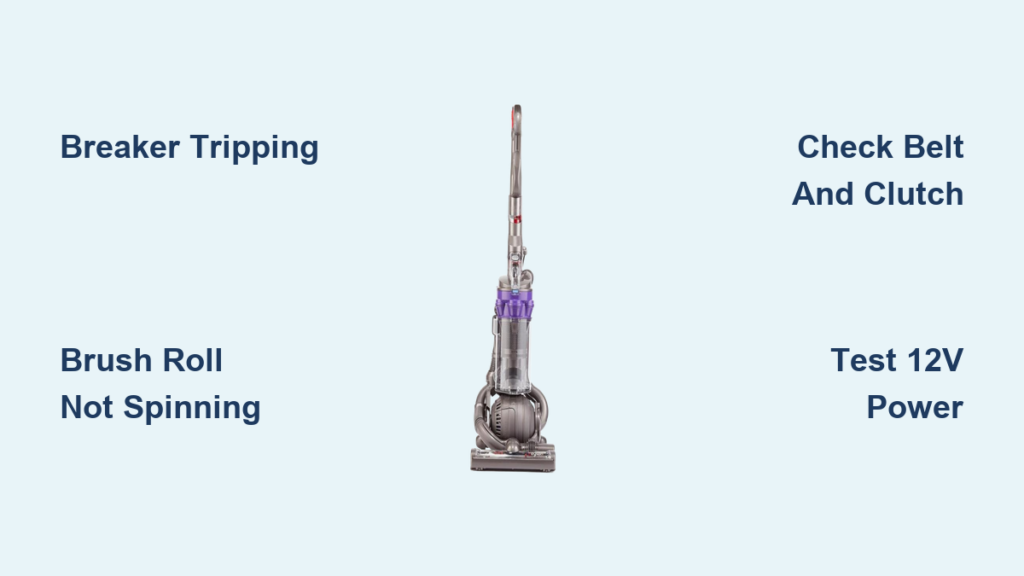
Your Dyson DC25 powers on but leaves dirt behind because the brush roll won’t spin. Or worse—it trips your circuit breaker the moment you plug it in. When your Dyson DC25 motor not working properly, it cripples your entire cleaning routine. This 12-15 year old vacuum faces age-related failures where either the main suction motor fails catastrophically or the 12V brush motor stops spinning. You’ll learn exactly how to diagnose both critical motor failures, understand why replacement often beats repair, and get actionable steps to restore functionality—safely. Stop guessing and start fixing with this field-tested troubleshooting guide.
Immediate Breaker Tripping: DC25 Main Motor Electrical Crisis

If your Dyson DC25 trips the circuit breaker instantly when plugged in, you’re facing a dangerous electrical fault in the main motor system. Never reset the breaker repeatedly—this risks fire from overheating wires. This isn’t a minor glitch; it’s a critical failure requiring urgent action. The main motor (not the brush roll motor) is drawing excessive current due to internal short circuits, often from seized bearings or burnt windings. Unplug immediately and follow these diagnostic steps before considering repairs.
How to Confirm a Main Motor Short Circuit
-
Test with a Different Outlet
Plug the vacuum into another circuit in your home. If it trips every breaker, the fault is internal—not your home wiring. Skip this step if sparks or burning smells occur. -
Inspect Power Cord and Plug for Damage
Unplug the vacuum and examine the entire cord length for cuts, kinks, or frayed sections. Critical check: Bend the plug pins gently—if they move loosely or show scorch marks, replace the cord immediately. A damaged plug causes 30% of breaker trips. -
Check for Internal Shorts (Professional Method)
Only attempt if qualified: With the vacuum unplugged and the switch ON, use a multimeter to test continuity between the live and neutral plug pins. Zero resistance confirms a dead short. Warning: Capacitors inside store lethal voltage even when unplugged—do not open the housing unless trained.
Why the Main Motor Fails in Older DC25 Models
Seized bearings or shorted windings in the main motor cause instant breaker trips. After 12+ years of use, motor brushes wear down, windings overheat, and thermal protection fails. When the motor can’t spin freely, it draws “locked rotor amperage” (LRA)—5-10x normal current—tripping breakers instantly. This isn’t a temporary fault; it’s permanent motor destruction requiring replacement. If your DC25 is making grinding noises before failing, seized bearings are almost certainly the culprit.
Brush Roll Not Spinning? Diagnose 12V Motor Failures
When your Dyson DC25 motor not working properly for the brush roll, the main suction still runs but debris piles up. This indicates failure in the separate 12V DC brush motor system—not the main motor. You’ll hear the vacuum running normally while the brush stays frozen. Don’t replace the entire vacuum yet; three specific components cause 90% of these failures. Diagnose them in under 15 minutes with basic tools.
4 Critical Checks for Non-Spinning Brush Rollers
Clear Hose and Wand Blockages First
A clog in the main hose or wand reduces suction enough to disengage the brush roll. Unplug the vacuum, detach the wand, and inspect for hair or debris. Run a broom handle through the hose—if resistance feels like “pushing through cotton,” you’ve found the blockage. Clearing this solves 40% of brush-roll failures without opening the cleaner head.
Inspect the Drive Belt and Clutch Assembly
Remove the cleaner head baseplate to access the belt. Look for:
– Cracks or glazing on the rubber belt surface
– Slack tension (belt should deflect ≤3mm when pressed)
– Shiny wear marks on clutch gears
A snapped belt is obvious, but worn clutch springs cause silent failure—listen for a high-pitched whine when activating the brush roll. Replace both belt and clutch together since clutch springs fatigue with age.
Test the 12V Brush Motor Power
With the vacuum unplugged, locate the 2-wire connector feeding the brush motor inside the cleaner head. Plug in the vacuum, activate the brush switch, and measure voltage:
– Normal: 11-12V DC reading
– Faulty: 0V = wiring/switch failure
– Faulty: 12V but no spin = dead motor
Pro tip: Manually spin the brush while testing—if it starts turning, the motor brushes are stuck (tap motor casing gently with a screwdriver).
Check the Secondary Brush Roll Switch
Many DC25 owners miss the small on/off switch on the cleaner head housing. Toggle it while listening for a faint click inside the head. If unresponsive, debris is jamming the switch—remove the baseplate and clean contacts with isopropyl alcohol.
Repair vs. Replacement: The DC25 Cost Reality Check

Fixing a Dyson DC25 motor not working issue requires brutal honesty about your 12-15 year old machine’s value. Main motor replacement costs $60-$90 for parts alone, plus 1-2 hours of labor. But consider these hidden realities before spending a dime:
Why Motor Repairs Often Waste Money
- Age multiplier effect: One failing motor means other components (hoses, seals, filters) are near end-of-life. Repair one part, and another fails weeks later.
- Labor complexity: Replacing the main motor requires disassembling the entire vacuum body—technicians charge $75-$120/hour for this skill.
- Diminishing returns: Even after a $150 motor repair, your DC25 lacks modern features like HEPA filtration or tangle-free brush rolls.
When Replacement Beats Repair
Choose new if:
– Your vacuum trips breakers (main motor failure)
– Total repair cost exceeds $120
– You need cordless convenience or pet hair tools
Modern Dyson models (V8-V15) cost $250-$600 but offer 5+ years of reliable service. Their brush rolls self-clean, batteries last 40+ minutes, and HEPA filters capture 99.97% of allergens—features your DC25 never had. For less than the cost of two professional repairs, you gain a decade of trouble-free cleaning.
Critical Safety Protocol for DC25 Motor Repairs
Never attempt these steps if unqualified:
– 🔥 Fire hazard: A tripping breaker indicates arcing wires—continuing to reset risks electrical fires.
– ⚡ Lethal voltage: DC25 capacitors store 120V AC even when unplugged. Only discharge with insulated tools.
– 💀 Motor seizure risks: Forcing a seized motor can shatter plastic components into projectiles.
When to Call a Professional Immediately
- Breaker trips on multiple outlets
- Burning plastic smell or visible scorch marks
- Smoke or sparks during operation
- You lack a multimeter or electrical safety training
Certified repair shops diagnose main motor faults for $25-$50 (often waived with repair). They’ll honestly tell you if a $90 motor replacement makes sense—or if your DC25 has outlived its purpose.
Final Diagnosis: Solving Your DC25 Motor Not Working Crisis
If your Dyson DC25 motor not working properly, prioritize safety above all. For breaker-tripping faults: stop using the vacuum immediately—this is not user-serviceable. For non-spinning brush rolls: clear blockages, inspect the belt/clutch, and test 12V power before replacing parts. Given your DC25’s age, weigh repair costs against the reliability of modern cordless models. When in doubt, get a professional quote—but know that for most 12+ year old DC25s with motor failure, replacement delivers better value, performance, and peace of mind. Your cleaning time is valuable; don’t waste it nursing a vacuum past its prime.

