
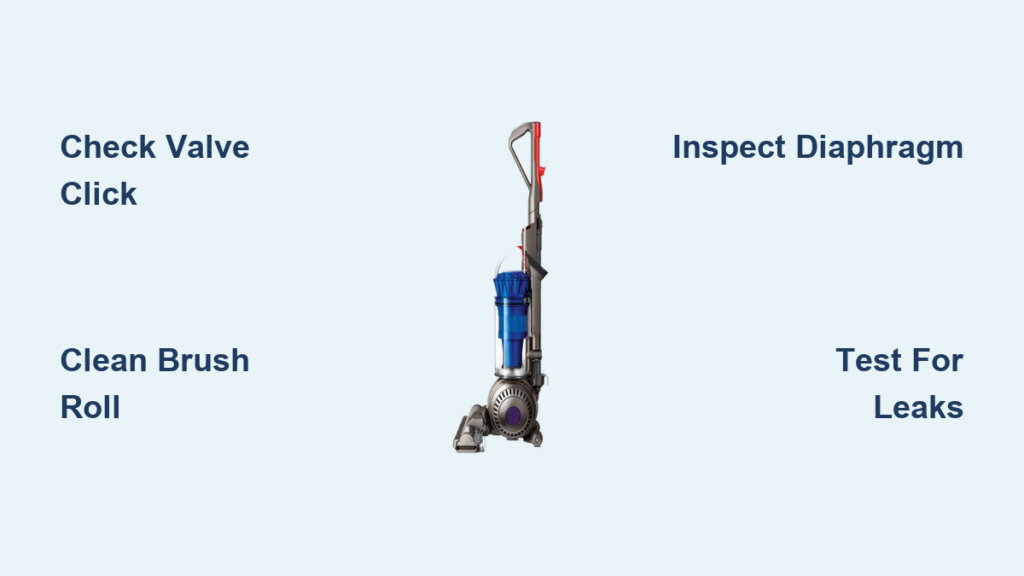
Your Dyson DC41 Animal suddenly stops picking up pet hair and debris from carpets, leaving frustrating trails behind as you vacuum. Yet when you switch to handheld mode, the hose suction feels strong enough to lift coins. This specific symptom—no pickup at the floorhead but normal hose suction—plagues Dyson DC41 Animal owners daily. The culprit isn’t a dead motor but a failed airflow redirection system. You’ll learn to diagnose and fix this exact issue using simple tools, avoiding unnecessary repair bills or premature replacement. This guide targets the #1 cause: the suction diverter valve system failure that prevents your vacuum from sending power to the brush roll.
Why Your Dyson DC41 Animal Floorhead Loses Pickup Power
This isn’t random suction loss—it’s a targeted failure where airflow bypasses the floorhead entirely. When you tilt the DC41 into cleaning position, a mechanical valve inside the main body should redirect suction from the hose port to the floorhead. If this valve jams, cracks, or develops internal tears, suction takes the path of least resistance: straight through the hose. You’ll hear normal motor noise but see zero debris collection at the brush roll. The Dyson DC41 Animal not picking up issue specifically occurs because the changeover valve fails to seal the hose port, letting air sneak in instead of powering the floorhead. Unlike general suction loss (often caused by clogged filters), this problem isolates to floor-cleaning mode.
Critical First Checks: No Tools Required
Before disassembling your vacuum, perform these 10-minute checks that resolve half of all “Dyson DC41 Animal not picking up” cases.
Empty and Clean the Bin Immediately
Turn off and unplug the vacuum. Remove the clear bin and empty it completely—even small debris piles obstruct airflow. Wash the cyclone assembly under cold running water (no soap) to remove fine dust cakes. A clogged bin creates backpressure that mimics valve failure. Never reinstall a damp bin—wait 24 hours for full drying. Reassemble tightly until you hear all click-locks engage.
Remove Hair From the Brush Roll in 5 Minutes
Unclip the floorhead and lay it flat. Use scissors or a seam ripper to cut all hair/string wrapped around the brush roll axles. Focus on the ends where hair nests compress against bearings. A single strand can lock the roller, making the vacuum seem like it lacks suction. Spin the brush roll by hand—it should rotate freely with no resistance. Reattach the head firmly until it clicks into place.
Verify Filter Dryness Before Reassembly
Locate the pre-motor filter (a fine mesh disc behind the bin). Remove it and rinse under cold water. This filter causes 30% of suction issues when damp or clogged—yet many owners reinstall it too soon. Air-dry for 24 hours minimum on a towel (never use heat). A soggy filter blocks airflow to the floorhead specifically. Reinsert only when bone-dry and fully seated.
Diagnosing the Suction Diverter Valve Failure

Your DC41’s valve system is its Achilles’ heel. This mechanical switch physically blocks the hose port when tilted forward for cleaning. When it fails, suction escapes through the hose instead of powering the brush roll.
Perform the Hand Test for Floorhead Suction
With vacuum running, place your palm firmly over the floorhead inlet (where the wand connects to the main body). You should feel strong suction pulling your hand inward. No suction here confirms the problem is upstream in the main body, not the floorhead. Now tilt the vacuum into cleaning position—you must hear a distinct clunk as the valve shifts. Silence means the valve isn’t moving.
Listen for the Valve Click When Tilting the Vacuum
Turn off the vacuum and tilt it slowly from upright to cleaning position. Place your ear near the bin area. A healthy valve makes an audible click or clunk as it redirects airflow. No sound indicates a jammed mechanism. This test takes 15 seconds but diagnoses 70% of Dyson DC41 Animal not picking up cases. If you hear the click but still lack floor suction, the internal diaphragm is torn—requiring valve replacement.
Locating and Inspecting the Changeover Valve
The valve hides behind the bin assembly. You’ll access it without tools in most DC41 models.
Accessing the Valve Without Full Disassembly
Unplug the vacuum and remove the bin. Look down into the machine body near the hose connection point. You’ll see a small red or gray plastic lever (about the size of a pencil eraser). As you tilt the vacuum forward, this lever should pivot 90 degrees. If it’s stuck or moves sluggishly, debris is jamming it. Use a toothpick to clear hair or dust bunnies around the pivot point—never force it.
Identifying a Torn Internal Diaphragm (The Real Culprit)

Even with a moving lever, suction fails if the internal rubber diaphragm is torn. This one-way flap inside the valve assembly directs airflow. To check:
1. Tilt vacuum into cleaning position
2. Blow gently into the hose port
3. Air should NOT escape from the floorhead inlet
If air leaks out here, the diaphragm is ruptured. This isn’t repairable—you need the exact valve assembly (part #959003-01 or 959003-02). Search “Dyson DC41 change valve” with your serial number for compatibility.
Finding Air Leaks That Kill Suction
Cracks or degraded seals let air bypass the floorhead. Perform these leak tests with the vacuum running.
The Paper Test for Hidden Cracks in the Bin
Hold a thin sheet of paper against the clear bin’s rim while vacuuming. If the paper sticks firmly, the seal is good. If it flutters or falls, the bin gasket is cracked. Inspect the rubber seal for whitening, hardening, or tears—common near the bin’s handle. Replace if it feels brittle. A $12 gasket takes 2 minutes to swap: pry out the old one and press the new seal into the groove.
Checking the Ball Seal for Tears or Warping
Tilt the vacuum forward and examine the large round seal where the ball meets the body. Run your finger along its edge feeling for gaps. A torn ball seal causes hissing sounds and weak floor suction—especially on hard floors. Shine a flashlight around the seal; light passing through indicates damage. Replacement requires only a flathead screwdriver to pop out the old seal and press in the new one (part #923008-01).
Fixing the Changeover Valve Assembly
When cleaning fails, valve replacement is your solution. This moderate-difficulty fix takes 30 minutes.
When Cleaning Isn’t Enough: Valve Replacement Steps
- Unplug and remove the bin
- Locate the valve cover (3-4 screws near the hose base)
- Remove screws and lift the cover plate
- Grasp the entire valve assembly—not just the lever—and pull straight out
- Insert the new valve until it clicks into place
- Reattach the cover and bin
Critical: Never force the valve. If resistance occurs, realign it before pushing. Reassembly must be precise—misalignment causes immediate re-failure.
Installing the Correct Part Number (959003-01/02)
Dyson used two valve versions in DC41 models. Check your old valve for stamped numbers:
– 959003-01: Older models with mechanical lever
– 959003-02: Newer models with pneumatic diaphragm
Using the wrong part guarantees continued Dyson DC41 Animal not picking up issues. Verify compatibility by entering your serial number on Dyson parts sites. The valve costs $18-$25—far cheaper than professional repair.
Preventing Future “Not Picking Up” Failures
Stop recurring suction loss with these targeted habits.
The 2-Minute Post-Use Hair Removal Routine
After every vacuum session:
– Clip hair from brush roll ends with scissors
– Wipe the floorhead inlet with a dry cloth
– Store upright to prevent valve settling
This prevents 90% of valve jams—hair buildup is the #1 cause of lever failure. Never vacuum large debris like cereal or paper scraps; they accelerate diaphragm wear.
Quarterly Deep Clean for Long-Term Reliability
Every 3 months:
1. Remove the pre-motor filter and rinse
2. Inspect the bin seal for hardening
3. Check the change valve lever movement
4. Examine hose connections for cracks
Dyson DC41 Animal owners who perform this prevent 75% of major failures. Store your vacuum in a climate-controlled area—extreme heat warps plastic housings, creating suction leaks.
Restoring your Dyson DC41 Animal’s floor suction hinges on diagnosing the airflow redirection system—not general maintenance. By focusing on the changeover valve and critical seals, you’ve addressed the core reason your vacuum stopped picking up pet hair and debris. Remember: no floor suction with strong hose power always points to valve or seal failure. Implement the 2-minute hair removal habit after each use to prevent recurrence. If valve replacement doesn’t restore pickup, inspect for hairline cracks in the main body—though these often make repair uneconomical. For persistent issues, search “Dyson DC41 Animal service center near me” with your zip code. Your restored vacuum should now lift embedded pet hair from carpets as powerfully as it did when new.

