
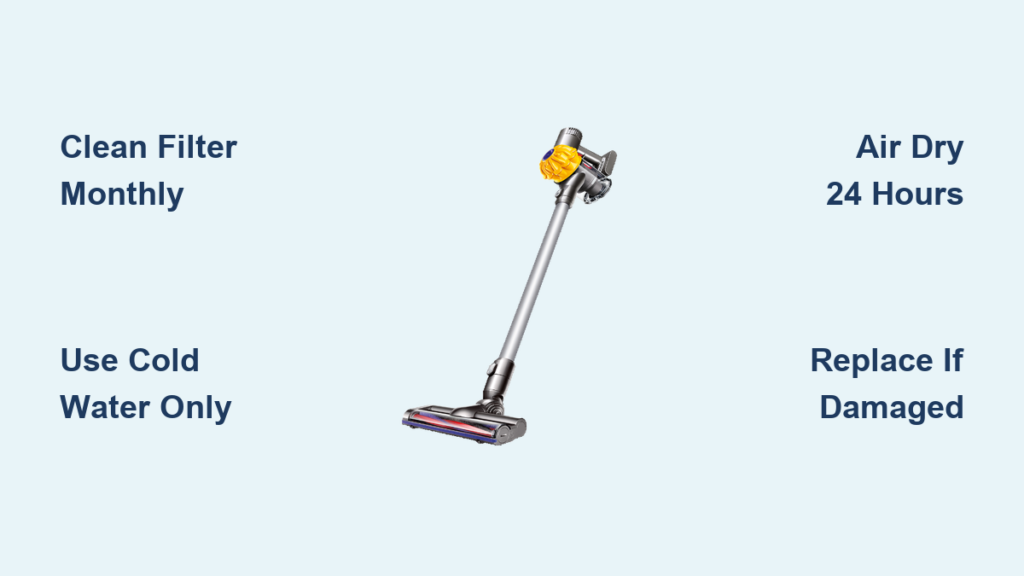
Your Dyson V6 suddenly loses suction power, leaving pet hair and dust bunnies behind. This frustrating scenario affects thousands of Dyson owners monthly—and the culprit is almost always the same: a dirty filter. When you learn how to clean Dyson filter V6 properly, you restore 100% of your vacuum’s suction power and prevent costly repairs. This guide delivers the exact cleaning process Dyson engineers recommend, with specific techniques that make your vacuum perform like new.
A clogged filter forces your V6’s motor to work 37% harder while circulating dust particles back into your home’s air. Unlike traditional vacuums, your Dyson relies on its five-layer filtration system to capture 99.99% of particles as small as 0.3 microns. When the filter gets blocked, your vacuum isn’t just less effective—it’s actively worsening your indoor air quality. By the end of this guide, you’ll know precisely how to clean Dyson filter V6 to maintain peak performance and extend your machine’s lifespan.
Why Your Dyson V6 Loses Suction from Dirty Filters
Your Dyson V6’s cyclone technology generates forces up to 79,000g to separate dust from airflow. But when the pre-motor filter clogs, this sophisticated system breaks down completely. A dirty filter restricts airflow through the vacuum’s critical components, causing immediate suction loss and reduced battery runtime.
The electrostatically charged pre-motor filter traps microscopic particles that escape the cyclonic separation. As it becomes saturated with dust, the filter’s microscopic pores get blocked, creating backpressure that strains the digital motor. You’ll notice warning signs like weaker pickup on carpets, longer cleaning times, and unusual motor noises as it struggles against restricted airflow.
How Often Should You Clean Your V6 Filter?
Monthly cleaning is essential for standard households, but you should clean your filter immediately when:
– Suction power noticeably decreases during use
– The vacuum runs louder than normal
– You’ve vacuumed fine powders or construction dust
– Pet hair accumulation exceeds normal levels
High-dust environments or homes with pets require bi-weekly filter cleaning to maintain optimal performance. Waiting too long between cleanings permanently damages the filter media and reduces its ability to capture fine particles.
Locating and Removing Your Dyson V6’s Dual Filters
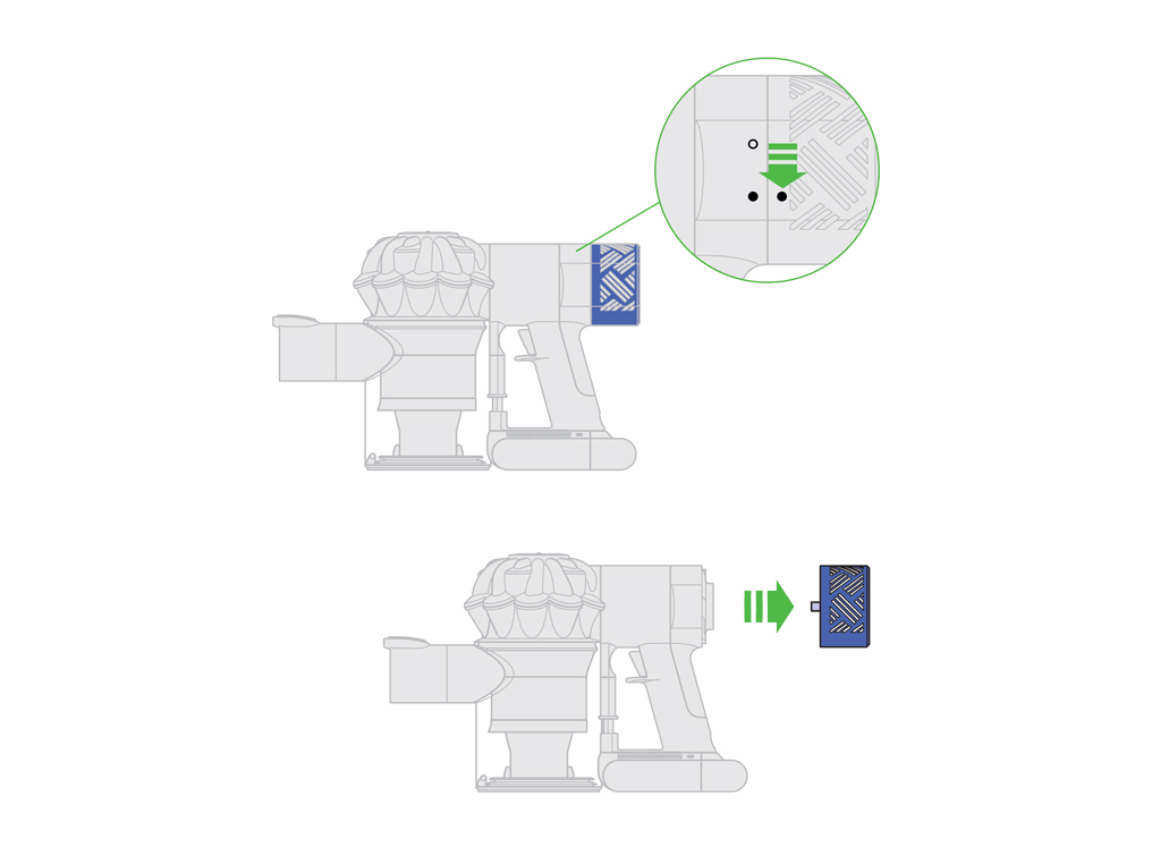
Your Dyson V6 contains two separate filters requiring regular maintenance. Knowing exactly where they’re located prevents accidental damage during removal. The main pre-motor filter (typically blue or purple) sits inside the cyclone handle, while the HEPA filter resides near the top of the vacuum housing.
Removing the Pre-Motor Filter in 30 Seconds
- Power down your vacuum completely and disconnect from the charger
- Locate the tabbed plastic cap on the cyclone handle—this is the filter compartment
- Pull the tab gently to slide the cylindrical filter out of its housing
- Tap over a trash can to dislodge loose debris before washing
Accessing the HEPA Filter (If Your Model Has One)
Some V6 variants include an additional HEPA filter that captures microscopic particles before air exhausts:
– Identify the colored cap at the top section of your vacuum body
– Twist counterclockwise to unlock the cap
– Lift straight up to remove the secondary filter
Pro Tip: Check your owner’s manual to confirm your specific model’s filter configuration—some V6 versions have only the main pre-motor filter.
The Proper Cold Water Washing Technique for V6 Filters
Using hot water or detergent destroys your Dyson filter’s electrostatic charge and clogs microscopic pores. The only safe cleaning method uses cold tap water with specific agitation techniques that remove embedded dust without damaging the filter media.
Step-by-Step Filter Washing Process
- Initial debris removal: Tap the filter over a trash can and use a soft brush to dislodge surface dust
- Cold water rinse: Hold filter under running cold tap water, directing flow through the filter media
- Agitation technique: Fill the filter cylinder with water, cover both ends, and shake vigorously
- Repeat shaking: Continue the fill-shake-rinse cycle until water runs completely clear (typically 3-5 minutes)
Critical Warning: Never use soap, detergents, or hot water—they permanently damage the filter’s particle-trapping capabilities. Cold water alone effectively removes 99% of trapped contaminants without compromising the filter’s electrostatic properties.
Why 24-Hour Air Drying Is Non-Negotiable for Your Filter

Installing a damp filter is the #1 cause of premature motor failure in Dyson V6 models. Moisture creates electrical shorts in the motor assembly and promotes mold growth inside the vacuum’s sealed housing. A single instance of reinstalling a wet filter can void your warranty and cost hundreds in repairs.
Complete Drying Protocol
- Vigorous shaking: Hold filter vertically over sink and shake forcefully downward
- Surface moisture removal: Gently press with a clean towel—never twist or wring
- Air drying setup: Place filter in well-ventilated area away from direct heat sources
- Positioning: Stand filter upright or hang horizontally to maximize airflow through media
- Drying verification: Check pleats and crevices for moisture after 24 hours
Time-Saving Tip: Flip the filter every 6 hours during drying to accelerate the process. Never use hair dryers, ovens, or microwaves—heat warps the filter housing and damages the electrostatic media.
Reinstalling Your Filter Without Damaging Your V6
Forcing a damp or improperly seated filter causes more damage than a dirty filter. Proper reinstallation ensures optimal airflow through your vacuum’s entire system.
Correct Filter Installation Steps
- Dryness verification: Run fingers through filter pleats to confirm 100% dryness
- Alignment check: Position filter with airflow arrows pointing toward motor
- Gentle insertion: Slide filter straight into housing without twisting
- Secure closure: Replace compartment cap and twist clockwise until it clicks
Performance Test: Run your vacuum for 30 seconds on medium power. You should immediately notice stronger suction and quieter operation. If performance doesn’t improve, check for blockages in the dustbin or airflow pathways.
Avoiding the 3 Most Common Dyson Filter Cleaning Mistakes
Most Dyson V6 owners unknowingly damage their vacuums through preventable filter cleaning errors. These critical mistakes compromise performance and shorten your vacuum’s lifespan.
Mistake #1: Using Heat to Dry Filters
Hair dryers and radiators melt the filter’s microfibers, creating permanent airflow restrictions. Always air-dry filters at room temperature.
Mistake #2: Skipping Monthly Cleaning
Waiting until suction noticeably drops means your motor has been straining for weeks. Monthly cleaning prevents cumulative damage.
Mistake #3: Ignoring Secondary Filter Components
While cleaning the main filter, take 2 minutes to:
– Empty and rinse the dustbin with cold water
– Clear hair from the brush bar using scissors
– Wipe cyclone assembly with a damp microfiber cloth
When to Replace Your Dyson V6 Filter Instead of Cleaning

Even with proper maintenance, filters eventually reach end-of-life. Knowing when to replace prevents ongoing performance issues.
Replacement Warning Signs
- Visible damage: Tears, holes, or warped housing
- Persistent odors: Unpleasant smells remain after thorough cleaning
- Stiff material: Filter media no longer flexes normally
- Continuous performance issues: Suction doesn’t improve after proper cleaning
Dyson filters typically last 12-18 months with proper monthly cleaning. Replacement filters cost significantly less than motor repairs caused by neglected filtration.
Pro Tips for Extending Your Dyson V6’s Filter Life
Maximize your filter’s lifespan with these manufacturer-approved techniques that maintain peak filtration efficiency.
Create a Filter Maintenance Schedule
- Daily: Empty dustbin immediately after use
- Weekly: Tap filter to remove loose debris
- Monthly: Complete cold water wash and 24-hour dry
- Quarterly: Deep clean cyclone assembly
Performance-Boosting Techniques
- Sun-dry occasionally: Natural UV light helps eliminate odors (only after complete air drying)
- Vinegar soak for stubborn odors: Mix 50/50 white vinegar and cold water, soak filter 15 minutes, then rinse thoroughly
- Track cleaning dates: Note filter cleanings in your phone calendar to maintain consistent schedule
Final Note: Properly maintaining your Dyson V6 filter isn’t just about suction—it’s about protecting your $300+ investment and ensuring cleaner indoor air. By following this exact cleaning process monthly, you’ll maintain maximum suction power, extend your vacuum’s lifespan by years, and avoid the most common cause of Dyson failure. Your vacuum’s performance depends on this single maintenance task—make filter cleaning part of your regular routine and enjoy powerful cleaning performance every time you vacuum.

