
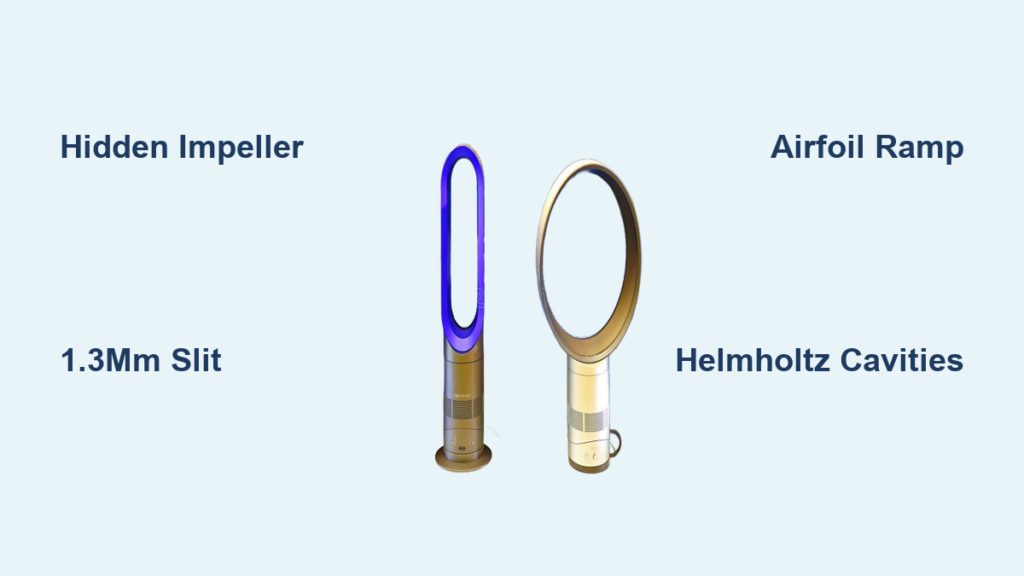
You stare at your Dyson fan, mesmerized by the smooth, uninterrupted breeze flowing from its ring—yet there are no visible blades spinning. That sleek, bladeless design isn’t just for aesthetics; it solves real problems like safety hazards with traditional fans and choppy, uneven airflow. But how does this engineering marvel actually move air without blades? The answer lies in clever physics, not magic. In this guide, we’ll break down exactly how Dyson Air Multiplier fans generate their powerful, whisper-quiet breeze using hidden impellers, precision-engineered slits, and airflow amplification. You’ll discover why these fans move up to 15 times more air than they consume while operating significantly quieter than conventional models.
Dyson’s bladeless technology replaces dangerous exposed blades with an elegant system that pulls surrounding air into a seamless column. Forget the turbulent gusts of standard fans—this design delivers consistent, laminar airflow that feels like natural wind. By the end of this explanation, you’ll understand every critical component from the hidden impeller to the noise-canceling cavities, plus why the ring’s shape is as crucial as an airplane wing. Let’s dive into the mechanics that make your Dyson fan a masterpiece of fluid dynamics.
How the Hidden Base Impeller Moves 20 Liters of Air Per Second
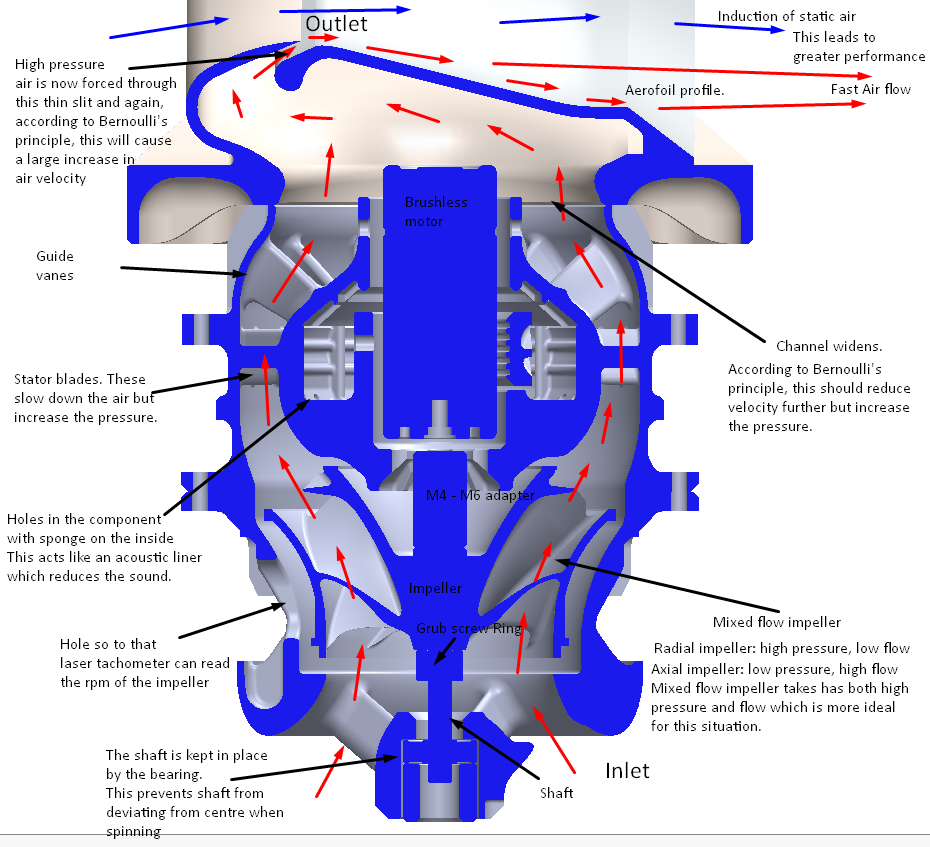
Your Dyson fan’s journey begins with a silent powerhouse you never see: the mixed-flow impeller tucked inside the base. Unlike traditional axial fans, this hybrid design combines centrifugal and axial principles to pull in massive air volumes efficiently. Think of it as a miniature jet engine optimized for quiet operation—drawing exactly 20 liters (5.3 gallons) of air every second through intake vents at the bottom.
This impeller isn’t just moving air; it’s compressing and accelerating it for the amplification stage ahead. The key is its unique blade geometry, which minimizes turbulence while maximizing pressure. As ambient air enters the base, the impeller’s angled vanes spin at high speed, forcing air upward into the fan’s column. You’ll notice no visible intake—just smooth surfaces—because all suction happens discreetly through the base’s perimeter. This initial step is critical: without this high-velocity primary airflow, the entire amplification process would fail.
Why Mixed-Flow Beats Standard Impeller Designs
Standard axial fans push air parallel to the motor shaft but struggle with pressure, while centrifugal fans create high pressure but limited volume. Dyson’s mixed-flow impeller solves both: it draws air axially but discharges it radially, achieving higher pressure without sacrificing airflow volume. This hybrid approach allows the fan to move air forcefully enough to initiate the amplification effect later.
What to Check If Airflow Feels Weak
If your Dyson’s breeze seems underpowered, inspect the base intake vents first. Dust buildup here chokes the impeller’s air supply—use a soft brush to clear debris without disassembly. Never block the base against walls; it needs 20+ cm of clearance to maintain that critical 20L/second intake rate.
The 1.3mm Annular Aperture: Where Air Acceleration Creates Jet Power
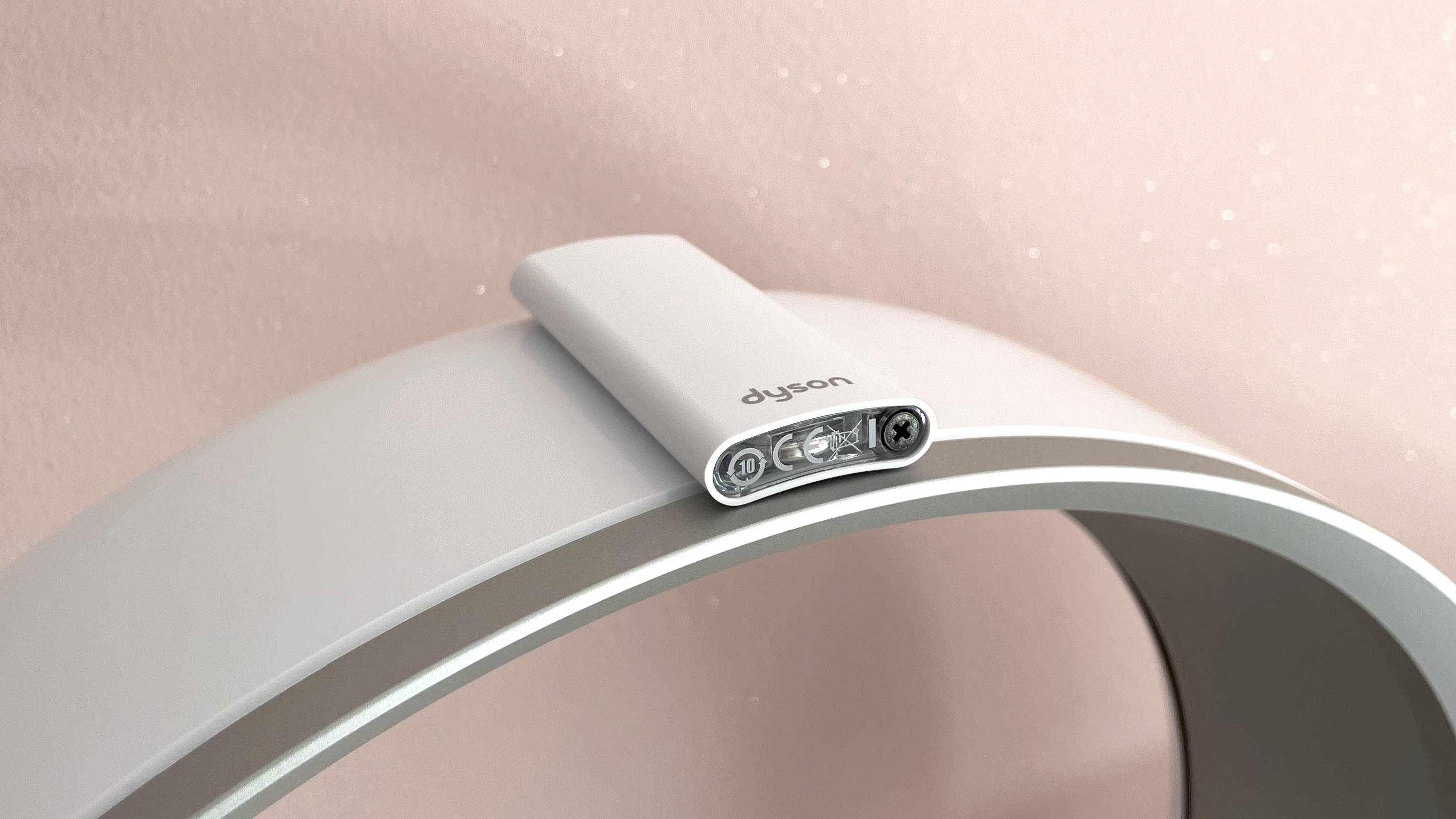
That slim, hairline gap encircling your Dyson’s ring isn’t decorative—it’s the annular aperture, precisely engineered to be just 1.3mm wide. This microscopic channel transforms the impeller’s output into a high-velocity jet stream by forcing all air through an extreme constriction. Imagine squeezing a garden hose: pressure builds until water shoots out forcefully. Here, the same principle applies to air, accelerating it to speeds over 55 mph before it exits the ring.
This slit’s uniform width around the entire circumference ensures consistent airflow direction—no dead spots or uneven pressure. The engineering tolerance is microscopic; even a 0.1mm variation would disrupt laminar flow. When you run your finger along the inner ring edge, you’ll feel this razor-thin opening—a critical feature most users overlook. It’s why Dyson rings feel solid yet secretly channel air with surgical precision.
Why Width Matters for Amplification
Too wide? Air escapes without sufficient velocity to trigger entrainment. Too narrow? Turbulence increases noise and energy use. Dyson’s 1.3mm width hits the sweet spot: fast enough to create low pressure behind the jet but smooth enough to maintain laminar flow. Replicas often fail here by using wider gaps, sacrificing amplification.
Warning: Never Insert Objects Into the Slit
That tempting gap can snag fingers or damage the aperture. Unlike traditional fans, there are no blades to hit—but inserting tools distorts the slit geometry, permanently weakening airflow. Clean only with the included brush accessory.
Airfoil Ramp Physics: How a 16-Degree Curve Generates Low Pressure
Behind the visible ring lies a hidden airfoil ramp angled at exactly 16 degrees—a specification borrowed from aircraft wing design. As the high-speed jet exits the annular aperture, it flows over this curved surface, adhering to the Coandă effect where fluids “hug” convex shapes. This isn’t passive guidance; the ramp actively manipulates pressure dynamics to pull ambient air into the stream.
Here’s the physics: fast-moving air over the curved ramp creates lower pressure directly behind it (per Bernoulli’s principle). This pressure drop acts like an invisible vacuum, sucking in surrounding air from the ring’s rear and sides. The 16-degree angle is non-negotiable—it maximizes pressure differential without causing flow separation that would create turbulence. Without this precise curvature, entrainment would fail, reducing output to mere impeller airflow.
Why Traditional Fans Can’t Replicate This Effect
Bladed fans expel air radially with chaotic turbulence, creating high-pressure zones that fight ambient air movement. The Dyson’s continuous ramp ensures smooth pressure transition, allowing surrounding air to merge seamlessly. This is why you feel a cohesive column of air, not scattered gusts.
Spotting a Damaged Airfoil Ramp
If airflow feels uneven or noisy, inspect the ring’s inner surface for dents. Even minor impacts alter the ramp’s curvature, disrupting the Coandă effect. Gently run a cloth inside the ring—any bumps mean professional recalibration is needed.
Entrainment in Action: How 1 Unit of Air Pulls 15 Units of Ambient Air

The moment the high-velocity jet flows over the airfoil ramp, entrainment begins—a fluid dynamics phenomenon where a fast stream drags slower surrounding air into its flow. For every 1 liter of air forced through the annular aperture by the impeller, your Dyson fan entrains approximately 15 liters of ambient air from behind and around the ring. This isn’t just “mixing”; it’s a pressure-driven cascade where the primary jet acts as an air pump.
You experience this as a powerful, continuous breeze despite the small impeller. Measure the airflow: near the ring, velocity spikes as the jet exits, then smooths into a broad column 30cm away where entrained air dominates. This amplification explains why Dyson fans move air farther and more evenly than bladed counterparts using the same wattage. The process happens silently—no moving parts beyond the base impeller—making it remarkably energy efficient.
Why Entrainment Beats Mechanical Blades for Comfort
Traditional fans chop air into turbulent pulses, causing that annoying “buffeting” sensation. Entrainment creates laminar flow (Reynolds number <2000), meaning air molecules move in parallel layers. The result? A breeze that feels natural, not mechanical—like wind through trees rather than a hairdryer.
Common Misconception: “No Blades = Less Power”
Bladeless doesn’t mean weaker. While the impeller moves only 20L/s, entrainment amplifies total output to ~300L/s. Test it yourself: hold your hand 1 meter away—you’ll feel stronger airflow than from most bladed fans at the same distance.
Helmholtz Cavities: How Dyson Fans Achieve 75% Quieter Operation

Early Dyson models had a subtle flaw: a high-pitched whine around 1000 Hz, painfully audible to human ears. Engineers fixed this not by silencing the impeller, but by adding Helmholtz cavities—resonant chambers built into the base that cancel noise like noise-cancelling headphones. These aren’t mufflers; they’re precision-tuned acoustic traps shaped like miniature bottles.
Here’s the genius: as turbulent airflow vibrates at 1000 Hz, it enters these cavities, causing air inside to resonate out of phase with the noise. The result? Destructive interference where sound waves cancel each other. Modern Dysons integrate multiple cavities targeting specific frequencies identified through smoke visualization and ultraviolet paint tests. This innovation didn’t just reduce noise—it smoothed airflow, cutting energy use by 40% while earning the Quiet Mark certification.
Why Cavities Are Hidden in the Base
Placing cavities near the impeller (where turbulence starts) maximizes noise capture. Open your Dyson’s base cover—you’ll see honeycomb-like chambers. Dust here muffles their effect; clean quarterly with compressed air. Never seal these cavities—they’re functional, not decorative.
Warning Signs of Cavity Blockage
If your fan suddenly gets louder, check for pet hair or dust bunnies in the base vents. Blocked cavities can’t resonate properly, increasing noise by up to 50%. A 2-minute clean with a vacuum nozzle restores silence.
Why Your Dyson Breeze Feels Smoother Than Traditional Fans
That velvety, consistent airflow isn’t accidental—it’s laminar flow engineered through three interlocking systems. First, the annular aperture’s uniform jet creates directional stability. Second, the airfoil ramp’s Coandă effect guides air in parallel layers. Third, entrainment merges primary and ambient air without turbulence. Together, they achieve a Reynolds number below 2000, the threshold for non-turbulent flow.
Compare this to bladed fans: their rotating arms create chaotic vortices, resulting in turbulent flow (Reynolds >4000) that feels gusty and uneven. The Dyson’s laminar output maintains velocity over distance, so you experience steady cooling even 2 meters away. This also explains why it’s ideal for allergy sufferers—no turbulent eddies to stir up dust.
How to Test for True Laminar Flow
Hold a tissue 30cm from the ring. A bladed fan makes it flutter erratically; a Dyson holds it steadily outward. If fluttering occurs, your annular aperture may be clogged—use the included cleaning tool.
Why Laminar Flow Saves Energy
Turbulent air dissipates energy as noise and heat. Laminar flow directs 90%+ of energy into forward motion, meaning less wattage for the same cooling effect. That’s why modern Dysons use as little as 28W on high versus 50W+ for comparable bladed fans.
Final Note: Dyson Air Multiplier fans work by harnessing fluid dynamics to amplify a small primary airflow into a powerful, smooth breeze—no blades required. The mixed-flow impeller, 1.3mm annular aperture, and airfoil ramp create conditions for entrainment to multiply airflow 15x, while Helmholtz cavities cancel noise at the source. For optimal performance, clean base intakes monthly and ensure 20cm clearance around the unit. This bladeless design isn’t just safer; it delivers more consistent, energy-efficient cooling by working with physics rather than against it. If you’re considering a purchase, newer models like the Dyson Pure Cool integrate these principles with air purification—proving great engineering only gets smarter.

