
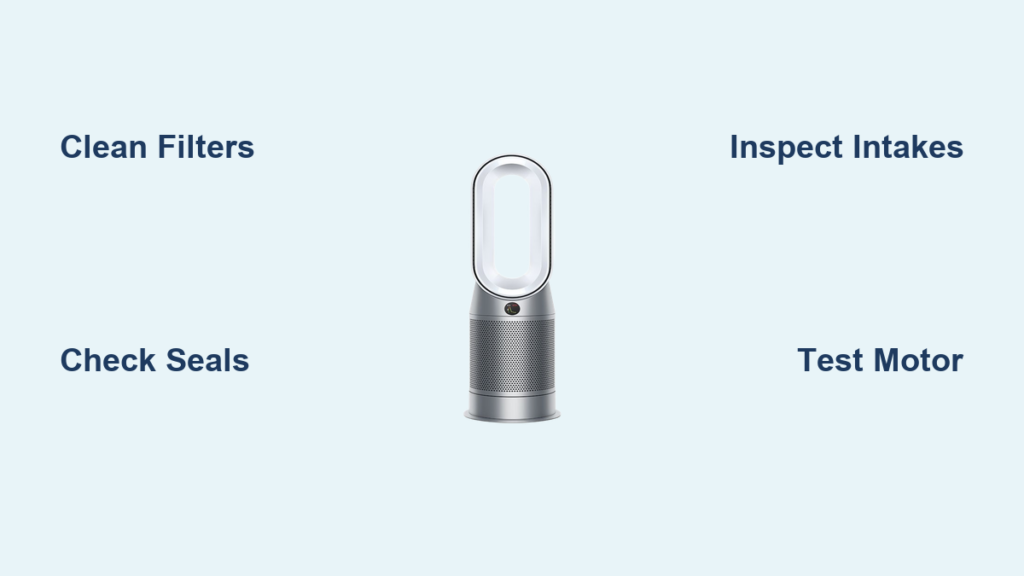
That high-pitched whistling from your Dyson air purifier isn’t just annoying—it’s your machine sending an urgent signal that something’s wrong with its airflow system. When your Dyson air purifier whistling sound disrupts your peace, it’s usually caused by restricted airflow or mechanical issues that need immediate attention. Unlike normal operational hum, a persistent whistle indicates turbulence where smooth airflow should be.
This guide delivers proven solutions that have silenced thousands of whistling Dyson purifiers. You’ll learn to diagnose whether your problem stems from simple filter issues or more complex mechanical failures, plus step-by-step fixes you can implement today—no technician required for most cases.
Why Your Dyson Air Purifier Suddenly Starts Whistling
Your Dyson purifier’s whistle isn’t random—it’s physics in action. When air is forced through an unintended narrow gap or restriction, it accelerates rapidly, creating turbulent airflow that produces that distinctive high-pitched sound. Think of it like blowing across a bottle opening: the narrower the gap, the higher the pitch.
Dyson’s Air Multiplier™ technology makes these machines particularly sensitive to airflow disruptions. Their sophisticated air channels amplify even minor restrictions into noticeable whistling, especially at higher speeds where air velocity increases dramatically.
Pinpointing Your Dyson’s Whistling Noise Source
Before attempting fixes, you must identify exactly where and why the whistle occurs—this saves hours of unnecessary troubleshooting.
Identify Your Whistle Type for Accurate Diagnosis
High-pitched constant whistle: Most often indicates a consistent airflow restriction, typically from clogged filters or permanent air leaks. This whistle remains steady regardless of fan speed changes.
Intermittent whistling or warbling: Points to a loose component vibrating at specific frequencies, such as a misaligned filter door or failing seal that only creates a gap under certain pressure conditions.
Speed-dependent whistling: If the whistle only appears at specific fan speeds (especially high settings), you’re likely dealing with either a partial blockage that only affects high-velocity airflow or early-stage bearing wear in the motor assembly.
Perform the Critical Speed Test
Run your Dyson through all fan speed settings while listening carefully:
- If whistling occurs only at high speeds, focus on filter condition and intake/exhaust obstructions
- If whistling happens at all speeds, investigate seal integrity and potential mechanical issues
- If whistling changes pitch with speed adjustments, suspect motor bearing issues or significant airflow restrictions
This simple test immediately narrows your troubleshooting to 2-3 likely causes instead of wasting time checking everything.
Immediate Fixes for Filter-Related Whistling Problems
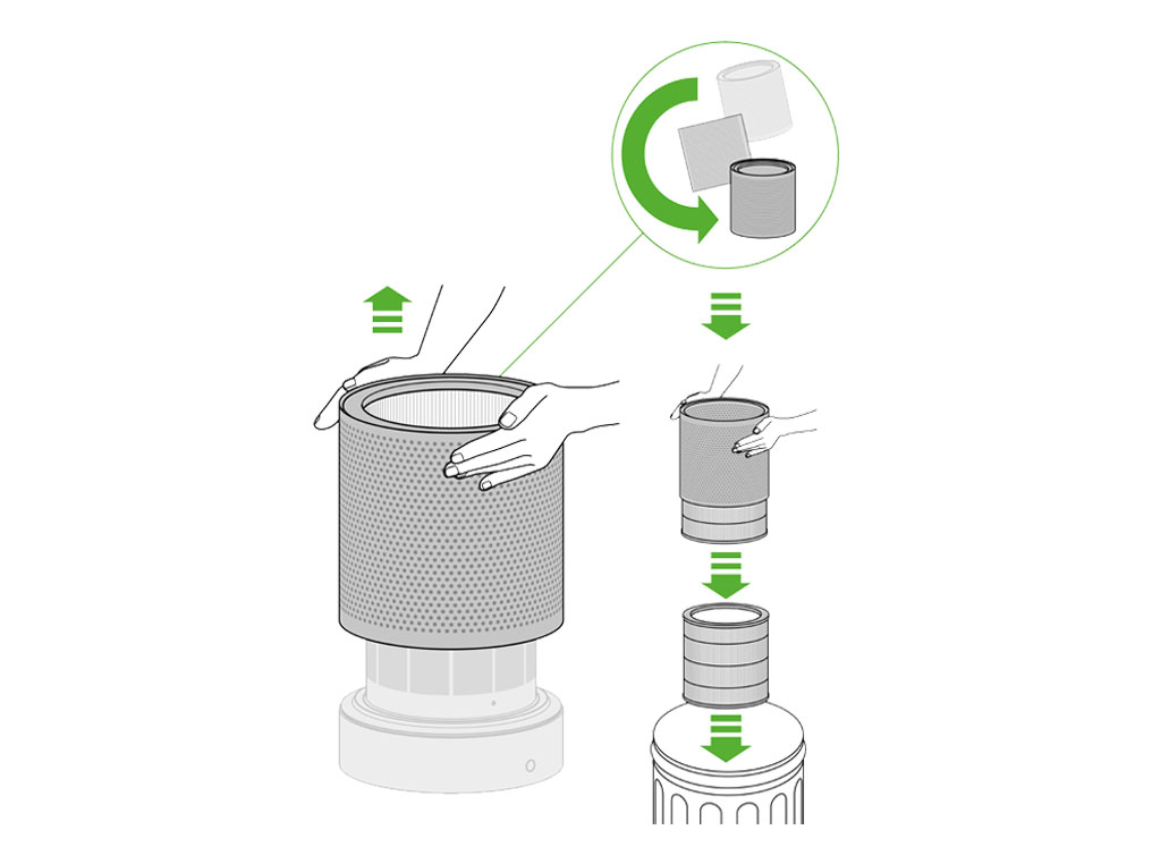
Dirty or improperly seated filters cause 70% of Dyson air purifier whistling issues—fortunately, this is the easiest fix.
Replace or Clean Clogged Filters in 4 Steps
- Unplug your unit completely—safety always comes first with electrical appliances
- Remove filters following your specific Dyson model’s instructions (typically a quarter-turn release)
- Inspect filters against bright light: If you can’t see light passing through the media, replacement is urgent
- Install new filters with firm, even pressure until you hear/feel them click securely into place
Pro Tip: Even if filters look clean, replace HEPA filters annually—hidden particle buildup creates microscopic restrictions that generate whistling.
The Paper Test for Perfect Filter Seating
After installing filters, perform this professional trick:
- Cut a thin strip of paper (business card width)
- Close the filter compartment with the paper strip protruding
- Pull the paper while trying to close the compartment
- If paper slides out easily at any point, that’s where air leaks and whistling occurs
Re-seat filters until the paper meets consistent resistance around the entire perimeter, ensuring airtight sealing.
Seal and Gasket Inspection: Stop Air Leaks Causing Whistles
Worn or misaligned seals create tiny gaps that turn your Dyson into an unintentional whistle—here’s how to find and fix them.
Locate and Repair Compromised Seals
Focus your inspection on these three critical areas where 90% of seal-related whistling originates:
- Filter compartment door seals: Run your finger along the entire rubber gasket, checking for cracks, warping, or embedded debris
- Base-to-tower connection: The seal where the base meets the main tower frequently degrades from temperature fluctuations
- Exhaust vent connections: High-pressure air escaping through imperfect seals here creates pronounced whistling
Fix: Clean seals with a dry microfiber cloth, then apply a thin line of food-grade silicone lubricant to restore pliability and create better seals.
The Soap Bubble Leak Test
This professional diagnostic method precisely identifies air leaks:
- Mix 1 tablespoon dish soap with 1 cup water
- Run your Dyson at medium speed
- Apply soapy solution with a paintbrush to suspected leak areas
- Watch for bubbles—they form instantly at leak points causing whistling
Once located, reseat the component firmly or replace damaged seals for immediate whistle elimination.
Cleaning Intakes and Exhausts to Eliminate Turbulence Noise

Dust bunnies in critical airflow paths create turbulence that manifests as whistling—often overlooked during routine cleaning.
Deep Clean Air Intake Grilles
- Use a soft-bristled toothbrush to dislodge dust from intake grille crevices
- Follow with a vacuum cleaner’s narrow attachment to remove loosened debris
- Shine a flashlight through the grilles—you should see clear, unobstructed pathways
Critical Check: Ensure at least 12 inches of clearance around all intake sides—wall proximity creates backpressure that induces whistling.
Clear Hidden Exhaust Pathways
Many users miss these exhaust trouble spots:
- The circular gap around Pure Cool models’ air projection ring
- The vertical slots on Pure Hot+Cool models’ front face
- The base intake on tower models (often blocked by carpet fibers)
Use a can of compressed air to blast debris from these channels while holding the unit upright.
When Your Dyson’s Fan or Motor Needs Professional Attention
If filter and seal fixes don’t silence the whistle, internal mechanical issues may be to blame.
Identify Bearing Failure Warning Signs
Worn motor bearings produce distinctive symptoms:
- A high-pitched metallic whine that increases with fan speed
- Whistling accompanied by slight vibration you can feel when touching the unit
- Noise that persists even with all filters removed
Don’t ignore this: Continuing to operate with failing bearings accelerates damage and may require full motor replacement.
The Filter Removal Diagnostic Test
Perform this critical test to isolate mechanical issues:
- Unplug and remove all filters
- Run the unit briefly (15-20 seconds max) without filters
- If whistling continues, the problem is mechanical (bearings, fan assembly)
- If whistling stops, the issue was filter-related—recheck seating and seals
Warning: Never operate your Dyson without filters for extended periods—this test is purely diagnostic.
Preventing Future Whistling: Dyson Air Purifier Maintenance Schedule
Consistent maintenance prevents 95% of whistling issues before they start.
Monthly Whistle-Prevention Routine
- Wipe all seals with a dry microfiber cloth to prevent dust buildup
- Vacuum intake and exhaust grilles using a soft brush attachment
- Rotate filters 180 degrees (if applicable to your model) for even loading
Quarterly Deep Maintenance
- Remove and inspect all seals for cracks or compression set
- Clean filter housing compartments with a damp (not wet) cloth
- Check for loose components by gently shaking the unit (should produce no rattles)
Annual Professional Checkup
Even with perfect home maintenance, schedule professional inspection every 12-18 months. Technicians can:
– Lubricate motor bearings with specialized compounds
– Perform dynamic balancing on fan assemblies
– Replace aging internal seals inaccessible to users
A whistling Dyson air purifier isn’t just noise pollution—it’s your machine begging for attention before minor issues become major failures. By systematically working through these targeted fixes, you’ll eliminate the whistle and extend your purifier’s lifespan. Start with the simplest solutions (filters and seals) before progressing to mechanical checks, and you’ll silence that whistle 9 times out of 10. When proper maintenance becomes routine, your Dyson will deliver the quiet, whisper-quiet performance you paid for—producing nothing but clean air, not annoying whistles. Remember: consistent filter replacement and seal care prevent most whistling before it starts, keeping your home environment peaceful and your Dyson operating at peak efficiency.

