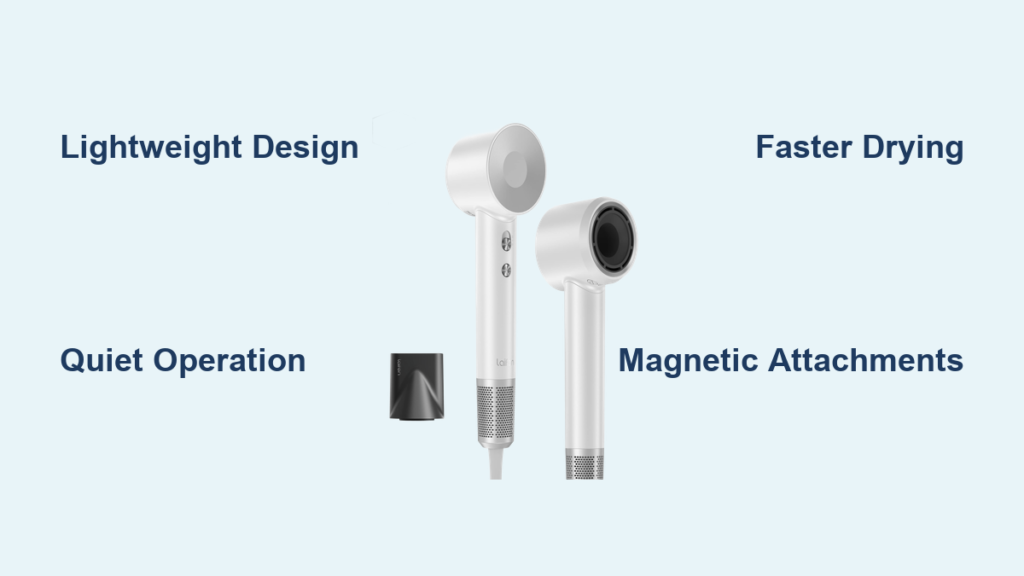
For decades, the hair dryer was trapped in technological purgatory—a hot, heavy, roaring appliance that fried hair while barely advancing beyond 1960s engineering. Professionals and consumers alike accepted deafening noise, shoulder-straining weight, and heat damage as unavoidable truths. Then in 2016, Dyson detonated this complacency with a £55 million engineering assault on the category. The dyson hair dryer history begins not with incremental tweaks but with James Dyson’s team dismantling 50 years of assumed limitations. This wasn’t a new hair dryer—it was the Supersonic, a handle-balanced marvel born from 600 prototypes and a secret hair library containing miles of human strands. You’re holding the result of aerospace-grade motor engineering meeting obsessive hair science—a revolution that rewrote what’s possible in your bathroom.
Why Traditional Hair Dryers Failed for 50 Years
Conventional hair dryers delivered punishing user experiences because of a fundamental design flaw: bulky AC motors crammed into the head. This created three critical failures you’ve probably endured. First, the weight imbalance—often over 1.5 pounds concentrated at the front—caused wrist fatigue during styling. Second, the motor’s low-speed operation (typically 10,000-20,000 RPM) required excessive heat to move air, frying hair cuticles. Third, the motor’s vibration generated that signature ear-splitting roar. Industry “innovations” merely added higher wattage or gimmicky attachments without addressing these core physics problems. Dyson’s engineers realized improving this design was impossible—they had to scrap it entirely and relocate the motor. Your daily styling struggle wasn’t user error; it was baked into 50 years of stagnant engineering.
How the Handle-Balance Breakthrough Solves Weight Fatigue
Moving the motor to the handle wasn’t just convenient—it transformed ergonomics through physics. By placing the 27mm Digital Motor V9 in the grip, the Supersonic achieved near-perfect 50/50 weight distribution. This eliminated the “nose-heavy” pull that strained stylists’ wrists during professional use. Test prototypes proved users could hold the dryer 40% longer without fatigue. Crucially, this shift wasn’t cosmetic—it enabled the high-speed airflow that reduced heat damage. When you feel that balanced heft today, you’re experiencing the direct result of Dyson questioning a “fixed” design rule.
The £55 Million Motor Breakthrough That Changed Everything

Dyson’s gamble hinged on creating a motor powerful enough to replace AC units yet small enough for the handle—a seemingly impossible task. The solution was the Digital Motor V9, an engineering marvel spinning at 110,000 RPM (5x faster than conventional motors). This wasn’t a scaled-down version of existing tech; it required inventing new manufacturing techniques for its 13-blade mixed-flow impeller. At just 27mm wide—the width of two quarters—the V9 propelled 13 liters of air per second while fitting neatly in the handle. But raw speed alone risked destroying hair. Dyson embedded intelligent heat control with a glass bead thermistor measuring airflow 20 times per second, instantly adjusting to prevent extreme heat spikes. This dual innovation—extreme airflow plus precise temperature regulation—is why the Supersonic dries hair faster while reducing damage.
Why 110,000 RPM Required Redefining Hair Science
Achieving usable airflow at such speeds demanded unprecedented aerodynamic precision. Early prototypes created turbulent “wind tunnels” that tugged hair violently. Dyson’s team redesigned the airflow path 147 times, using computational fluid dynamics to smooth transitions from motor to nozzle. The breakthrough came with the annular aperture—a ring-shaped exit that focused airflow like a jet engine. This concentrated stream could glide over hair without pulling strands into the nozzle, a common frustration with traditional dryers. When you experience that smooth, focused airflow today, you’re benefiting from 147 iterations of aerodynamic refinement most users never knew existed.
Inside Dyson’s Secret Hair Lab: Miles of Human Hair and Custom Machines
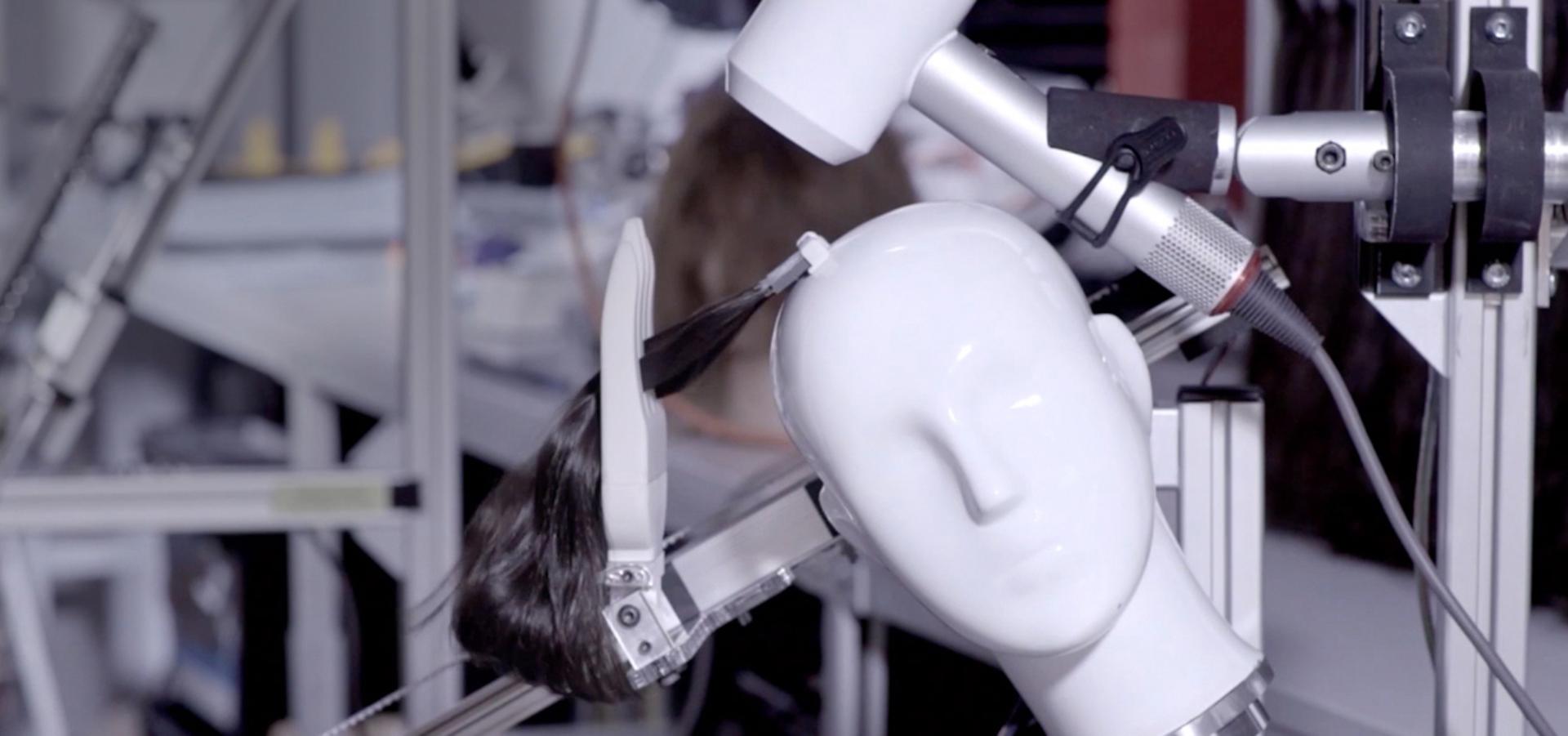
To validate their claims, Dyson couldn’t rely on industry standards—they built an entire hair science discipline from scratch. Their dedicated Hair Lab contained a “hair library” with over 1,000 miles of human hair strands (reportedly costing £40,000 and causing temporary shortages in global hair supply). But collecting hair was just step one. They engineered custom machines to measure what previously couldn’t be quantified:
- The Hair Tensile Tester: Measured breakage force after heat exposure, proving Supersonic reduced damage by 50% versus competitors
- The Curl Retention Analyzer: Tracked how long styles lasted using precise humidity chambers
- The Acoustic Mapping Rig: Pinpointed noise sources at different motor frequencies
This lab generated 103 terabytes of hair data—more than existed globally before 2012. When Dyson claims “reduced heat damage,” it’s not marketing fluff; it’s validated by machines they invented to see hair stress at a microscopic level.
How Stylist Akin Konizi Forced 600 Prototypes
No engineer could replicate salon expertise, so Dyson partnered with four-time British Hairdresser of the Year Akin Konizi from day one. His brutal honesty killed dozens of prototypes. When early versions couldn’t create smooth blowouts on thick hair, Konizi demanded higher airflow concentration. When the handle overheated during 30-minute sessions, he insisted on thermal redesigns. Most critically, he rejected all initial nozzle designs for failing to control flyaways—a universal stylist frustration. Konizi’s team tested every prototype on real clients, demanding results match professional tools. This collaboration birthed the Flyaway attachment, which uses Coandă-effect airflow to smooth strands without direct heat. The Supersonic succeeded because Konizi treated engineers like apprentices, ensuring the tool worked for your hair type, not just lab conditions.
Why Acoustic Engineering Was a Make-or-Break Factor
Konizi’s loudest complaint? Noise disrupting salon conversations. Traditional dryers operate at 15,000 Hz—painfully audible. Dyson’s acoustic team spent 18 months re-engineering sound. They shifted the motor frequency to 18,000 Hz (beyond most adults’ hearing range) and designed the air intake with Helmholtz resonators—essentially tuning fork chambers that cancel specific sound waves. The final solution reduced noise by 50% while maintaining airflow. When you hear that distinctive high-pitched hum instead of a roar, you’re experiencing acoustic physics applied to beauty tools for the first time.
Why the $399 Price Tag Shocked the Beauty Industry
Launching at $399—triple premium salon dryer prices—triggered industry disbelief. Beauty editors questioned if consumers would pay luxury watch prices for a hair tool. Competitors dismissed it as a “gimmick.” But Dyson’s strategy was deliberate: position the Supersonic not as a beauty product but as performance technology. Their marketing highlighted engineering specs (110,000 RPM! 27mm motor!) like a sports car ad. Crucially, they targeted influencers and celebrities—not beauty retailers—making it a status symbol before it hit stores. The gamble worked: within 18 months, it became the #1 professional dryer in high-end salons. That premium price wasn’t arrogance; it reflected the £55 million R&D investment recouped through performance, not cost-cutting.
Airwrap to Corrale: Expanding the Haircare Revolution

The Supersonic’s success proved Dyson’s airflow expertise could transform other styling tools. In 2018, the Airwrap leveraged the Coandă effect (where air flows along a curved surface) to curl hair with air instead of 400°F barrels. This eliminated direct heat contact, reducing damage while creating viral demand—waitlists stretched to 6 months. Then came the 2020 Corrale flat iron with flexible copper-manganese plates that conform to hair sections, cutting styling time by 50% through better contact. Each product shared the Supersonic’s DNA: re-engineering core physics rather than adding features. When you use an Airwrap to create heatless curls, you’re benefiting from the same airflow science that revolutionized drying.
How the Airwrap 2.0 Fixed User Complaints in 2022
Despite Airwrap’s success, Dyson immediately addressed user pain points. The 2022 Multi-Styler 2.0 introduced critical fixes based on 100,000+ customer reviews:
– Bi-directional barrels: Eliminated swapping tools for left/right curls
– Wide-tooth comb attachment: Specifically designed for coily hair textures
– 2-in-1 Coanda dryer: Combined pre-drying and smoothing in one tool
– Longer barrels: Accommodated 30% more hair per pass
This redesign—increasing the price to $599—proved Dyson’s “never finished” philosophy. They didn’t rest on viral fame; they used real-world data to solve actual user frustrations you might have experienced with the first model.
Dyson’s $100+ Million Hair Science Bet That Paid Off
The Supersonic wasn’t a lucky hit—it emerged from a staggering foundation: over £100 million invested in hair science before launch. This funded:
– A global team of 2,000+ engineers and hair scientists
– Patented hair testing protocols adopted as industry standards
– Proprietary research on how humidity affects 10 hair types
– Development of 14 new manufacturing techniques
Dyson didn’t just build a dryer; they created an entirely new category of “hair technology.” Competitors scrambled to copy features but lacked the underlying science. When you pay a premium for Dyson hair tools today, you’re funding ongoing R&D that continues to redefine what’s possible—proving that true innovation requires betting big on fundamental research, not quick fixes.
The dyson hair dryer history fundamentally reshaped beauty tools by treating hair science with aerospace-level rigor. From the handle-balanced Supersonic to the Coandă-effect Airwrap, Dyson proved that questioning 50-year-old assumptions could transform mundane routines into precision experiences. This wasn’t about making another appliance—it was about applying relentless engineering to a problem everyone had accepted as unsolvable. As Dyson continues iterating (with rumors of AI-powered styling tools emerging), one truth remains: the hair dryer you hold today exists because someone refused to accept “good enough.” Your smoother, faster, quieter styling isn’t accidental—it’s the direct result of 600 prototypes, miles of human hair, and a £55 million bet that changed everything.