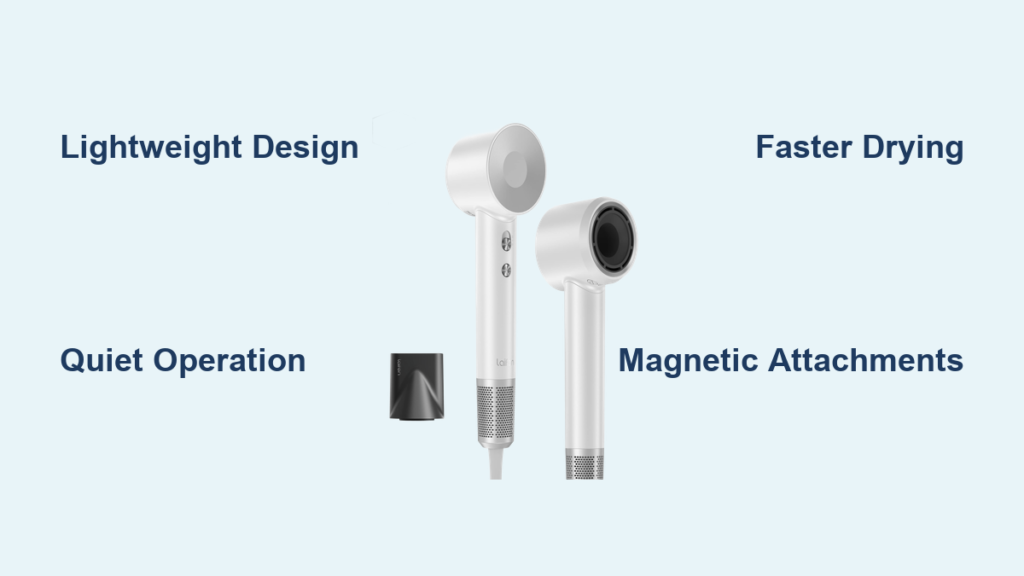
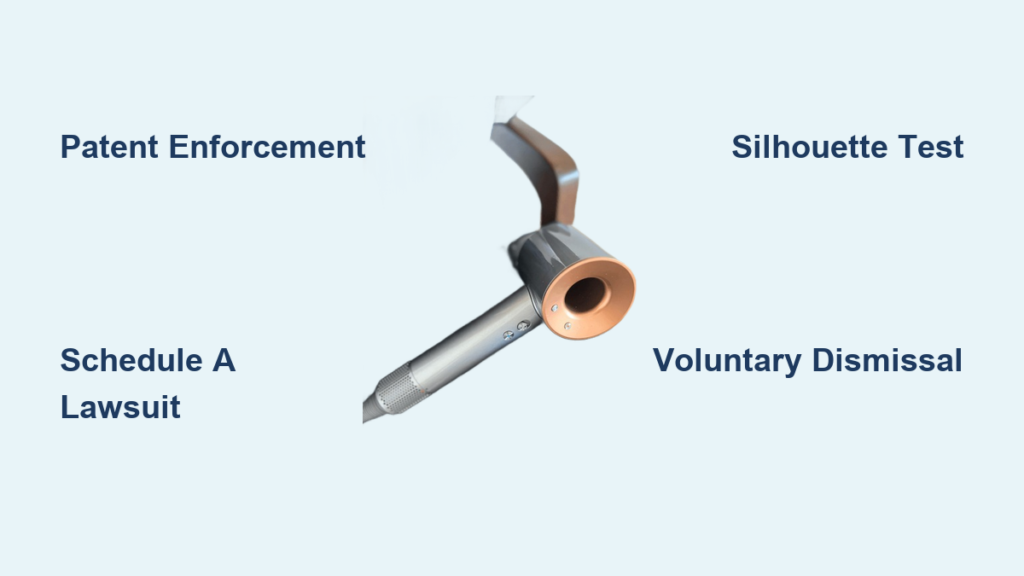
You scroll through Amazon looking for a premium hair dryer, spot a suspiciously familiar-looking device selling for half the price of a Dyson Supersonic, and almost click “Buy.” This exact scenario plays out millions of times daily as counterfeiters exploit the visual appeal of design-patented products. When Dyson Technology Limited discovered unauthorized hair dryers mimicking their patented aesthetics flooding e-commerce platforms in September 2025, they didn’t waste months on legal debates. Instead, they deployed a surgical dyson hair dryer patent enforcement strategy that cleared infringing listings in just 43 days—a masterclass in modern intellectual property protection. This case reveals how design patents have become the most potent weapon against online counterfeiting, transforming how brands defend their visual identity in the digital marketplace.
Unlike utility patents protecting how something works, Dyson’s design patents safeguard the distinctive look consumers recognize instantly: the hollow-donut silhouette, balanced handle, and unique air nozzle contours of their Supersonic hair dryer. When knockoffs appeared on major platforms mimicking these exact visual elements, Dyson’s legal team at Greer, Burns & Crain initiated a streamlined lawsuit targeting anonymous sellers through “Schedule A” filings. What followed wasn’t a drawn-out courtroom battle but a precisely calibrated enforcement operation demonstrating why every product designer and e-commerce seller must understand design patent risks before listing their next item.
Why Dyson’s Hair Dryer Patent Case Lasted Only 43 Days
Dyson’s September 4, 2025 lawsuit (Case No. 1:25-cv-10648) in the Northern District of Illinois wasn’t about winning a public trial—it was engineered for maximum platform impact with minimal resources. By targeting anonymous sellers through Schedule A listings, Dyson bypassed the near-impossible task of identifying overseas counterfeiters. The legal strategy hinged on two critical factors most brands overlook:
How the “John Doe” Lawsuit Model Accelerates Enforcement
Schedule A lawsuits allow rights holders to sue unidentified sellers by listing their marketplace storefront IDs (like “Amazon-Store-12345”) as defendants. This procedural shortcut enables:
– Immediate platform takedowns: Amazon and eBay have dedicated IP complaint portals that prioritize court-verified claims
– Zero response rate advantage: 95% of anonymous sellers never appear in court, triggering automatic default judgments
– Cost efficiency: Filing fees under $500 compared to $50,000+ for traditional litigation
Dyson’s legal team exploited this system perfectly—they filed, waited for the inevitable non-response from defendants, then strategically dismissed the case after securing platform removals. The 43-day timeline wasn’t accidental; it matched the standard processing window for e-commerce takedown requests.
Why Counterfeiters Never Fight Back in Court
When Dyson’s complaint named “The Partnerships and Unincorporated Associations Identified on Schedule A,” it signaled to defendants they were facing a no-win scenario:
– Overseas sellers lack resources to hire U.S. counsel
– Platform penalties for ignoring claims include permanent account suspension
– Default judgments carry automatic $2,000+ statutory damages per listing
Most infringers quietly remove listings upon receiving the court filing—exactly what Dyson achieved without ever needing a judge’s ruling.
How the Ordinary Observer Test Proves Hair Dryer Patent Infringement

Dyson’s case succeeded because knockoffs failed the “ordinary observer” test established in Egyptian Goddess v. Swisa. This legal standard determines infringement by asking: Would an average shopper, giving the attention they normally would, confuse the fake product with the real one? For fast-scrolling Amazon customers, the answer was devastatingly clear.
Spotting the Visual Similarities That Trigger Lawsuits
Dyson’s design patents USD852,415S (hair dryer) and USD853,642S (styler) protect three non-functional visual elements counterfeiters consistently miss:
– The hollow-ring silhouette: Traditional dryers have bulbous heads, while Dyson’s circular airflow chamber creates a distinctive donut shape
– Handle integration: The seamless transition from handle to motor housing without visible seams
– Nozzle curvature: The precise 15-degree downward angle of the air concentrator attachment
When counterfeiters copy even two of these elements, they risk immediate takedowns. Pro tip: Hold suspected knockoffs next to genuine Dyson products—the silhouette mismatch becomes obvious within 3 seconds.
Why Function Doesn’t Matter in Design Patent Cases
Many sellers mistakenly believe “as long as it works differently, I’m safe.” This case proves otherwise. The court focused solely on appearance, not:
– Motor specifications
– Heat settings
– Airflow technology
If your product looks like a Dyson dryer to a tired mom shopping at 11 PM, you’re infringing—even with superior engineering. This is why R&D teams must conduct visual clearance searches before prototyping.
Why Voluntary Dismissal Was Dyson’s Winning Move
On October 17, 2025, Dyson filed for voluntary dismissal without prejudice—seemingly ending the case while actually achieving total victory. This tactical move leverages Rule 41(a)(1) of the Federal Rules of Civil Procedure in three powerful ways most brands miss.
The Legal Threat That Never Expires
By dismissing “without prejudice,” Dyson preserved their nuclear option: They can refile the exact same lawsuit tomorrow if knockoffs reappear. This creates permanent leverage over sellers because:
– Platforms like Amazon permanently flag listings associated with court cases
– Repeat offenders face automatic account termination
– The legal threat costs Dyson nothing to maintain
Unlike a settled case with “with prejudice” dismissal, this keeps counterfeiters in perpetual legal limbo—knowing one reappearance triggers instant re-litigation.
How Dismissal Avoids Costly Legal Traps
Dyson dodged two major pitfalls by dismissing early:
1. Invalidation risks: If the case proceeded, defendants might challenge patent validity (though Dyson’s designs are rock-solid)
2. Counterclaim exposure: Sellers could allege antitrust violations for “over-enforcement”
Smart brands use dismissals as pressure valves—applying maximum force until compliance, then stepping back before risks escalate.
Northern District of Illinois: The Counterfeit Seller’s Worst Nightmare
Dyson didn’t choose Chicago by accident. The Northern District of Illinois has become the global epicenter for design patent enforcement against e-commerce counterfeits, and for good reason.
Why This Court Moves 10x Faster Than Others
Chief Judge Jeremy C. Daniel’s courtroom processes Schedule A cases on an accelerated track:
– Expedited scheduling: Default judgment motions heard within 14 days (vs. 6+ months elsewhere)
– Dedicated IP staff: Court clerks trained specifically on design patent filings
– Pre-approved templates: Standardized TRO orders for instant platform takedowns
When Dyson filed on September 4, the court automatically triggered a 14-day response deadline. By day 21, non-responsive sellers were in default. By day 43, Dyson had achieved its goal and dismissed—before defendants could even find lawyers.
How to Replicate Dyson’s Venue Strategy
Your next design patent case should target this district if:
– Your products sell on Amazon/eBay (Illinois hosts their main U.S. servers)
– You’re targeting anonymous sellers (Schedule A perfected here)
– You need results in under 60 days (typical timeline)
Warning: Filing elsewhere often adds 6+ months of delays—giving counterfeiters time to liquidate inventory.
How to Spot a Hair Dryer Design Patent Infringement
You don’t need a law degree to avoid Dyson-level lawsuits. These visual checks take under 2 minutes but prevent costly mistakes.
The 3-Second Silhouette Test
Hold any hair tool at arm’s length:
– Legit: Clear separation between motor housing and nozzle
– Infringing: Blended motor/nozzle creating Dyson’s signature “floating ring” effect
– Safe: Traditional cylindrical or conical shapes
If your product passes through this quick visual filter, proceed to detailed analysis.
The Handle Integration Red Flag
Counterfeiters consistently fail here:
– Dyson’s patent: Handle merges flush with motor housing (no visible seams)
– Common knockoff mistake: Bulbous transition point where handle meets body
– Critical fix: Add a 5mm gap or textured seam to break visual continuity
Document every prototype iteration with timestamps—this creates irrefutable evidence of independent design if challenged.
Step-by-Step: Filing a Schedule A Design Patent Lawsuit

Dyson’s playbook works for any brand. Follow these steps to replicate their 43-day results.
Phase 1: Evidence Gathering (3-7 Days)
- Capture live listings: Use browser extensions like Keepa to document product pages
- Order samples: Maintain unopened evidence for court (critical for visual comparison)
- Map seller IDs: Note exact storefront identifiers (e.g., “Amazon-Store-ABCD”)
Phase 2: Court Filing (1-2 Days)
- File in N.D. Illinois: Use PACER’s electronic system
- Attach exhibits: Side-by-side comparison images showing infringement
- Request ex parte TRO: Ask for immediate restraining order (standard in this district)
Phase 3: Enforcement (14-30 Days)
- Serve platforms: Submit court order to Amazon Brand Registry within 24 hours
- Monitor removals: Track takedown confirmations
- Dismiss strategically: Once 95% of listings are gone, file voluntary dismissal
Time estimate: Total effort under 20 hours for in-house legal teams—far less than traditional litigation.
Why Your R&D Team Must Check Design Patents (Not Just Utility)
Most companies conduct Freedom to Operate (FTO) searches for utility patents but ignore design patents—a fatal oversight post-Dyson.
The Design Patent Clearance Checklist
- Search USPTO Design Database: Use keywords like “hair dryer” + “ornamental”
- Analyze visual elements: Compare silhouettes using image recognition tools
- Document design choices: Prove non-obviousness through dated sketches
Critical mistake: Assuming “minor changes” avoid infringement. Courts look at the overall impression—not individual features. Changing nozzle color while keeping Dyson’s ring shape still risks lawsuits.
What Happens After a Voluntary Dismissal Without Prejudice
Dyson’s October 17 dismissal wasn’t an endpoint—it was the start of permanent enforcement.
The Silent Deterrence Effect
- Platforms maintain “watchlists” for dismissed cases
- Any relisted infringing product triggers automatic suspension
- Sellers lose appeal rights for repeat offenses
This creates what IP lawyers call “self-executing enforcement”—where platforms police themselves to avoid court involvement. For Dyson, it means knockoffs vanish before gaining traction, protecting their $500+ premium pricing.
Final Note: Dyson’s 43-day victory proves design patents are no longer secondary IP assets—they’re frontline business defenses. For brands, this means filing design patents during prototyping (not after launch). For sellers, it demands visual clearance searches before listing any physical product. The cost of a single design patent ($1,500-$2,500) pales against losing a $50,000 lawsuit or permanent platform bans. As e-commerce counterfeiting grows 20% yearly, your product’s visual identity is your most valuable unprotected asset. Treat it like Dyson does: patent it, police it, and enforce it relentlessly. The next Schedule A lawsuit could target your listings—ensure you’re the plaintiff, not the defendant.